Showing posts with label Sweden. Show all posts

Tuesday, July 01, 2025

SAQ Grimeton Radio Station ready for annual Alexanderson Day, on July 2nd, 2025

 
Grimeton Radio

The SAQ Grimeton Radio Station in Sweden is scheduled to perform its annual broadcast, also known as Alexanderson Day, on July 2nd, 2025. 

This year's broadcast is particularly significant as it marks the station's 100th anniversary. The station will celebrate the centennial of its official inauguration on July 2nd, 1925. 

Here is a summary of the planned activities for the SAQ Grimeton Radio Station on July 2nd, 2025:

The station will conduct two main transmissions. The first is scheduled to begin at 10:20 CEST (08:20 UTC) with a live YouTube broadcast, followed by the start-up of the Alexanderson Alternator at 10:30 CEST (08:30 UTC), and the transmission of a message at 11:00 CEST (09:00 UTC). The second transmission will follow a similar schedule, with the YouTube broadcast starting at 14:20 CEST (12:20 UTC), the alternator start-up at 14:30 CEST (12:30 UTC), and the transmission of an anniversary message at 15:00 CEST (13:00 UTC). 

Test transmissions are also planned for Tuesday, July 1st, between 13:00 and 16:00 CEST (11:00 - 14:00 UTC) for tuning, tests, and measurements. 

The transmissions will be on the Very Low Frequency (VLF) of 17.2 kHz CW, utilizing the historic Alexanderson alternator from 1924, which is a rare example of pre-electronic radio transmitter

You can view the events live on the World Heritage Grimeton Radio Station's YouTube Channel. If you are able to receive the transmission, you can submit a reception report online between July 2nd and July 27th. 
Please note that all transmissions are preliminary and may be cancelled. 

Previous testing has been observed as: 
Managed to hear two tests from SAQ on 17.2kHz this afternoon (1/7) 
The first between 1126 & 1207UTC and the second one between 1247 & 1255UTC. (In preparation for tomorrow's broadcasts celebrating 100 years of SAQ.)
 A mix of CW IDs, short and longer carrier bursts and pauses. Not sure if there was a third test.
A very good signal by 1255UTC, will send more details to MWL. 
(Nick Rank/BDXC)

Friday, December 20, 2024

Holiday programming from Arctic Radio Club, December 21-30


The Arctic Radio Club will be running special programs from 2200-2300 UTC on MW 1494 kHz [via Asfalttelegrafen / Ed] from December 21 to 30. 

Reception reports can be sent to:
Ronny Forslund
Arctic Radio Club
Vita Huset Svartsjövägen 3 A
SE-17995 Svartsjö
Sweden

Please include return postage (2 IRC or $/€ 5) and we will send you the ARC special QSL card. Yes, a real old-fashioned paper QSL like Grandad use to make them. No eQSLs will be issued.

Our sincere thanks to the operator of Asfalttelegrafen for this opportunity. We wish you a good reception.
Ronny to WRTH FB Group (2024-12-19)

Thursday, June 27, 2024

Schedule for Alexanderson Day, June 30


The Alexander Association welcomes all visitors to the Alexanderson Day, Sunday, June 30th, 2024,

The Alexander Association https://alexander.n.se/en/  in Sweden is celebrating Alexanderson Day 
https://alexander.n.se/en/alexanderson-day-2024/   on June 30th 2024 with CW transmissions on 17.2 kHz utilizing the SAQ radio transmitter that was first used in 1924. At that time the transmitter was used to transmit across the Atlantic Ocean to Long Island, NY, USA.

Messages are scheduled to be transmitted at 09:00 UTC and 12:00 UTC on June 30th. If you can't hear the transmissions over the air, the event can be viewed live on YouTube: 
https://www.youtube.com/channel/UC-83S-l9JKD1iuhsXx3XQ3g

Test transmissions may take place on June 28th [between 1100-1400 UTC]. QSL reports will be accepted. An amateur radio station, SK6SAQ, will also be on the air to mark the event.

More information can be found on the Alexanderson Day webpage: 
https://alexander.n.se/en/alexanderson-day-2024/

Source: The Alexander association via Amateur Radio Daily, 18 June 
(BDXC)

Together with the World Heritage Grimeton Radio Station, we will offer many activities, for the whole family, during the day.The unique Alexanderson alternator from 1924, with the call sign SAQ, is scheduled for two transmissions over the antenna on VLF 17.2 kHz CW.

Almost a hundred years ago, on December 1st, 1924, the long wave transmitter at Grimeton Radio Station, with the call sign SAQ, was put into commercial operation, with transmissions across the Atlantic ocean, to the receiving station in Riverhead and with the replying transmitter station in Rocky Point, both on Long Island, NY, USA. While all the other transmitting and receiving stations in the RCA network since long are gone, SAQ has been preserved as a World Heritage Site and, amazingly, SAQ is still operational. The design and manufacturing of such a robust and reliable radio transmitter was a monumental achievement by the Swedish-born inventor Ernst F.W. Alexanderson. Thank you Ernst!


Test Transmissions
There may be some test transmissions, preliminary on June 28th between
13:00 – 16:00 CEST.
During the tests, SAQ will be on air shorter periods of time, when we will be carrying out some tests and measurements.Your comments are welcome toinfo@alexander.n.se.

QSL Reports to SAQ QSL reports to SAQ are most welcome and appreciated!

We can not guarantee that reports by Email / mail / bureau will be confirmed.The online form will be open from June 30th until July 26th, 2024.Amateur Radio Station SK6SAQ. The Amateur Radio Station with the call “SK6SAQ” will be QRV during the day on the following frequencies:–
3 517.2kHz CW– 7 017.2kHz CW– 14 017.2KHz CW– 3 755 kHz SSB– 7 140 kHz SSBQSL-reports to SK6SAQ (NOT SAQ) are kindly received via:- Email to
info@alexander.n.se- or via: SM bureau- or direct by postal mail (link to address here) Two stations will be on the air most of the time.

Visiting World Heritage Grimeton Radio Station

In addition to these program items, lots of other activities are offered throughout the day, including:–The exhibition, where you can test your Morse skills, among other things.–The control, an obstacle course for all climbers, where there are different tasks to solve.–Signals intelligence, puts your Morse skills to the test. What is the secret message?–Kjells café, with good coffee.–Food galley, with freshly fried, hand-crafted Churros, inspired by radio stations from all corners of the World.–The radio shop, the World Heritage well-stocked souvenir shop.
Please see www. grimeton.org grimeton.org for complete visitor information.

Not a member yet ? Then it’s time to join the Alexander team!We welcome you as a member of the Alexander SAQ Grimeton Friendship Association, to support our non-profit activities in preserving, documenting and bringing to life the unique Alexanderson alternator from 1924.As a member You get a 10% discount on World Heritage Grimeton’s shop and café (not ice cream), and free admission to Alexander's evening displays and to the Alexanderson Day, upon presentation of your membership card.Four times per year, you will receive our online magazine “Alternatorn”, exclusively available only to our members.

Members also get access to our on-line library with lots of unique historical documents about SAQ and the Alexanderson alternator. Membership costs SEK 125 / year.
(BDXC)
(photo/ARRL)

Wednesday, February 28, 2024

Wavescan continues radio from Sweden, Part 2

Special thanks to Ray Robinson and Jeff White for sharing the Wavescan script of Part 2, discussing radio in Sweden.

Radio from Sweden -  Part 2 

Jeff: Last week, Ray Robinson began a two-part look at the history of radio broadcasting in the northern European country of Sweden.  So here to continue once again is Ray from Los Angeles.

Ray:  Thanks, Jeff.  You may remember that back in November in our short series on the history of radio jingles, I mentioned the Swedish offshore station Radio Nord, which was the first to use PAMS-style jingles in Europe.  Following the success of offshore radio in Denmark and The Netherlands, Radio Nord was setup by Jack Kotschak in 1960, with a 10 kW medium wave transmitter on board a ship called the MV Bon Jour.  The station broadcast very successfully outside the Stockholm archipelago in the Baltic Sea for 17 months from 21st February 1961 until 30th June 1962 on a frequency of 602 kHz, announced as 495 metres.

Radio Nord

In its short life, Radio Nord experienced both disaster and success.  It survived ice, storms, threats of seizure, and technical difficulties that face a shipborne station.

It was eventually closed down by government legislation, after having built up a huge following within Sweden, with an audience of 24% of the adult population!  Not only was Radio Nord a pioneer of radio in Sweden, it was also one of the pioneers of offshore radio in Europe and, to a large extent, provided the inspiration for the radio ships which later anchored off the British and Dutch coasts.  Indeed, the ship itself, the MV Bon Jour, was renamed the MV Mi Amigo and was famously used by Radios Atlanta and Caroline from 1964 to 1980.

In July 1962, largely as a result of the success of Radio Nord, a new pop music channel called P3 (or Program 3) was officially inaugurated, although at that time it only covered part of the country.
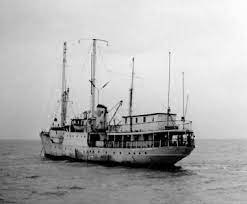
Radio Syd 

But Radio Nord wasn’t the only offshore station in Sweden.  While Radio Nord was still on air in March 1962, a second station, Radio Syd (owned by Mrs. Britt Wadner) was launched using the ship MV Cheeta which she had acquired from the Danish station Radio Mercur.  Radio Syd broadcast on various FM frequencies from the Öresund Sound between Malmö, Sweden, and Copenhagen, Denmark, and continued after the new Nordic anti-pirate law came into effect on 1st August 1962.  By March 1964, a poll showed that Radio Syd then had more listeners in the Malmö area than all three Swedish Radio networks combined.  Mrs. Wadner was prosecuted and fined several times, as were a number of the companies that advertised on Radio Syd.  She even spent one month in prison, although under Swedish law, she was permitted to continue operating her business from her jail cell – the operation of Radio Syd! 

In October 1964, the MV Cheeta sank after a particularly rough storm, but undeterred, Mrs. Wadner acquired a new ship which she called the MV Cheeta II, and was quickly back on the air again.  In fact, in 1965 she even made some test television transmissions on UHF.  In January 1966, the station was forced to leave its anchorage by bad weather, and the ship was leased to Radio Caroline for three months as a replacement for the MV Mi Amigo which had run aground and had to be taken to Amsterdam for a refit.  But in April 1966, a more severe anti-radio piracy law went into effect in Sweden, and Radio Syd never returned to the Öresund.  In fact in late 1967, the MV Cheeta II headed south, first to the Canary Islands, and then onwards to the port of Bathurst in the West African country of The Gambia, where she was used as a restaurant and nightclub.  And interestingly, Radio Syd did go on the air again as a licensed station in Bathurst (now known as Banjul), from 7th May 1970, on 908 kHz, 329 metres.  Here’s a clip of Radio Syd in Bathurst in 1971:

Mrs. Britt Wadner died at her home in Sweden in March 1987, and the operation in The Gambia was then managed by her daughter and son-in-law.  The station moved on land, and the ship itself sank in Banjul harbor in the early 1990’s.  The station did eventually move to an FM frequency, but the last entry for the station in the WRTH is in 2006.

In 1977 the Swedish P3 network introduced regional programming from 24 FM stations around the country, and stereo broadcasts became the standard in Sweden for the first time.  15 more stations were added in 1979.  Independent commercial radio finally became legal in Sweden in March 1993, more than 30 years after the government monopoly had first been broken by Radio Nord.

The best-known high-powered medium wave station in Sweden was located at Solvesborg, which used a power of 600 kW on 1179 kHz, 254 metres.  From the 60's to the 80's during the evenings, it relayed the Foreign Service of Radio Sweden for Europe, including one of the best-known entertainment shows on international radio - the Radio Sweden Saturday Show - presented by Dr. Roger Wallis, Sydney Coulson and Australian Kim Loughran, known as 'Kangaroo Kim'.  Here's a clip of Roger with guest former Radio Caroline DJ Dave Lee Travis on Saturday 16th September 1967:

The English language programs came at the end of each evening’s transmissions, at 11pm UK time, 6pm Eastern.  The first half hour of the Saturday Show was carried globally on both shortwave and medium wave, but then it continued for a further 60 minutes on medium wave only for Europe.  It was quite zany at times and liked to poke fun at itself in a way that was later imitated by Media Network on Radio Netherlands.

On Sundays, the same team also presented a show called ‘The Pops’ which showcased the best in home-grown Scandinavian pop music at the time.

And, we should remember too the long-running DX program from Radio Sweden, "Sweden Calling DXers", which was broadcast on Tuesday evenings.  Do you remember the way that show opened?


Sweden Calling DXers began with Arne Skoog in February 1948 as a guide for DXers and SWL’s, and it depended entirely on the logging contributions of its listeners.  As an incentive, if you contributed an item, the station would send you the printed script for six weeks.  I had a whole stack of them!  Versions of the show were broadcast in several European languages such as German, not just English.  The show was taken over by the American George Wood in 1978, the name was changed to MediaScan a few years later, and the program ended in 2001.

Domestically, on longwave, as in many other countries of Europe, there were three high-powered stations to blanket the country and reach Swedish-speaking communities in Finland and elsewhere.  These were located at Motala, Lulea and Gothenberg.  In 1962, the longwave service at Motala was transferred to a new location at nearby Orlunda.  However, Sweden abandoned use of longwave broadcasting in 1991, and the Motala building was then turned into a radio museum, where the original longwave transmitter can be seen on display.

Eventually, over the years, more than 100 medium wave stations had been established throughout Sweden, mostly with quite low power, though about half a dozen were described as high power stations.  Most of these were closed in favor of FM and DAB broadcasting in the 1990’s and early 2000’s.

Sweden then finally closed its two shortwave stations, Horby and Karlsborg, and the one remaining medium wave station at Solvesborg on 1179 kHz, on Saturday 30th October 2010.  Nationwide coverage on radio in Sweden is now obtained solely with several networks of FM stations and DAB multiplexes totaling anywhere up to 2,000 mostly lower power transmitters.

There were two other radio stations of note in Sweden.  A large communication station known as Goteborg Radio traces its earliest origins back to the year 1905.  This station was progressively located at four different sites over the years, and it has been well known under the callsigns SAG and SAB.

The other interesting station is the old spark wireless station at Grimeton which was inaugurated in the 1920's by King Gustav V.  The old long-wave Alexanderson alternator is still functional, and it is placed on the air once each year under the callsign SAQ.

Radio Sweden was a prolific verifier of reception reports and we are aware of at least 50 different designs for their QSL cards.  Likewise, many QSL cards have been issued for the old longwave transmitter SAQ, and for Goteborg Radio SAG and SAB.

Back to you, Jeff.

Jeff:  Thanks, Ray.  Next week, Ray will tackle a topic which I don't think has ever been covered in Wavescan before - the history of broadcasting in the tiny British Overseas Territory of Gibraltar.


Wavescan on Sweden MW, LW and IBRA - Part 1


Special thanks to Ray Robinson for sharing the script with our readers, discussing radio from Sweden, Part 1 

Jeff: Today, Ray Robinson begins a two-part look at the history of radio broadcasting in the northern European country of Sweden.  So, take it away, Ray.

Ray: Thanks, Jeff.  Sweden is the eastern country situated on the Scandinavian peninsula in Northern Europe.  It is nearly 1,000 miles long, with a total population of about 10½ million.

The earliest written history of this Nordic country was documented by the Romans some 2,000 years ago.  The daring exploits of the Vikings in their Atlantic quests to the west and the south have been chronicled and re-chronicled, though it should be stated that the Swedish Vikings usually traveled east, spreading out into Russia.

Actually, as the old records tell us, wireless came very early to Sweden.  It was back in the year 1900, that the Swedish navy borrowed some Marconi wireless equipment from the AEG company in Germany.  This electrical equipment was used in a series of successful wireless tests at Stockholm, on land and at sea.

Two years later, the first permanent wireless station in Sweden was installed in Stockholm, and in fact it was in use for ship communication for exactly 100 years.  This station was originally installed in the year 1902, it went through several series of modernizations, and it was ultimately closed on February 1, 2002.  The long history of the Swedish coastal radio station SDJ must be one of the longest terms of radio service anywhere in the world.

During the era of wireless telegraphy in Morse Code, a whole network of coastal and regional stations was established in Sweden.  These stations were installed mainly at coastal locations throughout the country and each callsign was issued in consecutive order, beginning with SAA in Karlskrone, SAB in Gothenberg, SAC in Trallerborg, and so on down through the alphabet.

And again, as the records tell us, radio broadcasting also came quite early to Sweden.  The first amateur radio broadcasters began their experimental transmissions during the year 1922, and interestingly, the callsign for each of these stations during this era consisted of four letters of the alphabet, beginning with SA or SM.  These days, a regional identification number is inserted into amateur callsigns in Sweden.

It is stated that there were many local stations on the air in Sweden during the 1920s and these were operated by radio clubs, commercial organizations and individual operators, as well as by the government Royal Telegraph Administration.  Music programs were on the air quite often from many of these longwave and medium-wave stations.

The Swedish government announced in 1924 that it planned to nationalize the broadcasting industry, as in England, and on Thursday, January 1 of the next year, 1925, the new organization, Radiotjanet, produced its first network broadcast.  This epic radio occasion was a special program held in Jakob's Church Stockholm.

By the late 1920s, there were 15 medium wave stations scattered throughout Sweden, all of which used four-letter callsigns beginning with either SA or SM.
 
In the mid-1930s, Sweden had two shortwave stations on the air with program broadcasting.  These two stations, both with amateur style callsigns, SM5SD and SM5SX, were located in Stockholm, and they were logged in the United States and Australia.

Station SM5SX was installed at the Technical University and its operating channel was 15080 kHz.

With political tensions rising in Europe during the late 1930s, Swedish Radio and the Foreign Ministry decided that Sweden needed to have a more robust voice to the outside world.  A longwave station had been inaugurated at Motala in the summer of 1927, and it was at this location 10 years later that two Swedish-made shortwave transmitters rated at 12 kW each were installed.  One of these new units was inaugurated in 1938, and the other in 1939.  These transmitters used four different channel callsigns, SBO and SBU on one, and SBP and SBT on the other.  In December 1939, news in English, French and German went on the air for the first time.  Even though Sweden was a neutral country, it was still impacted by the privations of war, and wanted the world to understand that.

After things settled down in Europe in the post-war years and the Cold War took hold, Sweden placed an order with the Marconi company in England for the purchase of two shortwave transmitters at 100 kW each.  These two units were installed at the already existing radio station located at Horby which had been erected in 1928, and they were inaugurated in 1952.  The use of the two older 12 kW shortwave transmitters at Motala was phased out after the two 100 kW shortwave transmitters were inaugurated at Horby.

In 1972, two 500 kW shortwave transmitters were ordered.  One was installed at Horby, but due to coronal arcing in the antenna system during foggy weather, they had to reduce the power level to 350 kW.

The other 500 kW shortwave transmitter was installed at Karlsborg, a station which had originally been established back in 1918 as a spark wireless communication facility.  However, the output of this unit was also reduced to 350 kW due to a similar coronal arcing problem in the antenna system.

In 1955, the Swedish Pentecostal Movement set up a Christian broadcast ministry in Stockholm called I-B-R-A or IBRA Radio, which produced programs in many languages for transmission on various stations around the world.  Initially, they broadcast via the shortwave transmitters of Radio Tangier in Morocco, and in the 60’s they added HCJB in Quito, Ecuador, as well as many local stations around the world.  From the 70’s onwards, they expanded dramatically, producing programming that was also heard on shortwave via:
Radio Trans Europe in Sines, Portugal,
Radio Mediterranean in Malta,
High Adventure in South Lebanon,
FEBA in the Seychelles, and
FEBC in the Philippines,
as well as on local stations in over 100 countries and in more than 60 languages.  In the 2000’s their broadcast activities have been scaled back in favor of more emphasis on usage of social media, but they are still active on shortwave in 2024, broadcasting now in a dozen or so African and Asian languages from Encompass transmitters around the world.  IBRA, though, has always followed a policy of buying time on established stations, and has never transmitted from within Sweden.

Next week when we continue the story of radio broadcasting in Sweden, we’ll look at the impact offshore stations had in the 1960’s at shaking up the official radio networks there, and we’ll also be remembering some of Radio Sweden’s external service programs that were so beloved by shortwave listeners.
(Photo credit/Flicker)

Wednesday, December 20, 2023

Sweden: The Asphalt Telegraph - Asfaltstelegrafen 1494 kHz


Hello! In the midst of all the closure hysteria on mediumwave, we invest here in Sweden!! Since our national broadcaster had stopped broadcasting 13 years ago, we think it’s time to invest again!

We have purchased a brand new 1 kW AM transmitter that is tuned to 1494 kHz. Unfortunately, we have not received a permanent license, which is completely incomprehensible, but we have in any case received a 14-day license from December 23, 2023 to January 5, 2024 on 1494 kHz again. The station has moved within the country [Sweden], so now the reception may be a little worse to the south, but still better north and east in Finland instead. Unfortunately, we will not be on air every day, we at the station have a regular job to attend to.

All listener mail is welcome at the following email: 1494khz@gmail.com
Torleif, Asfalttelegrafen, Ludvika 
(via Jari Lehtinen, SDXL Finland 7.12.23 https://sdxl.fi/asvalttilennatin-lennattelee-jouluna/ )
Was logged in the UK back in winter of 2019/20.
(Alan Penningtn/BDXC)

Thursday, June 29, 2023

Grimeton Radio Station broadcast on July 2


Alexanderson Day program & transmission schedule:
10:25 CEST (08:25 UTC) Live YouTube broadcast begins.

10:30 CEST (08:30 UTC) Start-up of the Alternator.

11:00 CEST (09:00 UTC) Transmission of a message.

11:15 CEST Guided antenna walk (Swedish). Start by the cooling pond.

11:45 CEST Guided technical tour (Swedish & English). Start by the visitor’s center.

13:25 CEST (11:25 UTC) Live YouTube broadcast begins.

https://youtube.com/live/4QwVIsnS8uQ?feature=share
13:30 CEST (11:30 UTC) Start-up of the Alternator.

14:00 CEST (12:00 UTC) Transmission of a message.

14:15 CEST Guided antenna walk (Swedish). Start by the cooling pond.

14:45 CEST Guided technical tour (Swedish & English). Start by the visitor’s center.

Live Video from World Heritage Grimeton Radio Station
Both transmission events can be seen live on our YouTube Channel.

Test Transmissions
There may be some test transmissions during the days before Alexanderson Day, July 2nd. Details about the time for the tests will be published on our website, possibly with short notice. During the tests, SAQ will be on air shorter periods of time, when we will be carrying out some tests and measurements. Your comments are welcome to info@alexander.n.se.

QSL Reports to SAQ
QSL reports to SAQ are most welcome and appreciated! For guaranteed E-QSL from us, please report using our ONLINE FORM. Our confirmation of reports by Email / mail / bureau is not guaranteed. Please only send ONE report covering both transmissions. The online form will be open from July 2nd until July 30th.

Amateur Radio Station SK6SAQ
The Amateur Radio Station with the call “SK6SAQ” will be QRV on the following frequencies (updated 2021-06-11): – 3.535 kHz CW – 7.035 kHz CW – 14.035 KHz CW – 3.755 kHz SSB – 7.140 kHz SSB

QSL-reports to SK6SAQ (NOT SAQ) are kindly received via: – Email to info@alexander.n.se – or via: SM bureau – or direct by postal mail (link to address here)

Two stations will be on the air most of the time.

Visiting World Heritage Grimeton Radio Station
In addition to these program items, lots of other activities are offered throughout the day, including: – The exhibition, where you can test your Morse skills, among other things. – The control, an obstacle course for all climbers, where there are different tasks to solve. – Operation Palmqvist, an escape room that takes place on Grimeton Radio Station during World War II. – Kjells café, with good coffee. – The radio shop, the world heritage well-stocked souvenir shop.

Please see grimeton.org for visitor’s information.

Not a member yet ? Then it’s time to join the Alexander team!
We welcome you as a member of the Alexander Grimeton Friendship Association, to support our non-profit activities in preserving, documenting and bringing to life the unique Alexanderson alternator from 1924. As a member You get a 10% discount on World Heritage Grimeton’s shop and café (not ice cream), and free admission to Alexander’s summer evening displays and to the Alexanderson Day, upon presentation of your membership card. Four times per year, you will receive our online magazine “Alternatorn”, exclusively available only to our members.

Members also has access to our on-line library with lots of unique historical documents about SAQ and the Alexanderson alternator. Alexander members also have free admission to the Radio Museum in Gothenburg. Membership costs SEK 125 / year. Apply For Membership Now!

Help us to keep SAQ Grimeton operational.
Just a small donation will be of great help to us, in our work to keep SAQ in operational condition. Your donation will go to the work of maintaining, displaying, and running the historical Alexanderson alternator, as well as passing on knowledge to current and future generations. Donate here.

*The world heritage site Grimeton is a living cultural heritage. The transmitter SAQ are therefore preliminary and may be canceled at short notice.

Wednesday, March 30, 2022

Echo Sthim scheduled for Thursday broadcast


Germany
Channel 292 is airing a new Russian broadcast Echo Sthim, a Stockholm, Sweden-based station. Organized by former staff of Radio Sweden's Russian service, programs are at 2100-2200 UTC Tuesday, Thursday and Saturday on 9670 kHz.

According to the station, programs are presented "unbiased news about Russia and the war in Ukraine." Station website http://echosthlm.se    
(BDXC)

Monday, August 19, 2019

Hörby Radioförening plans special broadcast


Google translation:
Hörby Radioförening will, in connection with VeteranLjuddagen, transmit on medium wave 1179 kHz. The transmitter will be up and running between 31 August - 13 Septmeber 2019.

The call signal will be: SBH Hörby Radioförening
This call signal is the same as previously used by the Hörby Broadcasting Station
(ITU-R RR APP 42)
http://veteranljuddagen.se/1179%20khz/index.html
(BDXC)

Wednesday, April 25, 2018

Grimeton Radio slated for May 1 broadcast

Grimeton Radio
World Heritage Grimeton Radio Station participates in the ERIH event WORK it OUT – Industrial culture, on May 1 and as part of the event we plan for the first SAQ transmission since 2016.

The transmitter start-up will begin at 11.30 (9.30 UTC) and the transmission will begin on 17,2 kHz CW at 12.00 (10.00 UTC). You can also watch a live video stream of the event on www.alexander.n.se

No QSL-cards will be given this time and no List of Reports will be constructed but we accept shorter Listeners Report to e-mail info@alexander.n.se.

We sincerely hope that all the SAQ transmission on 17,2 kHz will go as planned, but as always there is a reservation that the transmission is cancelled with short notice.
The Alexander association team @Grimeton, Sweden


Monday, May 01, 2017

Special programming and QSLing from Arctic Radio Club


Arctic Radio Club celebrates the 2017 Convention in Jönköping, Sweden May 6 and 7th. Our radio station will be on the air with many different types of programs, mostly in Swedish.

The transmitter will have a power of 250 W (ERP) on 1593 kHz and the antenna is located on a high hill near Lake Vättern. In the evening of May 5th we will start tests. There will be station identifications in English, too.

The official start will be May 6th at 1900 UTC and the programs will be running until 1100 UTC on Sunday noon. On the 7th there will be a program dedicated to the local SR P4 Radio Jönköping that celebrates its 40th year of broadcasting this year. This program starts at 1000 UTC and will be in Swedish until the station signs off at 1100 UTC. Reception reports are appreciated and a special QSL?card is issued, if you enclose return postage in your letter. Reception reports by email will be answered by an e-QSL.
Address:
Ronny Forslund
Arctic Radio 1593
Vita Huset, SE-17995 Svartsjö
SWEDEN.
E-mail: info@rock.x.se.
(Giampiero Bernardini, PlayDX/DX News 84-15)

Sunday, August 14, 2016

Grimrton Radio Station plans extra transmission August 16


An extra transmission from the Unesco World Heritage Grimeton Radio Station (SAQ) will be made on Tuesday, August 16th, 2016, on the occasion of the 11th Nordic Shortwave Conference HF 16 with the attached longwave symposium LW 16, a venue held on the small island of faaroe north of Gotland in the baltic sea.

Start up and tune in of the transmitter will begin at at around 09.15 UTC (11.15 local time), and the transmission of a message on the frequency 17.2 kHz CW, will start at 09.40 UTC (11.40 local time).

No QSL-cards will be given this time and no List of Reports will be constructed but we accept shorter Listeners Report to e-mail info@alexander.n.se.
Mauro Giroletti/HCDX)
_.___


Monday, December 21, 2015

SAQ slated for Christmas Eve Broadcast

Radio Grimeton
December 24, 2015

It is now 10 years since our first Christmas Eve transmissions started.

There will be, as earlier, a transmission with the Alexanderson alternator on VLF 17.2 kHz CW from Grimeton Radio/SAQ in the very early morning on Christmas Eve, Thursday, December 24th 2015.

A message will be transmitted at 08:00 UTC. The transmitter will be tuned up from around 07:30 UTC.

There will be no activity on amateur radio frequencies with the call SK6SAQ this time because the radio room is redecorated and cannot be used.

QSL-reports on SAQ transmission are kindly received:

- E-mail to: info@alexander.n.se

- or via: SM bureau

- or direct by mail to: Alexander - Grimeton Veteranradios Vaenner

  Radiostationen Grimeton 72                    

  SE-432 98 GRIMETON

  S    W    E    D    E    N

Also read our web site: www.alexander.n.se

The radiostation will be open to visitors.

WELCOME!

Yours

SM6NM/Lars

(Lars Kalland, Sweden)