Showing posts with label BBCWS. Show all posts

Tuesday, July 23, 2024

BBC announces Global Audience Measurement


Highlights reliability and resiliency in face of media declines elsewhere

 Radio World
By Nick Langan
July 22 2024

 
How many people consume BBC content internationally? The organization released its 2024 Global Audience Measurement and put the number at 450 million weekly, an increase of 3 million from last year.

The Global Audience Measure is an annual update of how many people consume the BBC weekly for all international services in all countries across TV, radio, website and social media. It excludes the BBC’s output aimed at the U.K. market.

It said its global reach “remains resilient in the face of increased investment and fierce competition from other news providers, including state-funded news companies.”

BBC World Service offerings, operating in 42 languages, drew an audience of 320 million. BBC News Arabic saw a 9% increase, which the broadcaster attributed to the Israel-Gaza war. The Gaza Daily emergency radio service, broadcasting on 639 AM in the morning and evening, is also part of the figures. The Arabic feed is the BBC’s second-largest language service, behind its BBC News Hindi service.

The English World Service feed grew its audience to 84 million overall, bolstered by audiences in Taiwan and the Philippines, the BBC said.

The organization said that its performance comes despite an overall downward trend in media consumption in TV and radio. It credited its trustworthiness and reputation for “reliability and independence amongst international news providers.”

On the heels of 2022 musings by BBC Director-General Tim Davie of an internet-only distribution model, the statement emphasized the organization’s resiliency “in the face of increased investment and fierce competition from other news providers, including state-funded news companies.”

 
“Whilst we have challenges ahead of us in the BBC World Service, we meet them from a position of strength,” said Jonathan Munro, BBC News’ deputy CEO. “In the meantime, we will continue to serve audiences with the fearless and fair reporting we’re renowned for.”

The BBC recently announced that Munro would become global director of BBC News in September; in that role he’ll be director of the BBC World Service and oversee BBC Monitoring. Munro will remain deputy CEO of BBC News and Current Affairs.

Nick Langan is the operations manager at Villanova University’s 89.1 WXVU in Villanova, Pa., and a lifelong radio enthusiast, with a special interest in long-distance FM signal reception.

Friday, January 05, 2024

A closer look at longwave radio


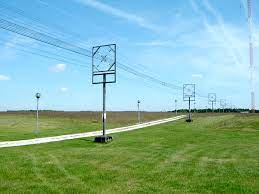
2024 looks to be a critical year for longwave broadcasting in the UK. In the year we celebrate 90 years of transmissions from Droitwich, the BBC has announced its intention to shut this historic transmitter down. The campaign to keep Longwave is still very young and consists essentially of the 13 people on this mailing list, but it is encouraging to see nearly 2500 people already having signed our petition. Please continue to refer anyone who might be interested in signing to www.keeplongwave.co.uk

I'm getting in touch now to let you know our current plan of action:
Plan A: Keep BBC Radio 4 Longwave
We have already contacted the BBC on this issue multiple times and contributed to the Radio 4 Feedback program. Some of those contacted have been sympathetic, but the general view of the BBC is that nobody listens to LW anymore and maintaining the transmitter is a waste of money. They have not provided any evidence for this, and have not been able to produce any listening figures for longwave. Please contact the BBC if you haven't already, to complain about the planned demise of Longwave, and help to prove them wrong! You can contact them quickly and easily here.
It has been heartening to receive messages from listeners in Europe, and as far away as Newfoundland, and it is becoming increasingly clear that the Droitwich transmitter is one of the most important in the world, with a large international audience. This is a point that has not been emphasised to the BBC, and will therefore guide our next stage of campaigning. I am going to contact my MP specifically on the issue of listeners abroad, and suggest to him that it might be worth approaching the Foreign Office to discuss the impact of losing the voice of the BBC in Europe. He is very sympathetic to our cause, and the Droitwich transmitter is inside his constituency.

Plan B: Amateur Longwave
Our Plan B will come into play if it becomes impossible to persuade the BBC and government to retain longwave transmissions. The plan would be to obtain an Ofcom license to broadcast on longwave from an alternative site using an underground aerial, since the costs of maintaining the Droitwich transmitter would be too high. This would keep longwave broadcasting, but we would lose our iconic transmitter, and listeners abroad would no longer be served. Were we forced to choose this option, however, we would need to start a fundraising campaign to set up and maintain transmissions?
If you have any other ideas or suggestions, please do let the group know. Thank you to everyone who has already contributed your comments and suggestions, and for sharing the petition.
Let us enter 2024 with a degree of optimism, even in the midst such troubled times worldwide.

With all best wishes,

Tobias
Dr Tobias Thornes
Campaign to Keep Longwave
tobiastjwt@googlemail.com
(Mike terry/BDXC)
(photo/Wikpedia)

Tuesday, June 28, 2022

BBC begins new e-QSLing


Today's news from the British DX Club indicates that BBC is now offering an e-QSLing service. 

Here is the link, and please tell us your  e-QSLing results.

https://eqsl.tools.bbc.co.uk/ 

Monday, February 16, 2009

SLBC continues BBCWS English programs

The BBC World Service announced on Tuesday that it has stopped providing programmes to the Sri Lanka Broadcasting Corporation (SLBC) because of “deliberate interference” by government censors. However. SLBC Chairman Hudson Samarasinghe says that so far he has not received any official information to that effect from the BBC World Service. SLBC therefore continues to broadcast BBC English programmes for 3.5 hours as day. However, the Tamil and Sinhala programmes have been dropped by SLBC.
Mr Samarasinghe told the Asian Tribune website that the BBC entered into an agreement with the SLBC to have 4.5 hours of airtime daily for broadcasting their services, for which the BBC pays US$185,000 annually to the SLBC - 3.5 hours a day in English and half an hour each in Sinhala and Tamil. He pointed out that for every thirty minutes of broadcasting time the BBC pays one quarter of what the SLBC charges to local sponsors for a thirty minute programme.
Mr Samarasinghe added that “The BBC has entered into an agreement with SLBC for airtime and if they want to renege on the agreement let them do it.”
(Source: Asian Tribune/R Netherlands Media Network Weblog)

Wednesday, September 10, 2008

BBCWS appoints new Head of French and Great Lakes services


The BBC has appointed Razvan Scortea as the Head of its BBC French and BBC Great Lakes language services. His responsibilities include overseeing the managerial and editorial direction of both services including staff located in London, in over 20 African countries, and the websites bbcafrique.com and bbcgreatlakes.com.
BBC in French for Africa – BBC Afrique – broadcasts daily programmes to millions of people in 23 countries across four time zones. BBC Great Lakes broadcasts programmes in Kinyarwanda and Kirundi to audiences in Rwanda, Burundi and neighbouring countries.
Razvan Scortea was previously the Head of BBC Romanian, a position he held for five years. In this role he managed the transfer of most of the live radio output from London to Bucharest, the setting up of a new office in the capital of Moldova, Chisinau, and the launch of several FM relays.
Razvan first joined BBC Romanian in 1991 reporting on stories that reflected a time of great change and upheaval. In the mid-Nineties, Razvan worked on the first BBC television current affairs programme in a vernacular language for Eastern Europe. In 2000 he became an Editor with BBC Romanian and was instrumental in the launching of its website. He later worked with the BBC’s international charity, BBC World Service Trust, on projects that took him to Azerbaijan, Serbia and Turkmenistan. Before joining the BBC, Razvan worked as a translator and reporter in Romania.
(Source: BBC World Service Publicity/R Netherlands Media Network Weblog)

Monday, September 08, 2008

BBC World Service to air DRM special September 13

On Saturday 13 September, the BBC World Service will be replacing its normal evening DRM broadcasts on mediumwave (1296 kHz) and shortwave (5895 kHz and 5875 kHz) with a special broadcast of The Last Night of the Proms.
The Last Night of the Proms, at the Royal Albert Hall in London, is one of the most popular classical music concerts in the world, watched and listened to by an audience of many millions around the globe. The BBC World Service special DRM broadcast will begin at 1800 UTC with highlights of Prom 69 featuring music by Debussy and Roussel, and will continue with the live broadcast from the Albert Hall in London from 1900 UTC.
More details will be available on the BBC World Service Proms website.
(Source: http://www.drm.org/ )

Tuesday, September 02, 2008

BBC World Service ends broadcasting in Bulgaria

The BBC World Service has stopped broadcasting in Bulgaria. The radio station, accessible at 91.0 FM in Sofia, started operations in the country in 1940. From today, the BBC’s English-language services will be available online at bbc.com/worldservice and via the Hotbird 2 direct to home satellite service.
In an embassy press statement, British ambassador to Bulgaria Steve Williams said: “I am sorry that the BBC World Service will stop broadcasting in Bulgaria on FM radio. Like other listeners, I will miss the high quality, impartial and comprehensive broadcasts.”
According to Bulgarian legislation, only Bulgarian-language programmes are allowed to be broadcast in Bulgaria; following the end of the BBC’s Bulgarian service, the only programs that the BBC had in the country were in English.
(Source: R Netherlands Media Network Weblog)

Full story at Sofia Echo www.sofiaecho.com/article/68-years-of-bbc-world-service-radio-ends-in-bulgaria/id_31513/catid_66

Monday, July 14, 2008

BBC World Service - multilingual summer schedule updates


All times UTC


Arabic target areas kHz
0300-0400 daily ME 9915cyp (ex 6015)
1900-2100 daily ME 11680mos (ex 13660)
2000-2100 daily Naf 13660rmp (del)

Burmese target area to southeast Asia kHz
1100-1130 mtwtf.. SEA 7115nak (ex 7330)

English target areas kHz
1700-1900 mtwtf.. CAs 13675rmp (add)
1700-1830 daily SAs 11955sng (del)
2100-2300 daily NAf 12095skn (del)
2300-2400 daily SEA 11850sng (ex 11955nak)

French target area to west Africa kHz
0700-0730 daily WAf 15340asc (ex 15105)

Russian target area to Russia kHz
0200-0230 daily RUS 5875rmp (ex 9775)

Swahili target area to east Africa kHz
1330-1530 …..s. EAf 11705mey (del)
1530-1630 …..s. EAf 11705sey (del)
(Source: WRTH July 08 summer updates http://www.wrth.com/ )