Welcome to Teak Publishing's Shortwave Central blog. This blog covers shortwave frequency updates, loggings, free radio, international mediumwave, DX tips, clandestine radio, and late-breaking radio news. Visit my YouTube and Twitter links. Content on Shortwave Central is copyright © 2006-2026 by Teak Publishing, which is solely responsible for the content. All rights reserved. Redistribution of these pages in any format without permission is strictly prohibited.
Monday, May 12, 2025
Afghanistan reactivates on mediumwave
Monday, February 06, 2023
RFE/RL Expands Broadcasts to Afghanistan Despite Taliban Ban
Monday, September 13, 2021
Deutsche Welle resumes programming to Afghanistan
Wednesday, September 01, 2021
Opinion: The U.S. government left its own journalists from VOA and Radio Liberty behind in Afghanistan
Monday, August 16, 2021
Taliban capture TV and radio station in Afghanistan
Friday, August 13, 2021
Keeping a Focus on Afghanistan as Taliban closes in
| (photo via VOA) |
Al-Qaida Will Return to Afghanistan, British Official Says
Fleeing Fighting, Afghans Flood into Kabul and Gather at Pakistan Border
| (via Arab News) |
Tens of thousands of people have been flooding into the Afghan capital, Kabul, and gathering at the Pakistan border to escape the escalating fighting between Taliban militants and government forces.
Tuesday, February 02, 2016
U.S. airstrikes destroy ISIS 'Voice of Caliphate' in Afghanistan
Monday, July 18, 2011
VOA considers adding Balochi service
Walter Isaacson, celebrated editor, book author and intellectual, who heads the VOA, was a guest speaker at a National Press Club luncheon Friday hosted for world-renowned blogger and his old friend Arianna Huffington, president and editor-in-chief of Huffington Post Media Group, and Tim Armstrong, chairman and CEO of AOL.
After the event, to a question from this correspondent, Isaacson said he will take up the matter of adding Balochi language service in real earnest.
He repeated his promise he will take up the issue of adding Balochi language as he left the NPC building.
The chairman of the Broadcasting Board of Governors, the agency that operates the Voice of America, has said the VoA will put the adding of a Balochi language service on its agenda.
He repeated his promise he will take up the issue of adding Balochi language as he left the NPC building.
Continue reading at on Examiner.com www.examiner.com/foreign-policy-in-baltimore/voa-balochi#ixzz1SSj2cpy2
Monday, December 13, 2010
Radio Azadi's Radio Distribution Drive in Afghanistan
Continued story and photos at Radio Free Europe/ Radio Liberty: http://www.rferl.org/content/off_mic_radio_azadi_distribution_drive/2241690.html
Friday, November 19, 2010
Radio Azadi launches interactive SMS service
“The exciting thing is that it’s not just Radio Azadi sending news to subscribers,” says RFE Associate Director of Broadcasting Akbar Ayazi. “It’s our subscribers sending news back to us. Since the project launched less than a month ago, we’ve already received more than 5,000 text messages from people all around the country - this ‘citizen journalism’ is unique in Afghanistan.”
Each morning and evening, Etisalat customers who subscribe to the free service receive news headlines from Radio Azadi in either Dari or Pashto. They also get SMS messages on their phones with breaking news and emergency alerts. In addition to texts, Mr Ayazi says subscribers will soon be able to send Radio Azadi photos and videos from their mobile devices. He says the station has launched a new weekly programme in which many of the SMS messages it receives are read on the air.
Despite being one of the poorest countries in the world, Afghanistan has 17 million mobile phone subscriptions out of a population of 29 million.
(Source: RFE/RL/R Netherlands Media Network Weblog)
Monday, October 04, 2010
Taliban propaganda employs leaflets, sermons and clandestine radio
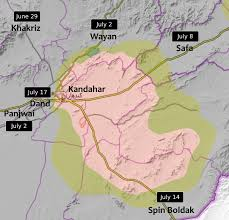
Ernesto Londono: "The Taliban continues to rely heavily on decentralized, conventional propaganda efforts, which U.S. military officials say is the crucial battleground. These include the distribution of leaflets with threats or pleas, sermons in mosques and clandestine radio stations. 'They've co-opted the religious narrative for the last several years,' Rear Adm. Greg Smith, NATO's communications chief in Afghanistan, said in an interview. 'They've used that narrative locally very effectively.' Foreign troops, meanwhile, are ill-equipped to offer counterarguments in mosques and other gatherings, forcing them to rely on Afghan officials to do so, Smith said. So far, that effort has been slow in the Taliban's southern strongholds of Kandahar and Helmand provinces, even as Taliban influence has spread in the east and the north, Afghans say." -- Nevertheless, the propaganda war, as with the military war, must ultimately be fought by Afghans who are opposed to the resumption of Taliban rule. The best the United States can do is to fight propaganda with non-propaganda, i.e. the credible information that causes propaganda to wither.Washington Post, 02 Oct 2010/Kim Elliott blogspot)
photo: UN/unhcr.org
Wednesday, June 30, 2010
US military a hit with Radio in a Box program
(R Netherlands Media Network Weblog)
Additional story and video at:
http://www.cjtf101.com/regional-command-east-news-mainmenu-401/2935-local-dj-celebrity-to-his-afghan-listeners.html
Friday, April 23, 2010
NATO radio launches in Afghanistan
Text of press release from International Security Assistance Force (ISAF) Joint Command on 22 AprilHerat: Music, local news and in-depth discussions on important social issues and local culture are now more prevalent in western Afghanistan.
A NATO radio network station began broadcasting from Camp Arena recently, offering public-interest content to help local residents better understand the purpose of ISAF forces in Afghanistan.
Radio is the main tool to disseminate information throughout Afghanistan and can reach people even in the most remote areas, easily crossing the boundaries of literacy and distance. The radio station will provide an important contribution to the growth and social development of the country and provide immediate information in case of emergencies.
The broadcast selection is chosen by local personnel and closely connected with the target audience, the population of Regional Command-West’s area of responsibility. For this reason, all of the programmes are broadcast exclusively in the Pashto and Dari.
Mr. Guido Crosetto, under-secretary of state for the Italian Ministry of Defence, turned on the “On Air” light and spoke over the air during the ribbon-cutting ceremony Monday [19 April].
“Sada and Azadi West Radio [The Voice of Freedom - West],” said Mr Crosetto, “is a media that relies entirely upon an Afghan journalism staff and offers objective information on Afghanistan to all the citizens of the four western provinces - to city dwellers and those living in more isolated communities. The programming of Sada and Azadi Radio will pay attention to your proud traditions and prestigious culture without neglecting the specific needs of your everyday life. It is a service tool and an entertainment tool; a new voice that will increase the conscious participation in the democratic life of this country.”
The Task Force Commander Maj Renato Rocchetti directs and manages the new radio station, which is manned by an Italian Air Force NCO and three local journalists. Other staff members will be added soon.
The station was developed, with Italian funding, by the men and women of the Regional PSYOPS Support Element (RPSE), composed by personnel of 28th Regiment “Pavia,” a unit specializing in operating communications equipment.
(Source: ISAF website, in English 22 Apr 10 via BBC Monitoring/R Netherlands Media Network Weblog)
Tuesday, October 06, 2009
U S fights Taliban on airwaves

GOLESTAN: "You're listening to W.IED 102.5 FM 'the bomb'," joked Staff Sergeant Todd Bowers as he slotted another cassette of religious chants into his portable radio station.
While most of the battles fought by US Marines in restive Farah province are against improvised explosive devices (IEDs) and guns, Bowers, 30, is fighting a war of words to win the hearts and minds of people in rural western Afghanistan.
The radio station - a portable deck and 45-foot antennae at the military base in Golestan - began as a chance to give local villagers a taste of the music they were banned from hearing under the hardline Taliban rule.
Continued story at Channel News Asia
http://www.channelnewsasia.com/stories/afp_asiapacific/view/1009564/1/.html
(Alokesh Gupta, India)
Taliban winning the new media war 2.0 ?
The skilful use of old and new media technologies by terrorist organisations threaten to undermine the efforts of Coalition armed forces in countries such as Afghanistan and Pakistan, according to an Australian National University (ANU) researcher.
Speaking to Computerworld ahead of the War 2.0: Political Violence and New Media conference being held at the ANU, Prakash Mirchandai, a visiting fellow at the ANU Strategic and Defence Studies Centre, said terrorist organisations such as Al Qaeda had successfully harnessed technologies such as video and mobile phones to bypass Coalition messages conveyed by mainstream media.
“If you look at where the Taliban is getting its message across to the non-committed Afghanis it is through video,” he said. “They’re shooting Jihadist videos which are very sophistically edited and put on DVDs and the Internet.”
Full story at Compuetworld
http://www.computerworld.com.au/article/321114/taliban_winning_new_media_war_2_0
(R Netherlands Media Network weblog)
Friday, September 18, 2009
Former Afghan Star host joins Voice of America
"VOA is an important channel in Afghanistan," said Sediqi, who works for VOA's Afghan Service. "It is the one place I can work and do something for my country."
Sediqi, 29, sought and was granted asylum in the United States after he came to this country for the airing of an award-winning documentary, Afghan Star, at the prestigious Sundance Film Festival in Utah earlier this year. He later joined VOA as a Pashto-speaking radio broadcaster.
"We are excited to have Daoud on our team," said Beth Mendelson, VOA's Afghan Service Chief. "Our audiences in Afghanistan enjoy having one of the country's biggest stars back on the airwaves."
During the Taliban regime, Sediqi repaired televisions to help support his family. After the U.S.-led invasion ousted the Taliban in 2001, Sediqi turned his passion for music into a profession. He was hired by a popular FM radio station in Kabul, and was later asked to produce Afghan Star, which showcases musical talent.
While Afghan Star made him a celebrity - his audience often topped 11 million - his popularity also brought death threats from Islamic militants who shun music, especially music performed by women.
After Sundance, Sediqi says he realized he would be in serious danger if he returned to Afghanistan. And while he misses his homeland and his program, he says here in the United States, "You can talk! Freedom! Believe me, I can be what I want to be. I want to think like a free man."
Sediqi discussed his decision to come to the United States on YouTube at www.youtube.com/watch?v=4mXrynabFTg .VOA's Afghan Service broadcasts in Dari www.VOANews.com/ Dari and Pashto (www.voanews.com/ /Pashto) on radio, TV and Internet.
(Voice of America)
Monday, September 14, 2009
BBC World Service does not want to report "from behind barriers" in Afghanistan
(Kim Elliott blog)
Saturday, August 15, 2009
Radio Station Gives Voice to Remote Afghan Region
By Army Sgt. Matthew C. Moeller, Special to American Forces Press Service
NURISTAN PROVINCE, Afghanistan - NATO's International Security Assistance Force is giving voice to residents of this remote area through a radio station run by one of their own.
When Shaib Dad Hamdard was growing up here near the Pakistan border, he dreamed of being a voice to his people. Now, with the turn of a dial and the flick of the switch, he's on air at Kalagush Radio, reaching out across the remote mountain province.
And he doesn't shy away from controversy. Today's topic: the need for women's equality.
"With this," the 24-year-old station manager said, motioning to the microphone, "I can educate my people. I can provide a voice to them."
Broadcasting into areas so isolated -- many residents may only travel as far as the neighboring village in their lifetimes -- Kalagush Radio is "a live existence of the [outside] world," Hamdard said.
For 12 hours a day, the Nuristani radio station offers news and entertainment programs that cater to the local people.
Although the news stories are not always positive, they are honest. They offer a balanced look at issues affecting residents under the station's "don't take any sides" philosophy.
But news is only part of the station's programming. DJs offer a variety of music, history, education, religious and social commentary shows, as well. One of Kalagush Radio's most popular shows is a daily music program that allows listeners to phone in with requests, Hamdard said. The show has received a huge response, he said.
"We think of the needs of the local people, and what they want," said Hamdard, remarking on the station's success.
Although ISAF funds the station, Kalagush Radio employees insist they decide what is put on the air.
"Of course it is funded by the coalition forces, but I have total control over the programs," Hamdard said. "The programs are not limited to any specific groups."
ISAF forces are working with Kalagush Radio to expand its broadcast schedule to 24 hours a day. They're also planning to hire several new journalists for the station, including an Afghan woman, offering a voice for what the station's crew calls a silent majority.
Related Story Links:
Kalagush Radio Broadcasts Freedom
http://northshorejournal.org/kalagush-radio-broadcasts-freedom
Tuning into Kala Gush Radio
http://www.1stid.org/about/pressreleases/3bct0808.pdf
Kalagush Radio DJ prepares the Nuristan province, Afghanistan, radio station for broadcast, Aug. 3. The International Security Assistance Forces funded station offers the people of the remote mountain area a variety of news and entertainment programs. Combined Joint Task Force - 82 PAO Photo by Sgt. Matthew Moeller
And this from Kim Elliott's website (http://www.kimandrewelliott.com/
New NATO funded radio station in Afghanistan is "not limited to any specific groups." "NATO’s International Security Assistance Force is giving voice to residents of this remote area through a radio station run by one of their own. When Shaib Dad Hamdard was growing up here near the Pakistan border, he dreamed of being a voice to his people. Now, with the turn of a dial and the flick of the switch, he’s on air at Kalagush Radio, reaching out across the remote mountain province. ... Although ISAF funds the station, Kalagush Radio employees insist they decide what is put on the air. 'Of course it is funded by the coalition forces, but I have total control over the programs,' Hamdard said. 'The programs are not limited to any specific groups.' ISAF forces are working with Kalagush Radio to expand its broadcast schedule to 24 hours a day. They’re also planning to hire several new journalists for the station, including an Afghan woman, offering a voice for what the station’s crew calls a silent majority." American Forces Press Service, 10 August 2009. On FM? Or on medium wave or even shortwave, more capable of "reaching out across the remote mountain province"?
Thursday, May 07, 2009
Stars and Stripes focus on how US troops use radio in Afghanistan
United States troops have set up transmitters across the province in eastern Afghanistan, hired local employees for the stations and developed a process to put out information updates on incidents such as roadside bomb explosions. Major Herb Skinner, the 1-40 executive officer, said the system is key to combating Taliban misinformation that often blames coalition forces for civilian deaths caused by its own attacks.Read on this from First With the Truth article at:
http://www.stripes.com/article.asp?section=104&article=62487
Friday, February 06, 2009
U.S. troops in Afghanistan use radio to help tune out Taliban
By JIM LANDERS / The Dallas Morning Newsjlanders@dallasnews.com
COMBAT OUTPOST ZORMAT, Afghanistan – In this badly understaffed post, one of the more successful battle strategies for isolating the Taliban has been what the U.S. Army calls RIAB – Radio in a Box.
Radio Zormat started as a 50-watt FM transmitter – in a box – set up in 2007 inside this base. The station reached people living within a six-mile radius of the town of Zormat.
Now it's a 250-watt transmitter that the Army hopes will reach clear across the Zormat area of operations for the 70 soldiers at this base, a high plains region between two mountain ranges.
Continue story at: Dallas Morning News
http://www.dallasnews.com/sharedcontent/dws/news/world/stories/DN-radio_06int.ART.State.Edition1.4c909a7.html
