Monday, April 15, 2024

Radio History from Gibraltar


Special thanks to Ray Robinson and Jeff White for sharing a recent edition of Wavescan on AWR.

Radio History from Gibraltar
Jeff:  Today Ray Robinson tackles a topic we’ve never covered before here in Wavescan – the history of radio broadcasting in the tiny British Overseas Territory of Gibraltar.  So, in Los Angeles, here’s Ray.

Ray: Thanks, Jeff.  Gibraltar is a small peninsula attached to the south coast of Spain, which juts out into the Mediterranean.  It is just 1½ miles long north to south, and ¾ mile wide, much of which is occupied by the famous Rock itself.  With its commanding position overlooking the strait between Spain and Morocco through which all shipping between the Mediterranean and the Atlantic must pass, Gibraltar is of great strategic importance, and its sovereignty has been contested by the Spanish for centuries.

Gibraltar was first permanently settled by the Moors in the 6th century, and was renamed Jebel Tariq, meaning Mount of Tariq, which was later corrupted into the name Gibraltar.

Gibraltar was besieged and conquered by Spain in 1462, and it remained part of the unified Kingdom of Spain for 242 years from 1462 until 1704.  It was then captured by the Anglo-Dutch Navy during the War of the Spanish Succession, and was formally ceded to Great Britain in the Treaty of Utrecht in 1713 in exchange for territorial concessions in North America.  And for the last 320 years, it has remained under British control.

At the foot of the Rock on the western side there is a densely populated town area with narrow streets, which these days is home to a permanent resident population of about 32,000 people.  Gibraltar was formally recognized as a city by Queen Victoria in 1842.  Historically, much of the local economy was dependent on the naval port, but these days most of their income is derived from tourism (aided by a new cruise ship terminal), online gambling and offshore financial services.

Before the Second World War, a local private company had set up 'Radio Distribution', which relayed the BBC Overseas Service via cable from 301 Main Street. But as the clouds of war approached, Radio Distribution came under the control of the British Ministry of Information, and was run by the Royal Corps of Signals.

As from 1941, Radio Distribution was based at Wellington Front, an area that was to become the home for broadcasting on The Rock for three decades.

A new 'Radio Gibraltar' was also set up by the Ministry of Information for the civilian population.  Initially, its local content was minimal, but it did include announcement of the Gibraltar lottery results!  During the war, the transmitter was moved to Morocco, to play its part in Operation Torch - the allied invasion of North Africa.  Gibraltar was then served by a smaller 250 watt transmitter based at Wellington Front.

When the war ended, the need for information on The Rock was deemed less important by the Ministry, and by August 1945, the early version of Radio Gibraltar was phased out.

In the aftermath of the Second World War, Gibraltar was essentially a garrison town, its society finding its way after the evacuation and return of its civilian community to The Rock.  The Spanish language predominated, and local culture strove to make sense of its own identity.  Initially, a one-hour daily program was recorded in Gibraltar for the local residents, and this was broadcast by Pan American Radio from 5-6pm through the medium wave transmitter of Radio Tangier in Morocco, just across the strait.

It wasn't until 1957 that the local government in Gibraltar once again felt the need for a full-blown local information and entertainment service of their own.  Known also as Radio Gibraltar, it was the brainchild of Sir Howard Davis, and was managed and operated by British civil servants, with technical help from the Royal Corps of Signals.  The station launched at 11:50am on Sunday, 16th February 1958 with 1 kW on 1484 kHz (202 metres).  Daily programs were in English from 8am to 3pm, and 6pm to 11pm, partially funded by commercials.  Top of the hour newscasts were again relayed from the BBC Overseas Service, and other BBC programming was carried also.  Afternoon programming in Spanish was added later.

Using some very basic equipment, black and white television transmissions began from Signal Hill (at the southern end of The Rock) on VHF channel 12, in October 1962.  A locally controlled broadcasting service became increasingly important, so in December 1963, the Gibraltar Broadcasting Corporation was established, to take over the operation of both the radio and TV services on behalf of the Gibraltar government.

In June 1969, General Franco of Spain ordered the frontier with Gibraltar to be closed, and it remained closed for 13 years.  My family and I were fortunate to be able to live and work in Gibraltar for five months in 1980 & 1981, and it was sad to see the guards on the Gibraltar side of the border ceremoniously opening the gates every morning, and then closing them again every evening, while the gates on the Spanish side remained resolutely closed.  After we left, the border was partially reopened to pedestrians only in December 1982, and then finally fully reopened to vehicular traffic as well in February 1985.

Throughout the 70's during the period of the border closure, Radio Gibraltar also relayed BBC programming from London in Spanish, and this was much appreciated during the Franco years by the residents of La Liñea, San Roque, Algeciras, along the Costa del Sol and in other towns in the hinterland close to Gibraltar (known as the 'Campo').  It is said that walking through those towns in the afternoons, one could often hear "This is the BBC from London broadcasting to Spain on shortwave", coming from radios tuned to Radio Gibraltar on 202 metres.  In Spain at the time, it was actually forbidden to listen to the BBC from London!

The programs of record requests and dedications then also became an important means of maintaining contact for people with family members on both sides of the border.

In November 1978, Radio Gibraltar's transmitter was given a power increase to 2 kW and moved from 1484 to 1458 kHz (206m), the medium wave frequency it still uses to this day.  In 2014 it was given another power boost, this time to 4 kW.  Due to reception challenges close in around the Rock, however, two stereo FM frequencies were added in the 1980's - on 100.5 MHz with 1 kW, and on 91.3 MHz with 250 watts.  Some years later, a third FM transmitter was added on 92.6 MHz, also with 1 kW. 
The 1980's also saw both the GBC radio and television operations move from the rather dilapidated building at Wellington Front to new studios called Broadcasting House on South Barrack Road at the southern end of The Rock.

Until the early 80's, programming was typically in short blocks of 15 or 30 minutes covering many different musical genres including classical and opera as well as contemporary pop.  However, a restructuring then took place, and the more familiar two or three hour shows with contemporary music similar to many local independent stations in the UK was adopted.  Peter Canessa was the presenter of a lunchtime show called 'A Bit of Alright', and here he is at 1pm on Tuesday 8th June 1982:

I recorded that myself while on vacation on the Costa del Sol.  Three days later, I also recorded David Hoare with the station sign-on at 6:45am, on Friday 11th June 1982:

To serve the small military community, the British Forces Broadcasting Service (BFBS) opened a station in Gibraltar in the 1960's.  This has only ever broadcast on FM, originally on 93.5 MHz with 250 watts.  In the late 70's, a second frequency was added on 97.8 MHz, and both of those can still be heard today.  Programming is a mixture of locally produced shows and network shows relayed from London.

Here's the start of the 8:30am news headlines on BFBS with presenter Claire Riley, later the same morning as the GBC sign-on we just heard:

Since the mid-2000's, both GBC Radio Gibraltar and BFBS Gibraltar have been streaming their programming online, so if you want to catch up with them through an Internet Radio or web browser, it's pretty easy.

Back to you, Jeff.

Tangier International Zone - Part 1


Special thanks to Ray Robinson and Jeff White for sharing a recent edition of Wavescan on AWR.


Jeff: A couple of times recently, broadcasting from Tangier in Morocco has been mentioned in other topics.  A few weeks back in his item on radio broadcasting from Gibraltar, Ray Robinson noted that before Radio Gibraltar was set up in 1957, a one-hour daily program for Gibraltar had been broadcast by Pan American Radio via Radio Tangier, just across the strait.  Also, in one of the items on Sweden, it was noted that IBRA radio began by buying time on a station in Tangier.  So, Ray’s been digging into just what exactly was the broadcasting situation in Tangier during the 1940’s and 50’s, and it has turned out to be quite a fascinating story.  Here he is now, to tell us all about it.

Ray: Thanks, Jeff.  The history of Morocco on the northwest coast of the continent of Africa is long and eventful going back thousands of years.  For our purposes, we can note that during the 1800’s it had been ruled from Istanbul as part of the Ottoman Empire, although after the Napoleonic wars it became increasingly difficult to govern.  The French and the Spanish were both strongly interested in the territory which was nominally ruled by a Sultan.  But by 1900, it had become the scene of multiple local wars started by pretenders to the sultanate, by bankruptcy of the treasury, and by multiple tribal revolts.  The French had conquered neighboring Algeria in the 1840’s, and sensed an opportunity to expand their influence in the region.  They used both diplomacy and military force, and effectively took full control of Morocco in 1906.

Tensions rose between France and Spain, however, and in 1912, a treaty was signed by both the French and Spanish heads of state, which granted Spain a zone of influence in northern Morocco, which became known as the Spanish Protectorate of Morocco.  The remainder of the country, including the important cities of Fez, Casablanca, Marakesh and Rabat, became the French Protectorate of Morocco.

Both France and Spain wanted to control Tangier, a port city on the most northerly point of Morocco, which has the best harbor on the western end of the North African coast.  But the United Kingdom wanted to neutralize the city, to maintain its dominance of the Strait of Gibraltar.  Tangier looks out across the Strait to Tarifa, Spain, just 20 miles away, and has long been viewed as both the Gateway to the Mediterranean, and indeed to Africa as well.  So, it was agreed that Tangier would be granted special status, but the details of that status were not fully worked out until after World War I had started in 1914.  Then, while the attentions of the leaders of Britain and France were focused elsewhere, Spain used the opportunity to delay implementation.

Negotiations restarted after the war, and a new treaty was eventually signed by France, Spain and the UK in 1923 making Tangier a neutral zone under joint administration.  The Zone went into effect on 1st June 1925.  It had an area of 155 square miles, centered on the city of Tangier, and it was to be entirely free of any military presence.  It was also made into a tax haven , with no tariffs on imported or exported goods or gold, no exchange controls, no income or revenue taxes, and unlimited freedom of establishment (meaning no restrictions on the ability to set up businesses).  And for our purposes, we should note that there were no controls on radio broadcasting – no licensing was required.  The Zone had its own flag, defence force, police, and legislature.  Several currencies were accepted, but the official one was the Pound Sterling.  And Britain, France and Spain each provided their own postal services in the Zone.

The first edition of the World Radio Handbook was published in 1947, and that lists just two radio stations in the French Protectorate, in Rabat and Casablanca.  They both provided programming in French and Arabic, and operated transmitters on medium wave for coverage of the local city areas, and on shortwave for the north African region.

In the Spanish Protectorate, there is just one station listed, in Tetuan, with 20 kW on 6070 kHz shortwave.  All programming was in Spanish. 

It is likely that these stations were first implemented in the 1930’s, and continued during and after World War II.

In the Tangier International Zone, however, there is no known radio broadcasting activity prior to the war.

On 14th June 1940, the same day that Paris fell to the Nazis, Spanish troops occupied Tangier, using the pretext that they were protecting the city from the risk of an Italian or German invasion.  From then until 1945, Tangier effectively became part of the Spanish Protectorate, but after the war, Spain was forced to withdraw, and the International Zone was reinstated, with the United States joining the joint administration.

After the war, two main radio stations were set up in Tangier with the goal of broadcasting unregulated programming into Spain.  One was pro-Franco, and the other was anti-Franco.  The anti-Franco one came first.

In the mid-1930's, Herbert Rutledge Southworth was a left-wing socialist journalist working at the Library of Congress in Washington, D.C.  When the Spanish Civil War broke out in 1936, he began to review books on the conflict for the Washington Post.  He was emotionally affected by the struggle between fascism and anti-fascism, and wrote press articles and pamphlets with passion.  He was devastated by the defeat of the Spanish Republic although, after the Civil War ended, he continued to work for the exiled former premier Juan Negrín.  Then, shortly after the attack on Pearl Harbor, Herbert was recruited by the U.S. Office of War Information.  In 1943, he was sent to Algeria to work for the Office of Psychological Warfare.  Because of his knowledge of the Spanish situation, he was posted to Rabat in the French Protectorate of Morocco to direct Spanish-language broadcasts to Franco's Spain.

At the end of the war, he decided not to use his demobilization air passage home but to stay in Rabat.  Knowing that there were no controls on broadcasting from Tangier, he bought a quantity of U.S. Army surplus radio equipment with which he founded Radio Tanger Internationale (Radio Tangier International).  He broadcast with 10 kW on 244 metres (1230 kHz), and with 1 kW on 6200 kHz shortwave, with programming in French, Spanish, Arabic and English.  His primary purpose was to expose what he saw as some of the lies perpetuated by the Franco administration in Spain.  This was taking quite a risk, because Tangier was surrounded by the Spanish Protectorate in Morocco, where General Franco had a strong base of support.  Indeed, it was from there that he had launched his military coup against the Republican government in Madrid in 1936.  To cover the operating expenses of the station, Southworth accepted commercials and sponsored religious programs, with one of the first being ‘Bringing Christ to the Nations’ in French, Spanish and English on Sunday mornings.

The other station was founded by Jacques Trémoulet, a figure well-known in European radio circles before the war.  As early as 1925 he had established Radio Toulouse, which became one of the strongest private stations in France up until the Second World War.  In 1939 he had also set up Radio Andorra.  Toulouse, being in southern France, was in the area controlled by the Vichy government, and he was forced to carry official information and propaganda on behalf of the Vichy government over his radio station.  When the Vichy government fell, Jacques Trémoulet was accused of collaboration, and his property was confiscated.  He fled, first to Andorra, and then on to Spain.  He was tried in absentia and sentenced to death, although he was later acquitted on appeal.

In Spain he set up Radio Intercontinental Madrid, and then moved on to Tangier in 1947, where another of his stations appeared, Radio Africa, which broadcast in Spanish, French and Arabic with 1 kW on 7080 and 14280 kHz shortwave.  Their programming was mainly music, supported by commercials.  So whereas Radio Tangier International was anti-Franco, Radio Africa was very much pro-Franco.

Well, that’s all I have time for this week – we’ll continue the Tangier International Zone story in two weeks’ time.  Back to you, Jeff.

Weekly Propagation Forecast Bulletins


Product: Weekly Highlights and Forecasts
:Issued: 2024 Apr 15 0158 UTC
# Prepared by the US Dept. of Commerce, NOAA, Space Weather Prediction Center
# Product description and SWPC radio contact www.swpc.noaa.gov/content/subscription-services
#
#                Weekly Highlights and Forecasts
#
Highlights of Solar and Geomagnetic Activity 08 - 14 April 2024

Solar activity reached high levels on 11 Apr due to an M5.4 flare at 11/1706 UTC from Region 3637 (S12, L=231, class/area=Cso/40 on 14 Apr); the largest event of the period. Moderate levels of solar activity were observed on 13-14 Apr due to an M2.4 flare at 13/0502 UTC and an M4.3 flare at 14/0232 UTC from Region 3637. The remainder of the period saw low levels of solar activity with C-class flares observed. Two CMEs, associated with filament eruptions near N20E02 at 11/0600 UTC and S16W14 at 12/0020 UTC, were anticipated to arrive on 14 Apr, but ultimately were not detected in the solar wind by the end of 14 Apr. 

No proton events were observed at geosynchronous orbit.

The greater than 2 MeV electron flux at geosynchronous orbit was at normal to moderate levels throughout the week. 

Geomagnetic field activity was quiet to unsettled over 08-10 Apr due to positive polarity CH HSS influences. Quiet and unsettled levels were observed over 11-12 Apr, and quiet levels were observed over 13-14 Apr, as CH HSS influences subsided and nominal solar wind conditions returned. 

Forecast of Solar and Geomagnetic Activity 15 April - 11 May 2024

Solar activity is expected to be at low to moderate levels throughout the outlook period, with C-class flare activity expected and a varying chance for M-class flare activity. 

No proton events are expected at geosynchronous orbit.

The greater than 2 MeV electron flux at geosynchronous orbit is expected to be at normal to moderate levels throughout the period. 

Geomagnetic field activity is likely to reach G1 (Minor) storm levels on 15 Apr due to CH HSS influences and CME effects. Quiet and quiet to unsettled levels are expected to prevail throughout the remainder of the period. 

Product: 27-day Space Weather Outlook Table 27DO.txt
:Issued: 2024 Apr 15 0159 UTC
# Prepared by the US Dept. of Commerce, NOAA, Space Weather Prediction Center
# Product description and SWPC web contact www.swpc.noaa.gov/content/subscription-services
#
#      27-day Space Weather Outlook Table
#                Issued 2024-04-15
#
#   UTC      Radio Flux   Planetary   Largest
#  Date       10.7 cm      A Index    Kp Index
2024 Apr 15     180          18          5
2024 Apr 16     180           8          3
2024 Apr 17     180           5          2
2024 Apr 18     175           5          2
2024 Apr 19     170           5          2
2024 Apr 20     170           5          2
2024 Apr 21     167           5          2
2024 Apr 22     165           5          2
2024 Apr 23     160           5          2
2024 Apr 24     160           5          2
2024 Apr 25     155           5          2
2024 Apr 26     140           5          2
2024 Apr 27     135           5          2
2024 Apr 28     125           8          3
2024 Apr 29     120           8          3
2024 Apr 30     125           7          2
2024 May 01     125          10          3
2024 May 02     125          10          3
2024 May 03     125          10          3
2024 May 04     125           5          2
2024 May 05     125           8          3
2024 May 06     125           8          3
2024 May 07     130           8          3
2024 May 08     140           5          2
2024 May 09     150           5          2
2024 May 10     160           5          2
2024 May 11     175           5          2
(NOAA)

Using drones to verify FM antenna performance


Aerial vehicles validate predictions made in computer simulations

BY PAUL MCLANE 
PUBLISHED: APRIL 9, 2024

A Saturday session of the Broadcast Engineering & IT Conference will explore “Using Drones to Verify FM Antenna Performance.”

John Schadler is vice president of engineering for Dielectric LLC, which makes antennas, RF systems components, and transmission lines. Jason Schreiber is managing director of Sixarms, which uses drones to provide measurement solutions for broadcasters and other industries. 

Radio World: What is your session about?

John Schadler: The paper will discuss the power of computer simulation and validate the predictions through comparisons to drone measurements. This in turn also shows the ability drone measurements have to verify antenna system performance.

Additional interview at:

(Radio World)

Sunday, April 14, 2024

BBC to put ads on it's podcast


The BBC is, the BBC reports, to put ads on its podcasts.

The BBC has had ads on its podcasts for some time outside the UK, but now the BBC is to put ads on its podcasts inside the UK.

Listen on a third-party service (aka “open RSS”) and you’ll hear ads in BBC podcasts in the UK - which goes for Apple Podcasts, Overcast, Pocket Casts, or hundreds of others using open RSS. You can avoid the ads (in the UK) by downloading the BBC Sounds app.

The Corporation is presumably arguing that this is no different to BBC Magazines, BBC Books, or BBC DVDs, or Dave. Shows are made by BBC Studios, the commercial arm of the BBC, so they can monetise them how they wish.

Additional story from James Cridland at: 

Encore classical music from Radio Tumbril


Dear Listener,

Regular Broadcast times of Encore By WRMI and Channel 292 are:
02:00 - 03:00 UTC Friday 5850 kHz WRMI to US
20:00 - 21:00 UTC Friday 15770 kHz WRMI to Europe
10:00 - 11:00 UTC Saturday 9670 kHz Channel 292 to Europe
01:00 - 02:00 UTC Sunday 5850 kHz WRMI to US and Canada
19:00 - 20:00 UTC Sunday 3955 kHz Channel 292 to Europe
02:00 - 03:00 UTC Monday 5950 kHz WRMI to the US and Canada
13:00 - 14:00 UTC Tuesday 15770 kHz WRMI to Europe, the east coast of US, and Iceland (Sometimes RTTY on the lower sideband. Suggest notch out or use USB.)

Some Things to see on The Encore Website:
The Encore website is www.tumbril.co.uk where you will find:
Important information about funding of Encore - Radio Tumbril.
Up-to-date transmission times and frequencies.
The playlists for the most recent programs.
An email link.
Informal reception reports as well as those requesting eQSL cards are welcome.

WRMI and Channel 292 are very generous with their air-time but Encore still costs around 100 Dollars/Euros a month to broadcast.
If you can - please send a small contribution to help Encore keep going.

THE DONATION BUTTON AND 'BUY ME A COFFEE' BUTTON are on the homepage of the website - www.tumbril.co.uk - which folks can use if they would like to support Encore.


THIS FORTNIGHT'S PROGRAM - (First broadcast this FRIDAY 5th April) by WRMI at 0200 UTC on 5850, (and 2000 UTC on 15770) and then Channel 292 on SATURDAY (6th April) at 10:00 UTC on 9670 kHz):
Starts with part of the Czech Suite by Dvorák, some Vivaldi Lute music, and the Recorder Concerto from Ingvar Karkoff.
After that a field recording with music by Caroline Shaw, and some of the 3rd Symphony by Florence Price.

A very good site for online SDR receivers all over the world is: http://kiwisdr.com/public/  Click the 'Map' button in the top left of the screen.
 
Thank you for spreading the word about Encore - Classical Music on Shortwave on Radio Tumbril - and thank you for your support.

(This bulletin is sent by Bcc to the many hundreds of listeners who have been in contact with Encore over the last nearly five years of broadcasting Encore.)

Brice Avery - Encore - Radio Tumbril - wwwtumbril.co.uk
GMØTLY

Friday, April 12, 2024

Texas Radio Shortwave testing for Europe on April 13 and 14


Channel 292, Rohrbach, Germany, will air three Texas Radio Shortwave test programs on April 13 and 14.  These broadcasts are intended to help TRSW gauge propagation and listener numbers.

Here’s the schedule:

Saturday, April 13, 0900 UTC, 6070 kHz

Saturday, April 13, 2100 UTC, 3955 kHz (tentative)

Sunday, April 14, 1000 UTC, 9670 kHz.

The one-hour programs will feature 23 versions of TRSW’s signature tune, The Yellow Rose of Texas.

Detailed reception reports should be addressed to texasradioshortwave@protonmail .com 
Terry N5RTC
Austin, Texas USA 

Shortwave Radiogram, Program 349, April 12-17


Shortwave Radiogram, Program 349


Hello friends,

If you were close enough to its path, I hope you had a view of the April 8th eclipse. Even if clouds obscured the sun, the brief presence of darkness during the day is quite a phenomenon.

I found the filter glasses that we had from the 2017 eclipse, so my wife and I took turns looking at the 88% coverage here in Arlington, Virginia. That, and the shadows on the ground, were unusual and amazing.

I monitored WWV or 5 and 10 MHz during the afternoon. My thinking was the signal from Colorado would hit the ionosphere in the vicinity of totality on its way to Virginia. On an SDR, the 5 MHz signal went from nothing to faintly visible on the spectrum display, and back to nothing. The 10 MHz signal went, by my ear, from weak to fair and back to less audible, but I need to do some more precise measurements from the recording.

Three photos of the eclipse will be among the eleven images (all MFSK64) in this week's Shortwave Radiogram.

A video of last week's Shortwave Radiogram (program 348) is provided by Scott in Ontario (Wednesday 1330 UTC). The audio archive is maintained by Mark in the UK. The analysis is provided by Roger in Germany.

Here is the lineup for Shortwave Radiogram, program 349, 11-17 April 2024, in MFSK modes as noted:

 1:45  MFSK32: Program preview
 2:52  MFSK32: Faulty chip may be clue to Voyager 1 computer fix
 5:42  MFSK64: Seafood waste isn't as bad as previously thought
 9:17  MFSK64: This week's images
28:40  MFSK32: Closing announcements

Please send reception reports to radiogram@verizon.net
Twitter: @SWRadiogram or https://twitter.com/swradiogram 
(visit during the weekend to see listeners’ results)

Other Shortwave broadcast programs that include digital text and images include The Mighty KBC, Pop Shop Radio and Radio North Europe International (RNEI). Links to these fine broadcasts, with schedules, are posted here.
 
Thanks for your reception reports!
Kim

Kim Andrew Elliott, KD9XB
Producer and Presenter
Shortwave Radiogram
Reporting on international broadcasting at https://twitter.com/kaedotcom
  

Radio Caroline North broadcast nears

 
Ross Revenge


Our next Radio Caroline North broadcast is between 13th and 14th April, live from our radio ship Ross Revenge.
 
You'll hear some great music from the 60s to early 90s – plus a chance to win some goodies from our Web Shop, courtesy of Dave Cragie from Southwold, Suffolk.
 
Listen on 648 AM across England, The Netherlands, Belgium and beyond, on 1368 AM in the North/North-West courtesy of our friends at Manx Radio, worldwide online here via our Caroline North Player, on smart speakers and the Radio Caroline app.
 
We'd love to hear from you during the broadcast via memories@radiocaroline.co.uk and remember, it's the only email address that gets you straight through to our 'North' broadcasters.
 

Tuesday, April 09, 2024

Shortwave Radio in Texas - KAIJ, KCBI, WTWW

 
KAIJ QSL

Special thanks to Ray Robinson and Jeff White for sharing a recent edition of Wavescan on AWR.

Jeff: Whatever happened to the American shortwave station KAIJ in Dallas Texas?  You may well wonder, as indeed did Peter Grenfell in New Zealand some years ago in an entry to a DX contest.  Not many people remember that there was once a shortwave station in Texas, but Ray Robinson has the story.

Ray: Thanks, Jeff.  The state of Texas is the largest of the 48 contiguous mainland states of the USA.  At the time of European exploration, it is estimated that 30,000 Indians lived in the area that subsequently became known as Texas, many of whom lived in permanent settlements.  The first Europeans to visit the area were Spanish explorers who mapped the southern coastline in 1519.  

The French established a small, temporary colony inland at Fort St Louis; the Spanish sent many Catholic missionaries into the area; and when Mexico asserted its independence from Spain in 1821, Texas became part of the Mexican Empire.  In 1836, after several skirmishes with Mexican forces, Texas declared its independence as the Republic of Texas.

Nine years later, Texas joined the United States.  However, during the Civil War, Texas seceded and joined the Southern Union of Confederate States; but in 1870, Texas once again rejoined the United States.  

The twin cities of Dallas and Fort Worth are located in the north central area of the state.  The twin city Metroplex, or conurbation, had a population of 7.6 million in 2020 covering 11 counties, making it the 2nd largest by area in the United States.  One of the world-shaking events that occurred in Dallas was the tragic death of President John F.  Kennedy back in November 1964.

It so happens that there were two attempts over the years at establishing a shortwave station in Texas; one was unsuccessful and the other was successful.  The first attempt was made over 60 years ago, and the other more than 40 years ago.  Here are the details.

Back around the beginning of the year 1960, a request was lodged with the FCC in Washington, DC, for approval to establish a shortwave station in Dallas, Texas for coverage into Latin America.  In May, the details of this new shortwave station were published in a radio magazine in Australia, Radio & Hobbies.  

This news item stated that this new American shortwave station would operate at 50 kW on 15180 kHz and that it would broadcast into Latin America during the daytime, in English & Spanish.  As further details became available, it was stated that the owner of this new station was Albert L. Cain, who was also an amateur radio operator with the callsign W5SXT.  The intended callsign for this new shortwave station was KFRN, and a news report published in August 1960 stated that the station was under construction.

The 1961 edition of World Radio TV Handbook actually listed this new station, under the company ownership of Global Broadcasting, not in Dallas, Texas, but instead in Tulsa, Oklahoma, but without listing any callsign.  That is the last reference to the new shortwave station KFRN that we can find.  It was planned but never completed.

KCBI QSL

The second attempt concerned the well-known shortwave station KCBI (which became KAIJ) which was located near Denton, just north of the Dallas-Fort Worth Metroplex.  The application for this new station was lodged with the FCC on March 18, 1983.  The requested callsign was KCBI, which was also the callsign of the applicant’s FM station that had been inaugurated seven years earlier.  That station, KCBI, honored the Criswell Bible Institute, which was established in Dallas by the First Baptist Church.

The transmitter and antennas for shortwave station KCBI were installed in an isolated area of corn country 16 miles east of Denton, a little north of the Dallas Fort Worth Metroplex.  The transmitter was a re-engineered medium wave unit manufactured by General Electric, and there were two antennas, both described as corner reflectors, similar to the one used by the old WRMI in Miami.  

The first test broadcasts from station KCBI were noted on 11790 kHz around Christmas 1984, and the station was inaugurated in the middle of the following year, on July 28, with studios in the First Baptist Church in Dallas.  Initially the station was on the air with a regular daily schedule, but during the following year, this scheduling was reduced to just the weekends, due to a shortage in funding.  Shortly afterwards, the station was closed and placed up for sale.  

Four years later, the station was reactivated, and then sold for $1,000 to the University Network for the programming of Dr. Gene Scott.  An additional shortwave transmitter, a Continental unit rated at 100 kW, was installed in 1994 and the callsign was changed to KAIJ, although the significance of those call letters was never divulged.

During the height of its operation, station KAIJ was on the air with a full 24 hour daily schedule on both transmitters, 100 kW & 50 kW, operating on 5755 and 9480 kHz.  However, as time went by, this scheduling was reduced until just one transmitter was in use part time.  Gene Scott then moved his programming to station WWCR in Nashville, Tennessee, finding it more cost effective to buy airtime than to maintain and operate the high-power transmitters.

The station was then sold again, this time to Peoria Broadcasting Services, although they used it on air for little more than occasional test broadcasts.

Then in 2009, this shortwave station was procured by an organization called Leap of Faith, Inc., whose chairman was George McClintock. The equipment was removed from Denton, Texas and re-installed at an isolated rural area near Lebanon in Tennessee.  The 100 kW transmitter was refurbished for use at its new location, and two rhombic antennas were installed.


Test broadcasts from this shortwave station now located in Tennessee began in January 2010 under the callsign WTWW which you probably know stood for We Transmit World Wide.  Tests were heard on both frequencies previously used by KAIJ – 5755 and 9480 kHz.  Program broadcasting began officially at 1500 UTC on February 19, 2010 on 9480 kHz, though at reduced power.  Full power broadcasting began on March 1.

The two transmitters from Denton were supplemented by a third, a Harris 100 kW unit, donated by KNLS, Alaska, after that station had upgraded to a new transmitter.  And then in 2014, a further 100 kW Harris unit was obtained by George McClintock from KTWR in Guam, bringing the complement of transmitters to four.

To cover the operating costs, a long-term lease for airtime was agreed with an organization called ‘Scriptures for America’.  This is an outlet for the pre-recorded sermons of Pete Peters, founder of the LaPorte Church of Christ in LaPorte, Colorado.  Peters died in 2011 shortly after the station went on the air, but his back catalog of mainly Anglo-Israelism oriented teaching kept the station afloat financially for many years.  A second program stream from LaPorte called ‘The Bible Worldwide’ offered audiobook broadcasts of the Holy Bible in various languages.

The station’s lead engineer and chief operator was Ted Randall, who I met once at an NASB meeting in Nashville.  He demonstrated how he could control all the shortwave transmitters through his mobile phone – powering them up or down, changing frequencies and routing programming to the correct transmitter as needed.  He donated his services to the station in exchange for the right to use the transmitters for music and ham radio programming when they were not being used for ‘Scriptures for America’.  Together with his wife Holly, Ted produced a number of secular music programs on the station, with a very professional jingle package.

From August 2018 until November 2022, the station put out a nightly oldies and classic rock music format on 5085 kHz, hosted by several veteran DJ’s who volunteered for the service, broadcasting remotely from their homes.  The service was branded as ‘The Big One on 5085.’

On November 9, 2022, after a dispute with George McClintock, Ted Randall left WTWW, but reappeared with his oldies programming on WRMI five days later.  WTWW shut down briefly, but returned the following month, December 2022, with Scriptures or America programming on 5085 kHz, and eventually on 9475 kHz also.
 
Since October last year, 2023, WTWW has begun accepting programming from other religious broadcasters, including Bob Biermann’s talk show Truth 2 Ponder, as a supplement to its main outlet on WRMI.

So, that’s the story of the two shortwave endeavors in Texas, both in Dallas.  Station KFRN back in 1960 was never erected, neither in Dallas nor in Tulsa.  Station KCBI was inaugurated in Dallas in 1985, it was re-designated as KAIJ nearly ten years later and was subsequently transferred to Lebanon, Tennessee where it has since been on the air as WTWW.

There are a few QSL cards from the original KCBI in the collections of international radio monitors, and three different styles are known; a 1973 calendar, a two-sided On the Air Card, and an On the Air card with a plain back.  After the University Network procured the station, two cards were used, both with the title, Two If By Sea Broadcasting.  The first card shows the old callsign KCBI, and the second card shows the new callsign KAIJ.  QSL’s were issued both by email and by post for the transferred station WTWW at its location in Lebanon, Tennessee.

As an interesting side note, when this shortwave station was on the air under the callsign KCBI, it broadcast a delayed relay of the early DX program from Adventist World Radio in Poona, India.  The program title at the time was “Radio Monitors International”, the AWR studios were located in suburban Poona, and the broadcast from station KCBI was on the air under the auspices of Radio Earth.  The broadcast of “Radio Monitors International” via KCBI was on the air for a few weeks beginning on October 13, 1985.

Back to you, Jeff.
(QSLs via Gayle Van Horn QSL Collection/Teak Publishing)
 

Monday, April 08, 2024

Weekly Propagation Forecast Bulletins


Product: Weekly Highlights and Forecasts
:Issued: 2024 Apr 08 0055 UTC
# Prepared by the US Dept. of Commerce, NOAA, Space Weather Prediction Center
# Product description and SWPC contact www.swpc.noaa.gov/content/subscription-services
#
#                Weekly Highlights and Forecasts
#
Highlights of Solar and Geomagnetic Activity 01 - 07 April 2024
Solar activity reached moderate levels on 01 Apr due to an M3.9/Sf flare at 01/0132 UTC from Region 3625 (N13, L=174, class/area=Dai/80 on 01 Apr); the largest event of the period. The remainder of the period saw low-level solar activity with C-class flares observed from several unremarkable active regions. No Earth-directed CMEs were observed as a result of this period of activity. 

No proton events were observed at geosynchronous orbit.

The greater than 2 MeV electron flux at geosynchronous orbit was at normal to moderate levels throughout the period. 

Geomagnetic field activity reached active levels on 01 Apr, and unsettled levels on 02-03 Apr, due to weak positive polarity CH HSS influences. Active conditions were observed again on 04 Apr, with unsettled levels observed on 05-06 Apr, due to weak negative polarity CH HSS influences. Quiet conditions and a nominal solar wind environment prevailed over 07 Apr. 

Forecast of Solar and Geomagnetic Activity 08 April - 04 May 2024

Solar activity is expected to be at low to moderate levels throughout the outlook period, with C-class flare activity expected and a varying chance for M-class flare activity. 

No proton events are expected at geosynchronous orbit.

The greater than 2 MeV electron flux at geosynchronous orbit is expected to continue at normal to moderate levels through 04 May. 

Geomagnetic field activity is expected to reach active levels on 09-10 Apr in response to anticipated positive polarity CH HSS influence. Quiet and quiet to unsettled conditions are expected to prevail throughout the remainder of the outlook period. 

Product: 27-day Space Weather Outlook Table 27DO.txt
:Issued: 2024 Apr 08 0055 UTC
# Prepared by the US Dept. of Commerce, NOAA, Space Weather Prediction Center
# Product description and SWPC contact www.swpc.noaa.gov/content/subscription-services
#
#      27-day Space Weather Outlook Table
#                Issued 2024-04-08
#
#   UTC      Radio Flux   Planetary   Largest
#  Date       10.7 cm      A Index    Kp Index
2024 Apr 08     140           5          2
2024 Apr 09     128          12          4
2024 Apr 10     125          12          4
2024 Apr 11     135           8          3
2024 Apr 12     145           5          2
2024 Apr 13     145           5          2
2024 Apr 14     140           8          3
2024 Apr 15     135           8          3
2024 Apr 16     140          10          3
2024 Apr 17     140           8          3
2024 Apr 18     140           5          2
2024 Apr 19     145           5          2
2024 Apr 20     135           5          2
2024 Apr 21     125           5          2
2024 Apr 22     150           5          2
2024 Apr 23     150           5          2
2024 Apr 24     145           5          2
2024 Apr 25     150           5          2
2024 Apr 26     135           8          3
2024 Apr 27     140           5          2
2024 Apr 28     125           7          2
2024 Apr 29     125           8          3
2024 Apr 30     120           8          3
2024 May 01     125          10          3
2024 May 02     125          10          3
2024 May 03     125          10          3
2024 May 04     125           5          2
(NOAA)

Friday, April 05, 2024

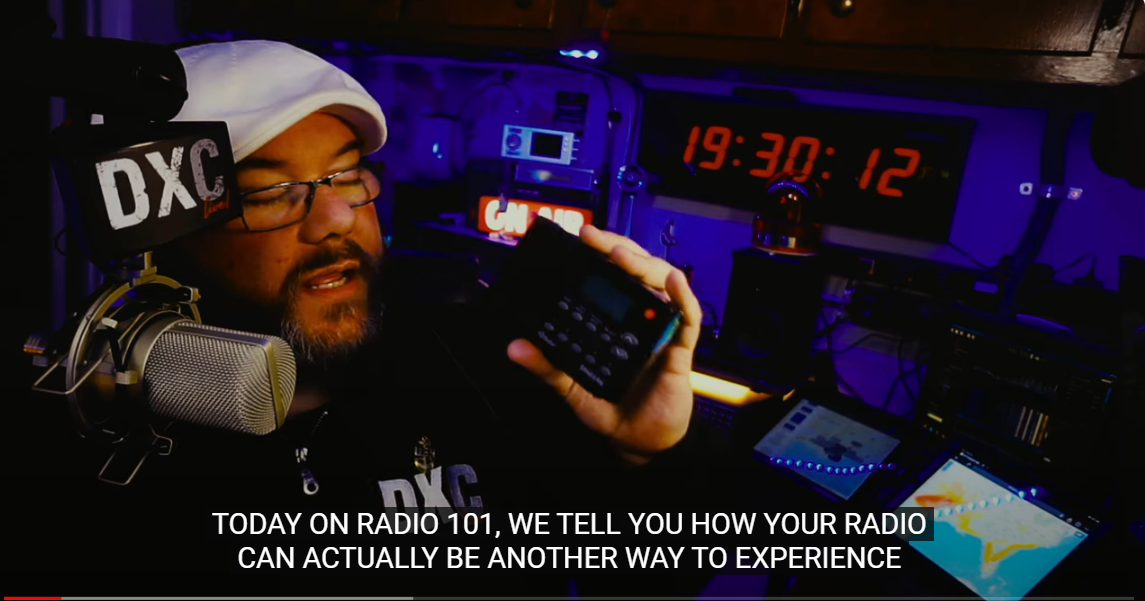
Radio 101 - How will the solar eclipse impact radio?


How will the solar eclipse impact radio?  Can you tune in totality on the AM or FM bands?  Video premieres at 6pm CDT today!  https://youtu.be/kwjl-FJ1wa0 #amdx #mwdx #SolarEclipse2024 #TheGreatAmericanEclipse  #radio #eclipse #solareclipse

Radio 101 - How will the solar eclipse impact radio?

https://www.youtube.com/watch?v=kwjl-FJ1wa0

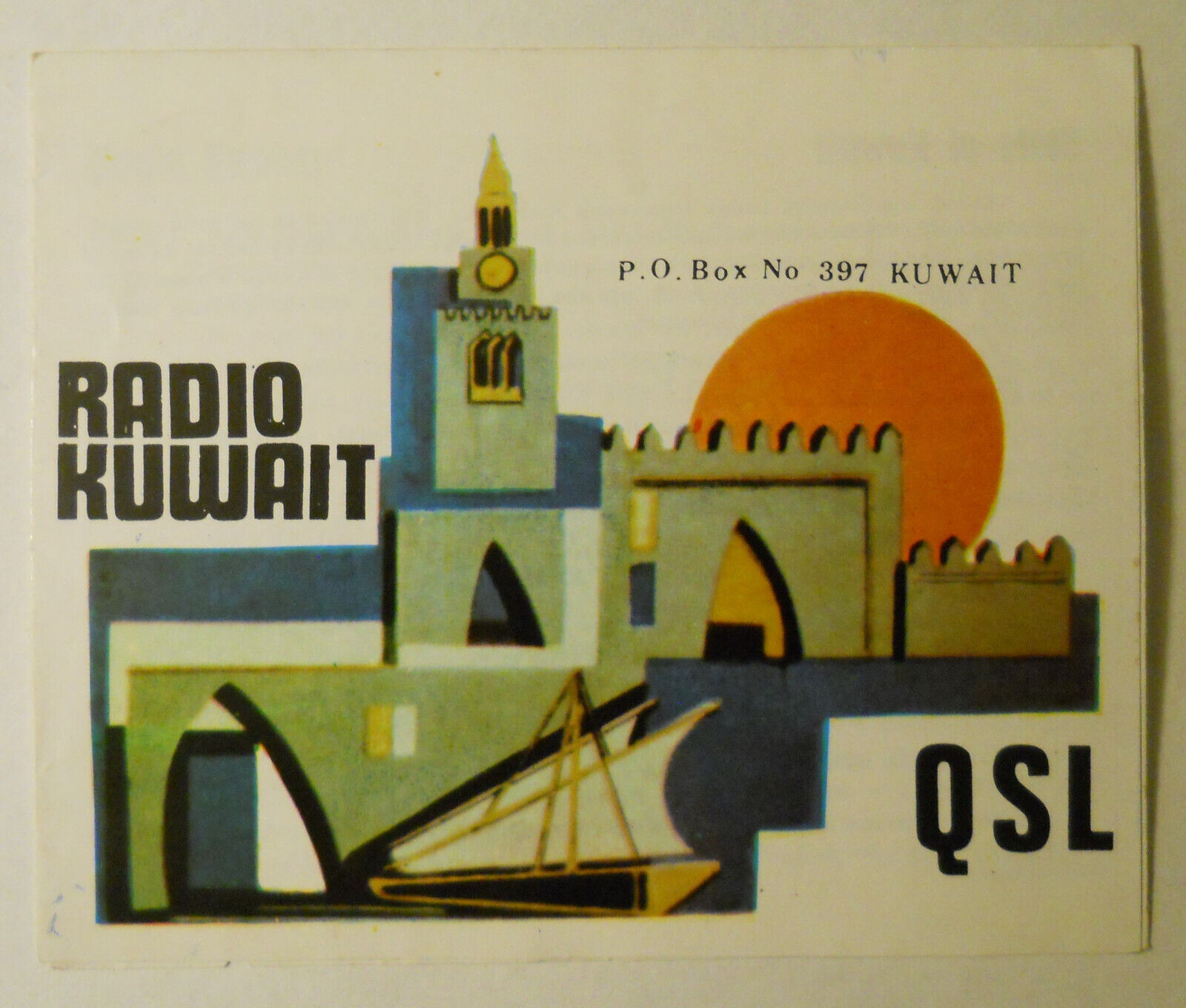
Radio Kuwait on shortwave


KUWAIT  
Radio Kuwait Kabd in Persian noted again Friday, April 5th on
 
08.10 UT scheduled, Holy Quran prayer at 08.29 UT, now at 08.42 UT. Persian song singer in action.
S=9+20dB signal in Kuwait Amateur Radio society amateurish KIWI SDR monitoring.
 
Also, S=9+20dB signal noted in the Doha Qatar Perseus unit on measured 7249.856 kHz approx.
 
Nothing of R Kuwat’s DRM signal could be traced on 15110 kHz today.
 (vy73 de wolfie  df5sx/wwdxc)

Radio Kuwait summer schedule

All times UTC

broadcast daily

Arabic
0300-0630  5960me
0500-0900  15515as
0945-1330  15110 DRM
1100-1330  9750af
1400-1600  11630af  (Qu'ran)

English
0500-0800  15530eu
0500-0800  11970 DRM
1800-2100  15540eu

Filipino
1000-1200  17760as

Persian
0800-1000  7250me

Urdu
1600-1800  15540as
(WRTH 2024)

Wind Storm Knocks Down 2 Radio Towers Serving West Virginia AM


90 mph winds blasted through the state's capital on Tuesday

BY ELLE KEHRES 
PUBLISHED: APRIL 4, 2024

A high wind storm with gusts reaching 90 mph hit West Virginia’s capital on April 2, bringing down two of four towers serving WCHS(AM) and its sister station WSWW(FM).

WCHS is the flagship station of the statewide West Virginia MetroNews network, broadcasting news, talk and sports programming. The AM is licensed to Charleston, W. Va., serving southern West Virginia and southwestern West Virginia. WCHS is owned by West Virginia Radio Corp. of Charleston (WVRC) Media and is the Primary Entry Point Emergency Alert System station for the state.

The AM broadcasts at 580 kHz with 5 kW by day and night. It is nondirectional in daytime from one tower, and directional at night from four towers. In addition to its main signal, WCHS is relayed by two FM translators broadcasting on 96.5 and 104.5, all of which were off the air on Tuesday.

Additinal story: 
Photo/Radio World

Shortwave Radiogram, Program 348


There are no transmissions of Shortwave Radiogram during the time of the solar eclipse on April 8. But that might be an interesting time to listen shortwave or even medium-wave radio. The theory is that frequencies usually open only at night might be usable during the brief period of darkness caused by the eclipse. 

We will not have a total eclipse here in the Washington DC area. But I will tune to WWV on 5 MHz from Colorado to see if that signal becomes audible, or improves, as the totality moves across North America.

Please be careful in your travels to an eclipse viewing area, and in viewing the eclipse when it happens.

A video of last week's Shortwave Radiogram (program 347) is provided by Scott in Ontario (Wednesday 1330 UTC). The audio archive is maintained by Mark in the UK. The analysis is provided by Roger in Germany.

Here is the lineup for Shortwave Radiogram, program 348, 4-10 April 2024, in MFSK modes as noted:

 1:42  MFSK32: Program preview
 2:49  MFSK32: NASA wants a new clock for the moon
 6:05  MFSK64: General Electric completes its demerger*
11:43  MFSK64: This week's images*
27:39  MFSK32: Closing announcements

Please send reception reports to radiogram@verizon.net


Encore classical music from Radio Tumbril


Regular Broadcast times of Encore By WRMI and Channel 292 are:
02:00 - 03:00 UTC Friday 5850 kHz WRMI to US
20:00 - 21:00 UTC Friday 15770 kHz WRMI to Europe
10:00 - 11:00 UTC Saturday 9670 kHz Channel 292 to Europe
01:00 - 02:00 UTC Sunday 5850 kHz WRMI to US and Canada
19:00 - 20:00 UTC Sunday 3955 kHz Channel 292 to Europe
02:00 - 03:00 UTC Monday 5950 kHz WRMI to the US and Canada
13:00 - 14:00 UTC Tuesday 15770 kHz WRMI to Europe, east coast of US and Iceland. (Sometimes RTTY on the lower sideband. Suggest notch out or use USB.)
 
Some Things to see on The Encore Website:
The Encore website is www.tumbril.co.uk where you will find:
Important information about funding of Encore - Radio Tumbril.
Up-to-date transmission times and frequencies.
The playlists for the most recent programs.
An email link.
Informal reception reports as well as those requesting eQSL cards are welcome.
 
WRMI and Channel 292 are very generous with their air-time but Encore still costs around 100 Dollars/Euros a month to broadcast.
If you can - please send a small contribution to help Encore keep going.
 
THE DONATION BUTTON AND 'BUY ME A COFFEE' BUTTON are on the homepage of the website - www.tumbril.co.uk - which folks can use if they would like to support Encore.
 
(Please don't be put off by the POWR security wall when using the PAYPAL button - it is a harmless requirement of WIX the website hosting service.)
 
THIS FORTNIGHT'S PROGRAMME - (First broadcast this FRIDAY 5th April) by WRMI at 0200 UTC on 5850, (and 2000 UTC on 15770) and then Channel 292 on SATURDAY (6th April) at 10:00 UTC on 9670 kHz):
Starts with part of the Czech Suite by Dvorák, some Vivaldi Lute music, and the Recorder Concerto from Ingvar Karkoff.
After that a field recording with music by Caroline Shaw, and some of the 3rd Symphony by Florence Price.
 
A very good site for online SDR receivers all over the world is: http://kiwisdr.com/public/  Click the 'Map' button in the top left of the screen.
 
Thank you for spreading the word about Encore - Classical Music on Shortwave on Radio Tumbril - and thank you for your support.
 
 
Brice Avery - Encore - Radio Tumbril - www.tumbril.co.uk 
GMØTLY

Thursday, April 04, 2024

Indiana County Will Supercharge Its TIS Station for the Eclipse


Morgan County has the FCC’s OK to turn up the juice on 1700 AM
BY NICK LANGAN 

An Indiana county that will experience totality during the April 8 solar eclipse is cranking up the power on its Travelers’ Information Station to help visitors.

Morgan County operates TIS station WQSI562 on 1700 AM from the county seat of Martinsville. The entire county lies within the path of totality. Martinsville will see more than four minutes of darkness, among the longest in the Hoosier State, and the county website is providing extensive information for the expected rush of visitors.

Additional TIS  story at: https://tinyurl.com/26vxbevu

Scandinavian Weekend Radio slated for monthly weekend broadcast


April 6, 2024

Local SW/MW                Program details/UTC
00-01 6170/11690 1602 21-22
01-02 6170/11690 1602 22-23
02-03 6170/11690 1602 SWR MusicMix 23-24
03-04 6170/11690 1602 SWR MusicMix 00-01
04-05 6170/11690 1602 SWR MusicMix 01-02
05-06 6170/11690 1602 SWR MusicMix 02-03
06-07 6170/11690 1602 SWR MusicMix 03-04
07-08 6170/11690 1602 Soul, Funk/R&B  04-05
08-09 6170/11690 1602 Fännityskuunnelma: 05-06
09-10 6170/11690 1602 Good Morning Virrat 06-07
10-11 6170/11690 1602 Huomenta-Good Morning Virrat 07-08
11-12 6170/11690 1602 Viihdettä/Ken Goodwin 08-09
12-13 6170/11720 1602 09-10
13-14 6170/11720 1602 10-11
14-15 6170/11720 1602 11-12
15-16 5980/11690 1602 Tales from Finland 12-13
16-17 5980/11690 1602 Wanhaa tanssimusiikkia 13-14
17-18 5980/11690 1602 Afernoon Mix/DJ GZT 14-15
18-19 5980/11690 1602 Afternoon Mix/DJ GZT 15-16
19-20 6170/11690 1602 Lauantai illan/DJ Onni 16-17
20-21 6170/11690 1602 Lauantai illan/DJ Onni 17-18
21-22 6170/11690 1602 18-19
22-23 6170/11690 1602 19-20
23-24 6170/11690 1602 20-21
Live stream 24h via Radioverkko.Finland 

Wednesday, April 03, 2024

Registration for the 2024 "Winter SWL Fest" is now available!


The Fest will be a combination of in-person and Zoom event and will be held at the Holiday Inn Express & Suites in Fort Washington, Pennsylvania - just north of Philadelphia.  We have a block of rooms set aside for the Fest at a special rate; this block will only be available until April 18th, 2024.  After that date, our special rate may no longer be available, and the hotel itself may sell out.

In-person registration is limited to 65 participants, so register early if you don't want to get shut out; there is no limit to the number of Zoom participants.

Start your process at the Winter SWL Fest website:


You can find out more information there, and access the group reservation link for the hotel and also register for either the in-person or the Zoom event.

We apologize if you're seeing this announcement in multiple places; we wanted to get the news out there as quickly as possible since we have tight deadlines this year.

We look forward to seeing you there!
(Richard Cuff and John Figliozzi, co-Festmeisters)

Texas Radio Shortwave resumes programming on April 7


Texas Radio Shortwave returns to Channel 292 in Rohrbach, Germany, monthly on the first Sunday, beginning April 7.  Programs will air at 1100 UTC on 6070 kHz and 1700 UTC on 3955 kHz.

With TRSW’s extensive program library, listeners will hear shows that weren’t aired in Europe.  April’s and May’s offerings feature music from Texas’s iconic dance halls.  The subject of June’s show hasn’t been determined.

The station welcomes reports from listeners using remote receivers like KiwiSDRs.

TRSW welcomes detailed reception reports emailed to texasradioshortwave@protonmail.com.  

(Terry N5RTC, Austin, Texas)


WRMI summer schedule


WRMI - Summer A24 schedule

Summer schedule of WRMI. Color grid with programming information is available at:

All times UTC
English/French/Portuguese/Spanish/Russian 

0000-0100  5010ca  5800la  5850na  5950na  7570na  9455na  15770eu
0100-0200  5050ca  5800la  5950na  7570na  7730na  7780ca  9455na  15770eu  
0200-0300  5010ca  5050la  5800eu  5950na  7570na  7780ca  9955sa  15770eu 
0300-0400  5010ca  5050la  5800la  5850na  5950na  7570na  9455na  9955sa  15770eu 
0400-0500  5010ca  5850na  5950na  7730na  7780ca  9455na  9955sa  15770eu   
0500-0600  5010ca  5850na  5950na  7730na  9395na  9455na  9955sa  15770eu  
0600-0700  5010ca  5850na  5950na  7730na  7780ca  9395na  9455na  9955sa  15770eu  
0700-0800  5010ca  5850na  5950na  7730na  7780ca  9395na  9455na  9955sa  15770eu 
0800-0900  5010ca  5950na  7730na  7780ca  9395na  9455na  9955sa  15770eu 
0900-1000  5010ca  5850na  5950na  7730na  7780ca  9395na  9955sa  15770eu 
1000-1100  5010ca  5950na  7730na  7780ca  9395na  9455na  9955sa  15770eu 
1100-1200  5010ca  5850na  5950na  7730na  7780ca  9395na  9455na  
1200-1300  5010ca  5950la  7730na  7780ca  9455na  9395na  15770eu 
1300-1400  5010ca  5850na  5950na  5990na  7730na  7780ca  9395na  9455na  
1400-1500  5010ca  5850na  5900na  7730na  7780na  9395na  9455na  9955sa  15770la  17790la  
1500-1600  5990na  7730na  9395na  9455na  9955sa  15770la  17790la 
1600-1700  5990na  7730na  9395na  9455na  17790la  
1700-1800  5990na  7730na  9395na  9455na  15770la  17790la   
1800-1900  5990na  7730na  9395na  9455na  15770la  17790la
1900-2000  5990na  7730na  9395na  9455na  15770la  17790la
2000-2100  9395na  9455na  17790la
2100-2200  5990na  7730na  9455na
2200-2300  5850na  5990na  7730na  9455na  15770la
2300-0000  5850na  5990na  7570na  7730na  9455na  15770la

Target Areas:
ca  Central America
eu  Europe
la  Latin America
na  North America
sa  South America

WRMI website: http://www.wrmi.net/

FCC continues its clampdown on pirate radio


More N.Y. State Property Owners Get the Pirate Letter

FCC agents traced signals in Poughkeepsie and Mount Vernon

BY RW STAFF
PUBLISHED: APRIL 1, 2024

The FCC Enforcement Bureau’s New York office has sent the “pirate letter” to two property owners in Mount Vernon, an inner suburb of New York City, and another in Poughkeepsie.

In both cases the letters advised the property owners that unlicensed FM broadcast signals had been found emanating from their properties and that they faced potential financial penalties of up to $2.39 million.

In the first case, the FCC said it received a complaint of illegal broadcasts on 104.5 MHz and that in May of last year, it traced them to a property on South 3rd Avenue in Mount Vernon, which is just north of the Bronx. The letter was sent to Jeromio B. Edwards, owner of the property.

In the second case, the FCC got a complaint about broadcasts on 87.9 MHz in Poughkeepsie. In September its agents traced them to a property on Albert Road owned by Keiwan F. Morrison and Shadae S. Bailey.
(Radio World)

FCC Finds Collecting Pirate Radio Fines a Challenge
Unclear if collection of fines under the PIRATE Act will be easier

Monday, April 01, 2024

Bible Voice Broadcasting summer schedule


BVB is a service of High Adventure Gospel Communication Ministries in Canada, in cooperation with Bible Voice Broadcasting in the UK. Programs are produced by various religious organizations or individuals, each with its own brand.


The summer schedule will broadcast as the following:

Bible Voice Broadcasting summer A24 schedule

Effective: 31 March - 26 October 2024

All times UTC, broadcast days, and transmitter sites as indicated

Amaharic (100 kW Nauen, Germany)
1700-1730  tw  15310as

Arabic (250 kW Nauen, Germany)
0500-0515  f  13730me
0600-0615  daily  11655af

Arabic (100 kW Sofia, Bulgaria)
1545-1600  daily  11600me 
1710-1730  mw  9490me
1730-1745 daily  9490me
1945-2000  daily  5900me

Arabic (250 kW Sofia, Bulgaria)
1930-1945  daily  5900me
1945-2000  daily  9400af

Bahasa (100 kW Tashkent, Uzbekistan)
1230-1245  Sun  17670pa

Dari (250 kW Tashkent, Uzbekistan)
1430-1500  sth  17650as

English (100 kW Nauen, Germany)
1800-1815  f  9810me
1800-1830  h  9810me
1830-1900  Sat/Sun  9810me
1900-1930  Sat/Sun  9810me
1915-1930  Sun  9635me
1930-2000  Sun  9810me
2000-2015  Sun  9810me

English (250 kW Tashkent, Uzbekistan)
1200-1230  Sat  17670as
1300-1315  f  11590as
1300-1330  mtw  11590as
1400-1430  Sat  17650as (1st Saturday each month)
1430-1500  daily  17650as

Farsi (100 kW Nauen, Germany)
1830-1900 sthf  11855as
Korean
1300-1330  Sat/Sun  11590as
1315-1330  daily  11590as

Oromo (100 kW Nauen, Germany)
1600-1630  Sun  15310af
1600-1630  mt  15310as

Nuer (100 kW Uzbekistan)
1430-1500  daily  15300as

Russian  (100 kW Nauen, Germany)
1800-1830  Sat  7540eu  9720eu  

Somalia (100 kW Nauen, Germany)
1630-1700  daily  15310as

Tigringa (100 kW Nauen, Germany)
1600-1630  hf  15310as
1700-1730  daily  15310as
(BVB) 

Target Areas: 
af  Africa
as  Asia
eu  Europe
me  Middle East


Pop Shop Radio on Shortwave Gold station


Beginning March 31, Pop Shop Radio will be heard at 1900 UTC on Shortwave Gold in Europe on 3975 and 6160 kHz. 


This in addition to our other transmissions on Channel 292, which with the time change are moving to 1600 UT Wed and 2100 UT Sat on 3955 and 9670 kHz, WRMI at 9PM ET US time Sunday on 5950.
(Tony Pavick/Pop Shop Radio)

HamSCI Presents the Solar Eclipse QSO Party on April 8, 2024


Join with thousands of your fellow amateurs as part of the largest crowd-sourced event for ham radio scientific exploration ever!  The SEQP is part of The Festivals of Eclipse Ionospheric Science and is for learning more about how the ionosphere works. Use any mode, any band for all or part of the day!  Participation can be from everywhere – you need not be near the path of the eclipse to contribute valuable data by participating.

Are you a contester? For details on the SEQP contest and rules go to www.hamsci.org/contest-info.  Don’t forget to send in your log!
For the Gladstone Signal Spotting Challenge using CW, WSPR and FST4W modes go to www.hamsci.org/contest-info.
If you’re an SWL or AM DX’er, there is The Medium Wave Recording Event for you as well!  Go to www.hamsci.org/mw-recordings/.
Or just get on the air and help provide the data to better understand the ionosphere.

Save the date – Monday, 8 April 2024

Get on the air! 1400-2400 UTC

Do it for science!! Any band/any mode (except the WARC bands)

HamSCI serves as a means for fostering collaboration between professional researchers and amateur radio operators. It assists in developing and maintaining standards and agreements between all people and organizations involved. Its goals are to advance scientific research and understanding through amateur radio activities and encourage the development of new technologies to support this research.

For more information about HamSCI, please visit the HamSCI website (www.hamsci.org) . For more information about the Festivals of Eclipse Ionospheric Science educational opportunities for the amateur community and the public please visit our information pages
at  https://hamsci.org/eclipse
(SWL Post)

Shortwave Radiogram, Program 347 to April 3

 
Hello friends

If you were tuned in last week to the Wednesday "red eye" show at 0800 UTC, you would have noticed the signal on 5850 kHz was absent. At first I suspected the solar activity that has affected shortwave reception lately. But tuning around the 49 meter band, I heard other stations with robust signals. So it must have been a transmitter problem.

Jeff White at WRMI later informed me it was "bad hose clamps" and the system "was  hemorrhaging water." We listeners sometimes forget about the plumbing aspect of shortwave transmission, necessary for cooling. 

Let's hope the 5850 transmitter is high and dry this coming Wednesday. And if you can't be awake at 0800 UTC, you can leave your radio and Fldigi on all night and look at the results in the morning. I also use recording software such as Audacity, in case an RSID or image trigger is missed.

On 31 March, most clocks in Europe move forward one hour for Summer Time. There will be no changes to the Shortwave Radiogram schedule by UTC, but transmission times will move forward one hour by listeners' local time.

A video of last week's Shortwave Radiogram (program 346) is provided by Scott in Ontario (Wednesday 1330 UTC). The audio archive is maintained by Mark in the UK. An analysis is provided by Roger in Germany.

Here is the lineup for Shortwave Radiogram, program 347, 28 March-3 April 2024, in MFSK modes as noted:

 1:49  MFSK32: Program preview
 2:58  MFSK32: Device transmits electricity through window glass*
 8:52  MFSK64: NASA rocket will study ionosphere during eclipse
13:13  MFSK64: This week's images*
28:31  MFSK32: Closing announcements

Please send reception reports to radiogram@verizon.net
Twitter: @SWRadiogram or https://twitter.com/swradiogram 
(visit during the weekend to see listeners’ results)