Thursday, December 14, 2023

Encore classical music schedules and information from Radio Tumbril


Regular Broadcast times of Encore By WRMI and Channel 292 are:

02:00 - 03:00 UTC Friday 5850 kHz WRMI to US
20:00 - 21:00 UTC Friday 15770 kHz WRMI to Europe
11:00 - 12:00 UTC Saturday 9670 kHz Channel 292 to Europe
01:00 - 02:00 UTC Sunday 5850 kHz WRMI to US and Canada
18:00 - 19:00 UTC Sunday 3955 kHz Channel 292 to Europe
03:00 - 04:00 UTC Monday 5950 kHz WRMI to the US and Canada
13:00 - 14:00 UTC Tuesday 15770 kHz WRMI to Europe, east coast of US and Iceland. (Sometimes RTTY on the lower sideband. Suggest notch out or use USB.)
  
Some Things to see on The Encore Website:
The Encore website is www.tumbril.co.uk where you will find:
Important information about funding of Encore - Radio Tumbril.
Up to date transmission times and frequencies.
The playlists for the most recent programmes.
An email link.
 
Informal reception reports as well as those requesting eQSL cards are welcome.
 
ENCORE IS A ONE-MAN OPERATION -  PLEASE MAKE A PAYPAL DONATION OR 'BUY ME A COFFEE' AND HELP KEEP ENCORE ON THE AIR - Go to - www.tumbril.co.uk
 
WRMI and Channel 292 are very generous with their air-time but Encore still costs around 200 Dollars/Euros a month to broadcast.
If you can - please send a small contribution to help Encore keep going.
 
THE DONATION BUTTON AND 'BUY ME A COFFEE' BUTTON are on the homepage of the website - www.tumbril.co.uk - which folks can use if they would like to support Encore.
 
(Please don't be put off by the POWR security wall when using the PAYPAL button - it is a harmless requirement of WIX the website hosting service.)
 
THIS FORTNIGHT" S PROGRAMME - (First broadcast this FRIDAY (15th Dec) by WRMI at 0200 UTC on 5850, (and 2000 UTC on 15770) and then Channel 292 on SATURDAY (16thnd Dec) at 11:00 UTC on 9670 kHz):
Starts with the overture from The Barber of Seville by Rossini. After that part of a cello sonata by Martinü and a piano piece from contemporary composer Caroline Shaw.
A mass for five voices by Byrd, Part of a Haydn symphony- No. 84 in E-Flat Major - and a Bach partita are next.
The programme ends with the third movement from the Octet in C Major by Romanian composer Enescu.
 
A very good site for online SDR receivers all over the world is: http://kiwisdr.com/public/  Click the 'Map' button in the top left of the screen.
 
Thank you for spreading the word about Encore - Classical Music on Shortwave on Radio Tumbril - and thank you for your support.
 
 Brice Avery - Encore - Radio Tumbril - www.tumbril.co.uk 
GMØTLY

Music Programs on Shortwave


Version 3.0 of my "Music Programmes on Shortwave" PDF file for the current B-23 broadcast season is now available to download from this permanent link:

Wednesday, December 13, 2023

American Apex Stations - Part 1 & 2

 Special thanks to Ray Robinson for sharing the Wavescan script with our readers

Part 1
Jeff: The era of High Fidelity radio stations in the United States was an experimental era that lasted for approximately ten years and it was the forerunner for the now widely accepted FM system.  This High Fidelity experimental era was made up of two specific time periods, and two widely different broadcasting bands. Let's go back to the beginning.  Here’s Ray Robinson.

Ray: Thanks, Jeff.  Back in the early 1930’s, reception of radio broadcasting stations in the regular medium wave band, stretching from 540-1500 kHz as it did in those days, was subject to the problems of static, and interference caused by long distance coverage at night.  In an attempt to correct these problems and to produce a better quality radio signal on the local scene, some radio stations began to experiment with a high fidelity system, which included a wider bandwidth, the usage of higher frequencies, and the installation of a very high antenna system.  In this way, it was hoped there would be less atmospheric and man-made static, and the signal would not be affected so much by the variables associated with day time and night time coverage.

The two bands that were in use were the top end of the medium wave band stretching from 1510 to 1600 kHz, and high frequency channels usually in the 9 metre and then the 7 metre ultra-shortwave bands, or what we would today recognize as part of VHF Band I.  The two time periods were from 1931-1937 before commercially made receivers were available for this Apex band, and then 1937-1942 when commercially made radio receivers incorporating the high frequency Apex band became available.

The very first station to install a transmitter in the high frequency Apex band was the CBS station, W2XDV, in New York City, which was inaugurated on February 6, 1932.  This station emitted just 50 watts and was on the air experimentally and spasmodically with a relay from the medium wave station WABC, now identified as WCBS.  The transmitter was installed in the CBS headquarters building in Madison Avenue, New York City.

The very first station to commence a regular broadcasting service in the high frequency Apex band was W8XH in Buffalo, New York, with a relay from the well-known medium wave station WBEN.  This was in the year 1934.  On November 3 in the following year, 1935, the aforementioned W2XDV-WABC introduced a regular broadcasting service on the Apex channel 31,600 kHz.  In the following year again, 1936, station W9XAZ in Milwaukee, Wisconsin was the first Apex station to originate its own specific programming in this High Fidelity broadcast band.
In 1937, radio receivers which included the high frequency Apex band began to appear on the American market.  One of the most notable of these receivers was manufactured by McMurdo Silver, and they issued innovative advertising to this effect.

At this stage, the FCC allocated a total of 5 MHz bandwidth for Apex broadcasting, and this section of the radio spectrum ran from approximately 41 to 44 MHz.  The station lists of this era show that 22 Apex stations were on the air.

In early 1939, the FCC issued a dozen additional licenses for Apex stations, though around this time they advised radio broadcasting stations in the United States to consider the implementation of the alternative FM system, which was far superior to the Apex High Fidelity system.

On June 15, 1940, the FCC issued licenses for three more Apex stations, the last licenses that were ever issued for radio broadcasting in the Apex high frequency band. The last station to leave the Apex band and convert to the new standard FM band is believed to be station WBOE in Cleveland, Ohio, and this event occurred in February 1941.

At the height of its popularity in late 1938 and early 1939, there were somewhere around fifty or sixty radio stations nationwide on the air in the Apex High Fidelity high frequency bands.  During the ten year period in which Apex broadcasting was in vogue, there was a total of a little more than one hundred different stations on the air at some time during this era.

Many of these stations were heard at a great distance, and radio magazines in Australia and New Zealand show that at least thirty of these stations were heard "down under."  These stations also issued QSL cards, and Dr. Adrian Peterson’s Heritage Collection contains at least a dozen.
However, at the same time as High Fidelity broadcasting was taking place in the high frequency ultra-shortwave bands, a similar attempt at quality radio transmission was taking place at the top end of the medium wave band, running from 1510 to 1600 kHz.  Stations were allocated a wider bandwidth to accommodate higher audio frequencies, and this experimental era began in 1934, just two years subsequent to the launching of experimental High Fidelity broadcasting in the ultra-shortwave bands.  The first four stations on the air in this section of the spectrum were:
Call kHz City State
W1XBS 1530 Waterbury CT
W9XBY 1530 Kansas City MO
W6XAI 1550 Bakersfield CA
W2XR 1550 Long Island City NY

However, the total number of broadcasting stations in this segment of the electronic spectrum was quite small, maybe just a dozen or so.  These stations also issued many QSL cards to listeners.  In fact one station, W9XBY in Kansas City, Missouri, numbered their QSL cards, and we have seen one card with a serial number as high as 4027.

Now, at the same time as High Fidelity broadcasting was being developed during the 1930’s in the twin areas of the electronic spectrum, at the end of the medium wave band and in the Apex ultra-shortwave bands, so also was experimental broadcasting using the FM, Frequency Modulation system.  At this stage, the FCC recommended the usage of FM for high quality radio broadcasting.

Thus, in 1940 and 1941, both of the earlier systems were abandoned; High Fidelity in the upper end of the medium wave band and Apex in the ultra-shortwaves. However, if you look at the radio dial of receivers manufactured in the late 1930’s, you may still find a radio receiver that tuned one of the Apex bands, a symbol of a bygone era.


Apex Radio Stations Worldwide - Part 2

Jeff: Last week in Wavescan, we presented the story of experimental radio broadcasting on the part of Apex radio stations in the United States.  This week, we continue the story of Apex radio broadcasting stations in other countries around the world, and also take a look at other later efforts to improve the technical quality of AM radio.  Here’s Ray Robinson.

Ray: Thanks, Jeff.  The purpose of the experimental Apex broadcasts in the 1930’s was to determine the effectiveness of transmissions on a very high frequency from a very high antenna, hence the name Apex.  It was considered that these two factors combined, high frequency and high antenna, would reduce the effect of static caused by man-made electrical interference and by thunderstorms, as compared to in the standard medium wave band.

Even though the United States played the most prominent part in experimental broadcasting in the Apex band, this experimental era actually began in Australia, not North America.  Sometime during the year 1931,perhaps as early as May 1931, the AWA radio organization installed a low-power transmitter in Sydney on a frequency somewhere in the 7 metre band (in what is today VHF Band I).  The programming was a relay of the Sunday broadcasts from their shortwave station, VK2ME, located at Pennant Hills, an outer suburb of Sydney, New South Wales, though no specific callsign was allocated to this 7 metre transmitter.

It had long been thought that these experimental AWA broadcasts in Australia on 7 metres were in the FM mode, but a closer investigation demonstrates that instead, they were in the AM analogue mode, using a very high frequency, equivalent to the American Apex transmissions.  The original series of test broadcasts, using only the Pennant Hills callsign VK2ME, lasted possibly a couple of years, but because no commercially-made receivers incorporating the Apex band were available, the tests were abandoned.

However, five years later, when Apex broadcasting was catching on in the United States, AWA re-commenced similar tests with an antenna located on top of a downtown department store, using a transmitter under its own licensed callsign, VK2MA.  Programming was again a relay from shortwave VK2ME, and at times from medium wave stations in the Sydney area.  The last broadcast from "Apex" VK2MA was on Monday morning, August 28, 1939.

This station was heard at times in the United States and QSL cards were issued.

During 1932, when stations in the USA were just beginning to experiment with Apex transmissions, station listings of the era suggest that four other countries were engaged in experimental broadcasting on very high frequencies – Canada, England, Germany and Russia.

The Canadian station was located at Bowmanville, Ontario, and used the callsign VE9GW.  This station began life as a commercial facility, used for both radio broadcasting and communication purposes.  When it was broadcasting radio programming, it relayed medium wave CKGW.  VE9GW was subsequently taken over by the Canadian Radio Commission and re-designated with the callsign CRCX.
Anyway, the high frequency registered for use by shortwave VE9GW was 24380 kHz, in the 12 metre band.

In England, the Marconi shortwave transmitter G5SW located at Chelmsford, 30 miles north east of London, was licensed for experimental broadcasts on a channel in the 11 metre band.  In those days, it was not realized that the 11 metre band could be effective for international broadcasting during years with high sunspot counts, but rather it was considered to be useful for high fidelity ground wave broadcasting in the station's primary coverage area.  Little is known about the results of these test broadcasts from station G5SW in England.

Other stations that were listed as on the air during the year 1932 were located in Berlin, Germany, and Moscow, Russia.  The schedule for the German station was for a short period of time on Tuesdays and Thursdays in the 7 metre band; and the Russian station, in the even higher 5 metre band under the callsign RW61, was simply listed as "broadcast".

During the following year, 1933, two more stations came on the air in this high fidelity mode in these high frequency bands.  Indonesia, as it is now known, was listed with station PK4PA with experimental transmissions on 5 metres; and Italy was listed with station IAF with experimental transmissions on 10 metres.
The final batch of countries, five in total, in which experimental transmissions were carried out in the very high frequency bands were located in South America, Europe and Asia, all listed in 1935.  In South America, Argentina was listed with stations LQK and LQL at Monte Grande on 7 metres, and Chile with station CEC in the 13 metre band.  In Europe, France was listed with station TYZ in the 8 metre band, and Madrid, Spain was listed with station EDS in the 13 metre band.  In Asia, station HSJ in Bangkok, Thailand was shown as on the air in the 12 metre band.

Interestingly, during the time when station VK2MA was on the air in Sydney, Australia in the 7 metre band, a local radio monitor made the observation that no other stations anywhere in the world were on the air on these very high frequencies, apart from Australia and the United States. While it is true that low-power transmissions on these very high frequency bands would not have propagated very far, the station listings during the 1930’s show quite clearly that there were indeed numerous stations on the air in what was known in America as the Apex band.

Nevertheless, the Apex concept, using a high frequency transmitted through a high antenna, was abandoned when FM broadcasting took over in the early and then later 1940’s.  Interestingly, FM stations these days also transmit at the high frequency end of the shortwave bands, and one of the major parameters in measuring the effective coverage area for an FM station is by the height of the antenna system.

Of course, that wasn’t the end of the hunt for high fidelity stereo broadcasting on AM.  In 1956, LM Radio in Mozambique experimented with a series of stereo tests on shortwave. These were the first such tests in southern Africa, and probably the first on shortwave, anywhere in the world.  Two frequencies were used in the 60 meter band, one for the left channel and the other for the right.  This meant that the audio was given twice as much bandwidth as would normally be the case, but a listener had to have two separate receivers to achieve the stereo effect.  Since not many households had more than one radio in those days when transistor radios were only just coming on the market, these tests were not pursued.

Then twenty years later in 1977, another attempt was made at facilitating high quality stereo transmissions on medium wave when the C-QUAM system was developed by Motorola.  This is a system that allows both a conventional Amplitude Modulated audio source and a stereo Phase Modulated audio source to be multiplexed into the same signal, without causing interference and maintaining full compatibility with mono receivers.  In 1983, Sony brought out their SRF-A100 AM Stereo/FM Stereo personal radio, as well as the SRF-A1 AM Stereo/FM Stereo Walkman.  But by that time, there were four different AM stereo systems competing with each other – Harris, Kahn/Hazeltine, Magnavox and Motorola C-QUAM, and the lack of standardization is what deterred most radio manufacturers from implementing AM stereo.  Even though the Canadian Federal Department of Communications mandated in 1988 that any station wishing to broadcast in AM Stereo must do so using the Motorola C-QUAM system, the FCC in the United States refused to make a ruling, preferring instead to take a ‘laissez faire’ approach and let the market decide the winner.

Although that approach really spelled the death of AM stereo, there are still about 45 AM broadcast band stations transmitting C-QUAM stereo signals in the USA and Canada today.  There is also one station that uses the standard in Rome, Italy – Broadcastitalia which since 2014 has been using a Motorola C-QUAM exciter with a Nautel transmitter on 1485 kHz.

In the mid-1990’s, DAB was developed as a new digital radio standard, but it was not compatible with existing analog AM radio, and therefore it required its own frequency range which varied by country, but was typically around 175-240 MHz in VHF Band III.  Although the DAB standard has been improved technically since it was first launched, it has not been widely adopted, and a number of countries which did start using DAB have since turned it off, including Canada, Finland, Hong Kong, Portugal, Ireland, Hungary, Romania and Sweden.

In North America in the late 1990’s, a competing digital system was developed by iBiquity - the proprietary HD Radio system.  This WAS selected by the FCC as the digital audio broadcasting method for the United States in 2002.  It is an IBOC, or In Band On Channel, system, which can be used in both the standard medium wave and FM bands with stations able to transmit hybrid analog and digital signals on the same frequency.  While HD Radio has been widely adopted by FM stations in North America, on the AM band there are now very few stations still using it, due to problems with skywave propagation at night.  Those AM stations that do still use it generally have to turn it off at dusk and back on at dawn.  There are currently only two stations in the whole of the United States using digital-only HD on AM – WWFD in Frederick, Maryland and WFAS in White Plains, New York.

And then finally, there came DRM – Digital Radio Mondiale.  That was developed in the early 2000’s, with the very first DRM broadcast taking place in June 2003.  This system can be used on medium wave, shortwave and FM frequencies, and has been most successfully adopted in India, where availability on car radios is now standard.  But globally, because of the lack of consumer radios that can receive DRM broadcasts, this system has still only been adopted by a handful of international broadcasters, and on a part-time basis at that.  There is no doubt that DRM is the superior system technically for digital radio, but with the growing popularity of podcasting and webstreaming, it is now probably too late for any of the current competing systems for digital broadcast radio – DAB, HD or DRM – to establish themselves as a global standard.

Tuesday, December 12, 2023

Don Moore releases new book Tales of a Vagabond DXer


Tales of a Vagabond DXer by Don Moore is a new book focusing on Latin American radio and DXing. In this 300-page volume, Don blends together stories from his radio station visits, his travels, and his experiences as a DXer. Don has been an active member of the DX listening hobby for over five decades. His interest in Latin American radio inspired him to serve in the Peace Corps in Honduras in the early 1980s.

Since then, he has traveled extensively in Latin America and visited more than 150 radio stations in the region. He has written dozens of articles on Latin American DXing for radio hobby publications including Monitoring Times, the NASWA Journal, Review of International Broadcasting, and Passport to World Band Radio. Today, Don is a regular contributor to the SWLing Post Blog.

Tales of a Vagabond DXer is available from Amazon.com in trade-sized paperback for $12.99 or Kindle eBook for $4.99, or for equivalent prices in local currencies on non-US Amazon stores.
(SWLing Post)

Monday, December 11, 2023

Birth of radio marked on Isle of Wight


Isle of Wight Observer

8 December 2023

Tuesday (December 5) was the 126th anniversary of radio pioneer Guglielmo Marconi’s first transmissions from the world’s first permanent wireless station at Alum Bay, Isle of Wight.

The occasion was marked by the presentation of a plaque, confirming the site has been awarded the status of a World Origin Site, which identifies a place or building where something truly ground-breaking was invented, discovered or first used.

General manager of the Needles Landmark Attraction, Marino Zanti, was honored to receive the recognition, supported by local historian, Tim Wander, in front of the world-famous Marconi Monument. The monument marks the location of the pioneering work at the end of the 19th Century, which led to radio and all telecommunications as we know it today.

Marconi (1874-1937) traveled to Britain in 1896 and conducted a series of pioneering trials across the country, convincing him that the equipment he invented could become the basis of a viable ‘wire-less’ communication system. The first permanent wireless station in the world was built at the Royal Needles Hotel, on a cliff-top high above Alum Bay, in November 1897.

Marconi experimented day and night, working with the Mayflower and Solent tugs, sailing between Bournemouth, Swanage, and Alum Bay, on improving transmission reliability. By 1900 the station had served its purpose and was dismantled and moved to Niton. With long-distance communications by that time a reality, the Isle of Wight was recognized as its birthplace.

Tim Wander, said: “What Marconi achieved changed the world forever and made it a far smaller place to live in.

“Easily passed by so many without a second glance, please make the time to visit and take a moment to read the plaques and wonder at the story they tell, because amazing things happened at this place.”

Christmas edition of Hans Knot International now available in PDF


It is once again the annual Christmas edition of the Hans Knot International; radio report has been released. First of all with information about the new large internet site in which all the sites formerly run by Martin van der Ven and Hans Knot have come together. 


Sadly, a number of former radio makers have also passed away in recent months and we reflect on a memory of Tom Edwards from the Rolling Stones. Pham City Festival from 1970 is also in the spotlight as is the Manor Park Project. 

There's a review of the new OEM DVD on Ronan O'Rahilly, Theovan Halsema reminisces about a trip to Israel in 1988 and, of course, it's also about the Voice of Peache. There is an update on new series of photos included in our Flickr Archive, with the number of photos exceeding 30,000. 

Finally, I myself have written a long article on early commercial makers De La Mar. Enjoy reading and you can download from the following site:

(BDXC/Mike Terry)

Weekly Propagation Forecast Bulletins

 Product: Weekly Highlights and Forecasts
:Issued: 2023 Dec 11 0118 UTC
# Prepared by the US Dept. of Commerce, NOAA, Space Weather Prediction Center
# Product description and SWPC web contact www.swpc.noaa.gov/content/subscription-services
#
#                Weekly Highlights and Forecasts
#
Highlights of Solar and Geomagnetic Activity 04 - 10 December 2023

Solar activity ranged from low to high levels this period with Regions 3511 (S22, L=216, class/area=Fsi/180 on 09 Dec) and 3513 (N19, L=220, class/area=Eai/220 on 10 Dec) being the primary sources of flare activity. The largest event observed was an M5.4/1b flare (R2/Moderate) at 08/2307 UTC from Region 3511. In addition to the M5.5 event, Region 3511 produced four R1 (Minor) events over 08-10 Dec. Region 3513 produced five R1 (Minor) events over 05-06 Dec. Despite the flare activity and a number of filament eruptions observed throughout the week, no Earth-directed CMEs were detected. 

No proton events were observed at geosynchronous orbit.

The greater than 2 MeV electron flux at geosynchronous orbit reached high levels 08-09 Dec, with normal to moderate levels observed on 04-07 and 10 Dec. 

Geomagnetic field activity was at quiet to unsettled levels over 04-06 Dec due to a combination of weak CME (from 01 Dec) influences on 04-05 Dec and negative polarity CH HSS influences on 05-06 Dec. Quiet conditions and a background solar wind environment prevailed over 07-10 Dec. 

Forecast of Solar and Geomagnetic Activity 11 December - 06 January 2024

Solar activity is likely to reach moderate to high levels on 11-12 Dec due to the flare potential of Regions 3511 and 3513. Solar activity is expected to be low with a chance for R1-R2 (Minor-Moderate) flare events throughout the remainder of the
outlook period. 

No proton events are expected at geosynchronous orbit.

The greater than 2 MeV electron flux at geosynchronous orbit is expected to be at normal to moderate levels throughout the period. 

Geomagnetic field activity is expected to be quiet and unsettled over 11-14 Dec due to positive polarity CH HSS influences. Quiet to unsettled levels are expected over 15-20 Dec, with active conditions likely on 18 Dec and G1 (Minor) storms likely on 19 Dec, due to positive polarity CH HSS influences. G1 (Minor) storms are likely on 22 Dec, with active conditions likely on 23 Dec, due to positive polarity CH HSS effects. Quiet to unsettled levels are expected on 30 Dec-02 Jan, with active conditions likely on 01 Jan, due to negative polarity CH HSS influences. Quiet levels and background solar wind conditions are expected to prevail throughout the remainder of the period. 

Product: 27-day Space Weather Outlook Table 27DO.txt
:Issued: 2023 Dec 11 0118 UTC
# Prepared by the US Dept. of Commerce, NOAA, Space Weather Prediction Center
# Product description and SWPC web contact www.swpc.noaa.gov/content/subscription-services
#
#      27-day Space Weather Outlook Table
#                Issued 2023-12-11
#
#   UTC      Radio Flux   Planetary   Largest
#  Date       10.7 cm      A Index    Kp Index
2023 Dec 11     125          12          3
2023 Dec 12     120          12          3
2023 Dec 13     118          12          3
2023 Dec 14     120           8          3
2023 Dec 15     122           5          2
2023 Dec 16     122          12          3
2023 Dec 17     124          12          3
2023 Dec 18     125          15          4
2023 Dec 19     130          25          5
2023 Dec 20     135           8          3
2023 Dec 21     135           5          2
2023 Dec 22     135          20          5
2023 Dec 23     140          10          4
2023 Dec 24     140           5          2
2023 Dec 25     150           5          2
2023 Dec 26     150           5          2
2023 Dec 27     155           5          2
2023 Dec 28     150           5          2
2023 Dec 29     145           5          2
2023 Dec 30     140           8          3
2023 Dec 31     140           8          3
2024 Jan 01     140          10          4
2024 Jan 02     140           8          3
2024 Jan 03     135           5          2
2024 Jan 04     135           5          2
2024 Jan 05     135           5          2
2024 Jan 06     130           5          2
(NOAA)

Friday, December 08, 2023

Update on KNLS via Madagascar


ALASKA   [Madagascar site]  New KNLS frequencies. Broadcasting in Russian

(from November 21):
All times UTC
09:00-10:00 UTC  9705 
16:00-17:00 UTC  9585 
17:00-18:00 UTC  9605 
The other two programs and the broadcast from Madagascar are unchanged.
(Dmitry Mezin, Kazan-RUS, Radio reception - Telegram, via
RUSdx #1265 via wwdxc BC-DX TopNews Nov 26)
(Top News 1563)

WRMI winter frequency schedule


Winter schedule of WRMI. Color grid programming information is available at: 

All times UTC
English/French/Spanish/Various

0000-0100 5010ca  5800ca  5950na  7570na  7730na  9455na  15770eu  
0100-0200 5800sa  5950na  7570na  7730na  7780ca  9455na  15770eu
0200-0300 5010ca  5050sa  5800sa  5950na  7570na  7730na  7780ca  9455na  15770eu  
0300-0400 5010ca  5050sa  5800sa  5850na  5950na  7570na  9455na  9955sa  15770wu     
0400-0500 5010ca  5050sa  5850na  5950na  7570na  7730na  7780ca  9455na  9955sa   15770eu
0500-0600 5010ca  5850na  7570na  7730na  9395na  9455na  9955sa  15770eu
0600-0700 5010ca  5850na  7570na  7730na  7780ca  9395na  9455na  9955sa  15770eu
0700-0800 5010ca  5850na  7570na  7730na  7780ca  9395na  9455na  9955sa 15770eu
0800-0900 5010ca  7570na  7730na 7780ca  9455na 9955sa  9395na  15770eu
0900-1000 5010ca  5850na  7570na  7730na  7780ca  9455na  9955sa  15770eu
1000-1100 5010ca  7570na  7730na  7780ca  9395na  9455na  9955sa  15770eu
1100-1200 5010ca  5850na  7570na  7780ca  9395na  9455na
1200-1300 5010ca  7570na  7730na  7780ca  9395na  9455na  15770eu
1300-1400 5010ca  5850na  7570na  7780ca  9395na  9455na
1400-1500 5010ca  5850na  7570na  7730sa  7780ca  9455na  9395na  15770a
1500-1600 5010ca  5850na  7570na  7730sa  7780ca  9395na  9455na  9955sa  17790sa
1600-1700 5010ca  5850na  7570na  7730sa  7780ca  9395na  9455na  9955sa  17790sa
1700-1800 7730sa  9395na  9455na  15770eu  17790sa
1800-1900 7730sa  9395na  9455na  15770eu  17790sa
1900-2000 7730sa  9395na  9455na  15770eu  17790sa
2000-2100 9395na  9455na  17790sa
2100-2200 7730sa  9395na  9455na
2200-2300 5800sa  5850na  5950na  7730sa  9455na  15770eu
2300-0000 5800sa  5850na  5950na  7570na  7730sa  9455na  15770eu

Target Areas:
ca Central America
eu Europe
na North America
sa South America

BBC overhauls American website amid broader overseas push


The BBC on Tuesday relaunched its North American website as a part broader push to grow its business and audiences in the U.S. and abroad, BBC Studios' CEO of global distribution Rebecca Glashow tells Axios.

Why it matters: The move comes as the storied public broadcaster faces increased pressure from U.K. regulators over public funding.

The country's prime minister on Sunday said a proposed £500 million cut to BBC's budget are "welcome."

Clausius Obrecht to air 08 December broadcast to Africa


A radio broadcast of music for all of Africa focusing on Ghana and Madagascar will be broadcast 08 December 2023 on 11970 kHz (250 kW) at 19.00-2000 UTC (19.00 in Ghana, 22.00 in Antananarivo, Madagascar, and 20.00 in Lagos, Nigeria). 


Thursday, December 07, 2023

Upcoming final 2023 broadcast for Radio Caroline North


The final Radio Caroline North broadcast of 2023 is between 9th-10th December, live from our radio ship Ross Revenge.

You'll hear some great music from the 60s to early 90s – plus a chance to win a Thornton & France Luxury Christmas hamper with wine and snacks, courtesy of Addo Addison from Royston, Herts.

Listen on 648 AM across England, The Netherlands, Belgium and beyond, on 1368 AM in the North/North-West courtesy of our friends at Manx Radio, worldwide online here via our Caroline North Player, on smart speakers and the Radio Caroline app.

We'd love to hear from you during the broadcast via memories@radiocaroline.co.uk and remember, it's the only email address that gets you straight through to our 'North' broadcasters.

(Mike Terry/BDXC)

Atlantic 2000 International to air December 9


Atlantic 2000 will be on the air this Saturday, 9th of December from 0900 to 1000 UTC (1000 to 1100 CET) on 6070 and 9670 kHz via Channel 292.


Streams will be available at the same time here: http://radioatlantic2000.free.fr


Before that, you can listen to our 24/7 web stream or our podcasts on our website.

Good listening! 

Visit our website and listen to Atlantic 2000: http://radioatlantic2000.free.fr   
(Manuel Méndez, Spain) 

Wednesday, December 06, 2023

Shortwave Radiogram, Program 332


Hello friends

If you have lately attempted to access Mark Hirst's comprehensive archive of Shortwave Radiogram audio, and have been frustrated by a bad link, that link is now fixed. Mark's archive is based on his reception in the UK. We thank Mark for this very useful service.

Auroras and solar activity may be an issue during this weekend. If an HF blackout prevents your reception of Shortwave Radiogram, go outside, and you might see the northern lights.

The autumn foliage in the northern hemisphere is mostly gone and no longer providing subjects for our images of the week. Holiday displays will often be seen in December. Then, beginning in January, it's just winter. Look for more indoor photos and summer scenes from the southern hemisphere. 

A video of last weekend's Shortwave Radiogram (program 331) is provided by Scott in Ontario (Friday 1300 UTC broadcast). The audio archive is maintained by Mark in the UK. The analysis is provided by Roger in Germany.

Here is the lineup for Shortwave Radiogram, program 332, 1-4 December 2023, in MFSK modes as noted:

 1:42  MFSK32: Program preview
 2:50  MFSK32: Container-based battery hub recharged by kite*
 8:12  MFSK64: Solar activity likely to peak next year
11:09  MFSK64: This week's images*
27:23  MFSK32: Closing announcements

Please send reception reports to radiogram@verizon.net
And visit http://swradiogram.net 
Twitter: @SWRadiogram or https://twitter.com/swradiogram 
(visit during the weekend to see listeners’ results)
Facebook group: https://www.facebook.com/groups/567099476753304
Shortwave Radiogram Gateway Wiki: https://wiki.radioreference.com/index.php/Shortwave_Radiogram_Gateway 
  
Other Shortwave broadcast programs that include digital text and images include The Mighty KBC, Pop Shop Radio and Radio North Europe International (RNEI). Links to these fine broadcasts, with schedules, are posted here.
 Thanks for your reception reports!

Kim

Kim Andrew Elliott, KD9XB
Producer and Presenter
Shortwave Radiogram
Reporting on international broadcasting at https://twitter.com/kaedotcom
  

NASWA Flashsheet selections


All times UTC
4500  CHINA P.R.  PBS Xinjiang, Urumqi-Changji, in listed Mongolian, 11.25.2023, 0009-0024.  very long talk by man above slow piano music, till 0016, other man brief announcement above slow music, again first man w/ long speech above slow piano music; better in Lsb sync to avoid strong qrm buzz stream, rapid no deep qsb,moderate qrn crackles, fair in lsb sync, otherwise poor; in // 6190 same site, almost good (Serra - Roma, Italy)

4765   TAJIKISTAN.  R. Tajikistan – Dushanbe, 1915.  Tajik to CAs, interviews. 1922 Central Asian folk song on indigenous instruments. Weak signal into Mount Evelyn and some deep fades at times, faded by 1940. Confirmed via the Vadodra, India Kiwi SDR. Nov 26. (Wagner - AUS)

4775  PERU.  Radio Tarma, Tarma, 2353-2356.  Talk in Spanish by two men.  Very weak, threshold level signal in heavy noise.  12/1/2023  (Evans - TN)

6110   ETHIOPIA.  R. Fana - Addis Ababa, 2025.  Amharic to EAf with a long interview program. Fair signal, Nov 27. (Wagner - AUS)

6175  BOTSWANA. VOA, Selebi Phikwe, in listed Shona, 12.01.2023, 0413-0431.  man w/ long speech, interspersed by other man brief talk (presumed interview), other man announcement, afro pop music break, same man talk and interviewing a man who made a long speech, then talk above brief slow pop piano music, continuing w/ talk program w/ some men and a woman chatting interspersed by some music breaks; better in usb/lsb sync, non stop rapid qsb, strong rustle qrn, poor/very poor/almost fair at times; // 7255 kHz (7254.997v kHz per utwente), via Pinheira,São Tomé e Principe; better in ssb sync, non stop rapid qsb w/ strong qrn rustle, almost fair (Shona is a Bantu language of the Shona people of Zimbabwe - <via Wikipedia>). (Serra - Roma, Italy)

6184.97  MEXICO.  XEPPM-OC Radio Educación-Cultura México Señal Internacional, (p),,Mexico City,,in Spanish, 11.17.2023, 0256-0314.  (6184.967 - .966 khz and vice versa per utwente), song, man brief talk, followed by woman long talk interspersed by same man at times (both unclear), playing a long lively song; better in lsb sync, non stop rapid qsb, strong qrn rustle, very poor/poor/no audio at times (Serra - Roma, Italy)

9664.99  BRAZIL.  Rádio Voz Missionária, Camboriú SC, in Portuguese, 11.22.2023, 0212-0237.  (9664.998 kHz per utwente), woman excited and rel. sermon, screaming at times, above slow piano music (ment Deus, madre de Deus) till 0221,music pause, man announcements and IDs (ment Rádio Voz Missionária, Missionária, Santa Catarina, America do Sul), then talk above slow music, brief chorus vocal chants, interspersed by woman and man talk, then another man brief sermon and then crowd repeating shouting some man's words, brief song, man brief talk, followed by woman sermon; better in Lsb sync, non stop rapid see-saw qsb, moderate qrn rustle, fair/almost good in Lsb sync. (Serra - Roma, Italy)


Radio Delta news update

 Here are the headlines for December 2nd and 3rd, 2023:

Starting today, Radio Delta is introducing a new programming schedule for the weekends. For more detailed information, please visit our website at www.radiodelta.am.

We are excited to announce the addition of three new or improved programs: “5 Decades of Music,” “Radio Delta Goes DX,” and “Finnish Request.” These programs promise to bring you the best of music from different eras, exciting DX news, and a selection of requests from our listeners in Finland.

As part of our programming update, each show will have new jingles or jingles that are currently being created. These will be added in the coming weeks to enhance your listening experience.

Get ready for some exciting segments in each program, such as “The Track and Its Story,” “Greetings from Emily,” or “A Radio Poem by Emily.” We will also keep you informed with the latest Radio Delta News and enchant you with captivating Radio Stories.

If you, as a listener, have any content or a radio experience you would like to share, please feel free to send it to us at info@radiodelta.am.

We have a treat for you this holiday season! Mark your calendars for our special Christmas broadcasts on December 23rd, 24th, 25th, and 26th. During these shows, we will look back on the past year and give away some fantastic Radio Delta Merchandise. The live drawing will be open to all our listeners who have supported us throughout the year.

CBC/Radio-Canada to cut 10 percent of the workforce, end some programming as it faces $125M budget shortfall


The public broadcaster says most cuts will take effect over the coming year 

Catheine Tunney
The Canadian Broadcasting Corporation/Radio-Canada announced Monday that it plans to cut about 10 per cent of its workforce and axe some programming to cope with a potential $125 million budget shortfall.

In a news release, the public broadcaster said it plans on cutting 600 union and non-union positions across the entire organization. The corporation said about 200 vacant positions will be eliminated on top of that.

CBC and Radio-Canada, the French-language arm, will each be cutting in the range of 250 jobs, while the rest of the cuts will come from the technology and infrastructure department and other corporate divisions, said spokesperson Leon Mar.

Additional story at: 

Tuesday, December 05, 2023

Radio Tamazuj announces English news segment


An announcer from clandestine station Radio Tamazuj, announced a "News in English" (10-minute segment) airs every Tuesday and Friday from 1500 UTC. Arabic resumed after the news segment. Heard on 21485 kHz from Issoudun, Frances relay site.

(BDXC) 

Weekly Propagation Forecast Bulletins

 Weekly Highlights and Forecasts
:Issued: 2023 Dec 04 0331 UTC
# Prepared by the US Dept. of Commerce, NOAA, Space Weather Prediction Center
# Product description and SWPC web contact www.swpc.noaa.gov/content/subscription-services
#                Weekly Highlights and Forecasts
#


Highlights of Solar and Geomagnetic Activity 27 November - 03 December 2023

Solar activity reached high levels on 28 Nov when Region 3500 (S20, L=307, class/area=Dkc/320 on 27 Nov) produced an M3.4 flare (R1/Minor) at 28/1932 UTC, followed by an M9.8 flare (R2/Moderate) at 28/1950 UTC; the largest event observed during the period. The asymmetric halo CME associated with the M9.8 flare, visible in LASCO/C2 coronagraph imagery at 28/2012 UTC, arrived at Earth on 01 Dec. Solar activity reached moderate levels on 01 Dec with M1 flares observed at 01/0439 UTC and 01/2120 UTC from Regions 3502 (N14, L=343, class/area=Cao/80 on 27 Nov) and 3500, respectively. Solar activity was at low levels with C-class flare activity observed over 27, 29-30 Nov, and 02-03 Dec. 

Solar activity was low on 27 Nov, however, three distinct CMEs associated with four prominent eruptions were analyzed to have partial Earth-directed components. The first 27 Nov CME, visible in LASCO/C2 imagery at 27/0624 UTC off the SSW, was associated with a filament eruption near S26W27 at 27/0531 UTC (in SUVI 304 imagery). The second CME, visible in C2 imagery at 27/2000 off the SE, was associated with a C3.8 flare at 27/1837 UTC from an unnumbered area of flux near N20E15. The third CME, visible in C2 imagery at 27/2336 off the NW, was believed to be associated with a C5.5 flare at 27/2340 UTC from Region 3503 (N15, L=284, class/area=Hrx/10 on 27 Nov) and a filament eruption that occurred at around the same time just northward of 3503. 

No proton events were observed at geosynchronous orbit.

The greater than 2 MeV electron flux at geosynchronous orbit was at normal to moderate levels throughout the period. 

Geomagnetic field activity was quiet under background solar wind conditions on 27 Nov through late 30 Nov. The solar wind environment became weakly enhanced at around 30/2330 UTC due to the arrival of CME(s) from 27 Nov. Active conditions were observed in the early hours of 01 Dec following CME arrival. An additional, stronger, solar wind enhancement was observed at 01/0853 UTC due to the arrival of a CME from 28 Nov. Periods of G1-G3 (Minor-Strong) geomagnetic storming were observed following CME arrival on 01 Dec, and active and G1 levels were observed in the early hours of 02 Dec as CME influences waned. Quiet and unsettled levels were observed on 03 Dec. 

Forecast of Solar and Geomagnetic Activity 04 December - 30 December 2023

Solar activity is expected to be low with a chance for M-class flare activity (R1-R2/Minor-Moderate) throughout the outlook period. 

No proton events are expected at geosynchronous orbit.

The greater than 2 MeV electron flux at geosynchronous orbit is expected to reach high levels on 05-09 Dec. Normal to moderate levels of flux are expected throughout the remainder of the period. 

Geomagnetic field activity is likely to reach G2 (Moderate) storm levels on 04 Dec, G1 (Minor) levels on 05 Dec, and active levels on 06 Dec, in response to negative polarity CH HSS influences. Active conditions are likely on 12 Dec due to positive polarity CH HSS influences. Periods of G1 storms are likely on 18-19 and 22 Dec, with active levels likely on 23 Dec, due to the influences of positive polarity CH HSSs. Quiet and quiet to unsettled levels are expected to persist throughout the remainder of the period. 


Product: 27-day Space Weather Outlook Table 27DO.txt
:Issued: 2023 Dec 04 0332 UTC
# Prepared by the US Dept. of Commerce, NOAA, Space Weather Prediction Center
# Product description and SWPC web contact www.swpc.noaa.gov/content/subscription-services
#
#      27-day Space Weather Outlook Table
#                Issued 2023-12-04
#
#   UTC      Radio Flux   Planetary   Largest
#  Date       10.7 cm      A Index    Kp Index
2023 Dec 04     136          33          6
2023 Dec 05     134          18          5
2023 Dec 06     130          12          4
2023 Dec 07     132           8          3
2023 Dec 08     132           5          2
2023 Dec 09     132           5          2
2023 Dec 10     130           5          2
2023 Dec 11     135           5          2
2023 Dec 12     140          10          4
2023 Dec 13     140           8          3
2023 Dec 14     140           5          2
2023 Dec 15     140           5          2
2023 Dec 16     140           5          2
2023 Dec 17     150           5          2
2023 Dec 18     160          15          5
2023 Dec 19     160          25          5
2023 Dec 20     160           8          3
2023 Dec 21     160           5          2
2023 Dec 22     160          20          5
2023 Dec 23     160          10          4
2023 Dec 24     160           5          2
2023 Dec 25     160           5          2
2023 Dec 26     160           5          2
2023 Dec 27     155           5          2
2023 Dec 28     150           5          2
2023 Dec 29     145           5          2
2023 Dec 30     140           5          2
(NOAA) 


Thursday, November 30, 2023

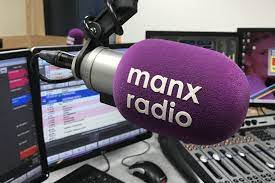
Manx Radio Turning Up the Wick 1970-1972


Following on from the post about Manx Radio's overnight closedown 6 months ago I bought second hand on the history of Manx Radio, A Nations Station by Derek Winterbottom published in 2014 for it's 40th anniversary. 223 pages and a balanced account  They'd been awarded a licence in July 1965 to broadcast with 2kw with a directional aerial. Chapter 3, Turning Up the Wick (1970-76) had some information I wasn't aware of, edited summary:


The station was barely profitable. When the Conservatives won the 1970 election they hoped to get permission to turn up the power and persuade Chris Chataway to nominate Manx Radio as the regional station for NW England. He refused as it would hit revenue for English commercial companies. Tynwald did vote to buy a more powerful transmitter. When the transmitter arrived in October 71 they planned to test it at its full power 10kw but it developed a fault. Post Office got to hear of this and warned them that transmitting at more than 2kw would be a breach of their licence. On January 20th 1972 without any announcement they transmitted at 10kw so were heard loud and clear in many parts of the UK. The BBC complained to the Home Office, Home Office complained to the Isle of Man Governor and on January 28th he told them to return to 2kw forthwith.

Their new strategy was to argue that if the UK refused to allow spillage from Manx Radio transmissions then they would complain about any interference from new commercial stations in Manchester and Liverpool. They requested a meeting with Chris Chataway which took place in March 1972. Just before the meeting Post Office technicians completed a survey and advised that they could achieve perfect coverage of the Isle of Man using low power relay stations. Chataway used this as his main argument at the meeting insisting that Manx Radio broadcasts should be restricted to the Isle of Man. He suggested as an alternative that the Isle of Man could join a new consortium which was applying for the Liverpool commercial licence. They put an advert in the Liverpool Daily Post on August 24 1972 saying they wished to apply for that licence and asking interested parties to contact them, clipping here.


There was a good response and links were established with Sir Max Entwhistle, former leader of the City Council, David Moores of Littlewoods, former Postmaster General Reginald Bevins and performers such as Ringo Starr, Cilla Black and Arthur Askey, They set up The Liverpool Broadcasting Company. Their hopes were dashed when the IBA concession was given to rival company Radio City.

IBA Technical Review 5 on Independent Local Radio Planning September 1974 states "By March 1972 there was substantial development of MF planning. A new factor was that because the Isle of Man commercial radio service was not permitted to provide coverage in England the IBA transmissions had to be restricted in a reciprocal manner." The Mb21 Transmission Gallery for the Piccadilly Radio MW transmitter site at Ashton Moss includes an article by E.T Ford on Directional MF arrays for IBA station  with detailed information on directional aerial. 

The Radio City MW transmitter site at Rainford near St. Helens was directional to the South West. Manx Radio 1368 was granted permission in 1980 to use a 10kw transmitter on 1368 a directional aerial with nulls of 7-9 db towards 110-140 degrees and 300-330 degrees, effective radiated power 20kw.
(Mike Barraclough/BDXC)