Welcome to Teak Publishing's Shortwave Central blog. This blog covers shortwave frequency updates, loggings, free radio, international mediumwave, DX tips, clandestine radio, and late-breaking radio news. Visit my YouTube and Twitter links. Content on Shortwave Central is copyright © 2006-2026 by Teak Publishing, which is solely responsible for the content. All rights reserved. Redistribution of these pages in any format without permission is strictly prohibited.
Tuesday, April 08, 2025
DRM Testing Schedule From China
Friday, October 25, 2024
KTWR Guam, Winter DRM schedule
Wednesday, July 10, 2024
Radio New Zealand's new DRM Shortwave Transmitter now operating
Monday, April 15, 2024
KTWR DRM schedule update
Thursday, August 18, 2022
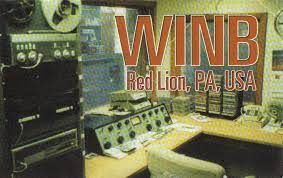
WINB summer DRM schedule update
Friday, July 01, 2022
DRM Remote Learning Trial
Monday, December 06, 2021
KTWR updates their DRM schedule
From KTWR Guam:
We ran into some unexpected
interference with our 11860kHz DRM broadcast at 1358-1428UTC. As of this
Friday, 10 December, we will move it to 11890kHz. We hope this will greatly
improve the SNR in central India.
73 and have a great Christmas.
Wednesday, December 01, 2021
KTWR plans for special holiday DRM broadcasts
Wednesday, August 18, 2021
KTWR slated for DRM testing
KTWR is going to air some short test DRM broadcasts in the Tamil language each Sunday for the next six weeks. This will be just before our regular DRM block for India. It will be on 15200kHz at 1014-1026 UTC at 90kW.
Friday, December 18, 2020
KTWR slated for special Christmas broadcasts
Thursday, January 02, 2020
Frequency updates
All times UTC
New Zealand
Radio New Zealand Pacific Sun-Fri DRM:
1651-1750 on 5975 RAN 035 kW / 035 deg to Tonga/Samoa English unchanged
1751-1850 NF 11690*RAN 035 kW / 035 deg to Tonga/Samoa English, ex 9780
1851-1958 NF 13840*RAN 035 kW / 035 deg to Tonga/Samoa English, ex 11690
* both freqs are unregistered for this time slots
United Kingdom
BBC - cancelled transmissions
Effective: 01 Jan 2020
0100-0130 on 5845 TAC 100 kW / 141 deg to SoAs Hindi
0100-0130 on 5875 WOF 250 kW / 075 deg to SoAs Hindi
0100-0130 on 7430 WOF 300 kW / 082 deg to SoAs Hindi
0100-0130 on 11995 SNG 250 kW / 315 deg to SoAs Hindi
1500-1600 on 7410 DHA 250 kW / 045 deg to SoAs Urdu
1500-1600 on 9410 SNG 250 kW / 315 deg to SoAs Urdu
1500-1600 on 11995 SNG 250 kW / 320 deg to SoAs Urdu
Only one transmission of BBC in Hindi is on the air:
1400-1430 on 5875 TAC 100 kW / 141 deg to SoAs Hindi
1400-1430 on 9510 SNG 250 kW / 320 deg to SoAs Hindi
1400-1430 on 9540 SLA 250 kW / 075 deg to SoAs Hindi
1400-1430 on 11995 SNG 250 kW / 315 deg to SoAs Hindi
(DX Bulgaria 01 Jan 2020)
Tuesday, December 10, 2019
Are Digital Radio Coverage Maps Useful?
Ruxandra Obreja
The author is chairman of Digital Radio Mondiale.
A picture is worth a thousand words and a digital radio coverage map might be worth a million dollars or more in business.
We might stress in documents and presentations the undeniable benefits of digital radio: Better audio, extra data, more choice, emergency warning capability and less spectrum. For DRM specifically the list also includes, the capacity to offer improved audio and data for large or local coverage very often using the existing basic infrastructure.
Additional story at: ps://tinyurl.com/wawyzyo
(Radio World)
Friday, November 29, 2019
DRM Conference Front and Center at Russia
RW STAFF 27 Nov 2019
Russian broadcasters took a deep dive into the realm of digital radio with a conference, “Digital Broadcasting Standard DRM: Results of the Experimental Zone and Development Prospects in the Russian Federation,” held in St. Petersburg on Nov. 18.
The conference highlighted the initial results of the DRM for FM trial in St. Petersburg and featured a number of speakers who provided insights into where digital radio stands in Russia.
According to reports, trial results thus far show that for “stable reception of a digital signal, significantly lower field strengths and signal-to-noise ratios are required, which allows achieving parity of service areas with FM broadcasting, ceteris paribus, an order of magnitude lower transmitter power.”
Additional story at: https://tinyurl.com/w6mosnf
Thursday, August 22, 2019
Special DRM transmissions during HFCC Argentina Conference - update
![]() |
| Buenos Aires montage (wikipedia) |
Special DRM shortwave transmissions are being planned for the special meeting of HFCC to be held in Buenos Aires, Argentina, 26-29 August. They will be broadcast by Encompass Digital Media Services
1600-1700 UTC on 21630 kHz from Ascension Island Bearing 245°. On each of the four days the content will be supplied by a different broadcaster:
• Monday – BBC World Service English
• Tuesday – KBS (Korean) in Spanish
• Wednesday – NHK (Japan) in Spanish
• Thursday – TWR (Trans World Radio) in Spanish (St. John DRM North America Group)
(NASWA)
Vatican
Special DRM shortwave transmissions of Vatican Radio for HFCC Argentina conference.
1830-1900 on 17535 250 kW / 230 deg to SoAm Spanish, August 26-29.
(DX Bulgaria)
Sunday, August 18, 2019
Global Radio Guide - Summer 2019, available at Amazon
There's still plenty of time for quality DXing, before the next edition. Find some quality time for radio, and the summer edition of Global Radio Guide 2019. Thanks to all that have purchased this edition. Stay tuned...the winter edition will be top-notch!!!
Press Release:
Teak Publishing Company
P.O. Box 297
Brasstown NC 28902
For Immediate Release 1 May 2019
Global Radio Guide (Summer 2019) Now Available at Amazon
Older ham radio operators and radio listeners might remember a time when shortwave radio stations broadcast a nearly constant drumbeat of political propaganda during the Cold War years. Shortwave radio stations such as Radio Moscow, the Voice of America, and the BBC, to name a few, played an important ideological role during that confrontation between the East and West.
Once again, Global Radio broadcasters have moved to the front lines as the world’s major superpowers have entered a new Cold War. As tensions heat up in the world’s hotspots such as eastern Europe, the Middle East, and East Asia, you can follow international events on the radio, but you need an accurate and comprehensive radio guide to hear the action.
Teak Publishing is pleased to release that important radio guide – the Global Radio Guide (GRG), the 12th edition (Summer 2019) electronic book, by Amazon bestselling author Gayle Van Horn W4GVH. The book was formerly known as the International Shortwave Broadcast Guide.
This Amazon 'electronic' book is your ticket to travel the Global Radio bands. The heart of this publication is a 24-hour station/frequency guide with Summer 2019 schedules for selected medium wave and all known longwave/shortwave radio stations. This unique resource is the only radio publication that list by-hour schedules that includes all language services, frequencies and world target areas for over 500 stations. There are listings of DX radio programs and Internet websites addresses for many of the stations in the book. There are also entries for standard time and frequency stations, and even a few other intriguing shortwave radio stations.
New in this 12th edition of the GRG is a Summer 2019 Propagation Forecast, by international radio propagation expert, Tomas Hood NW7US. Tomas looks at summer radio conditions and the new solar cycle.
Gayle and Larry Van Horn have joined forces again penning a very timely article on monitoring the Venezuelan political crisis including broadcast and military frequencies.
Other authors in this edition include The Spectrum Monitor’s Fred Waterer, with a feature on summer radio programming and Richard Fisher with an easy homebrew antenna support construction article.
Spectrum Monitor e-zine columnist/feature writer Larry Van Horn has a special feature on Who’s Who in the Shortwave Radio Spectrum that will assist the reader in monitoring Global Radio activity outside the broadcast radio spectrum. This article also includes an updated Teak Publishing HF 1000+ non-broadcast frequency list.
The 12th edition of the Global Radio Guide e-Book (electronic book only, no print edition available) is available worldwide from Amazon and their various international websites at
https://www.amazon.com/dp/B07R81NJHD/.
The price for this latest edition is US$8.49. Since this book is being released internationally, Amazon customers in the United Kingdom, Germany, France Spain, Italy, Japan, India, Canada, Brazil, Mexico and Australia can order this e-Book from Amazon websites directly servicing these countries. Customers in all other countries can use the regular Amazon.com website to purchase this e-Book.
You can read any Kindle e-Book with Amazon’s ‘free’ reading apps on literally any electronic media platform. You do not have to own a Kindle reader from Amazon to read this e-book. There are Kindle apps available for iOS, Android, Mac and PC platforms. You can find additional details on these apps by checking out this link to the Amazon website at www.amazon.com/gp/feature.html?ie=UTF8&docId=1000493771.
Additional information on this and other Teak Publishing radio hobby books can be found on the company sponsored Internet blogs – The Shortwave Central (http://mtshortwave.blogspot.com/),
The Military Monitoring Post (http://mt-milcom.blogspot.com/), and The Btown Monitor Post (http://monitor-post.blogspot.com/). You can learn more about the author by going to her author page on Amazon at http://www.amazon.com/GayleVan-Horn/e/B0084MVQCM/.
Global Radio listeners are routinely entertained with unique perspectives to events, music, culture, history, and news from other countries that you won’t see or hear on your local or national broadcast channels. Global Radio broadcasts are not restricted by country borders or oceans and can travel thousands of miles, reaching millions of listeners worldwide, now in over 300 different languages and dialects.
isteners can hear shortwave broadcast stations from China, Cuba, Egypt, France, Germany, India, Iran, Japan, New Zealand, North/South Korea, Saudi Arabia, Taiwan, Turkey, United Kingdom, United States, Vietnam, and many other counties. If you have a shortwave radio receiver or Internet connection, and this unique radio resource, you will know when and where to listen to your favorite radio broadcast station.
The Global Radio Guide will have wide appeal to amateur radio operators, shortwave radio hobbyists, news agencies, news buffs, educators, foreign language students, expatriates, or anyone else interested in listening to a global view of world news and major events as they happen.
Wednesday, July 24, 2019
KTWR begins DRM in English on August 5
Hi Everyone,
KTWR is about to start regular DRM broadcasts to four different areas. We will do one day per week to each of four areas starting 05 August 2019. We will be working with the content server parameters to come up with the best compromise settings for each area. Each week will have different settings. We would really appreciate your feedback for as many weeks as possible. Your assistance will ultimately help give your fellow listeners the best possible reception in the long run. For now, all programs will be in English.
The schedule will be as follows, starting the week of 5 August through the end of the A19 broadcast season:
All times UTC - 05 August, 2019
Monday 11580kHz 1215-1245 target to South Asia 90kW
Tuesday 11995kHz 1026-1056 target to ANZ/South Pacific 50kW
Wednesday 11995kHz 1026-1056 target to China 50kW
Thursday 11995kHz 1026-1056 target to Japan/Korea 50kW
We hope you enjoy the broadcasts.
(Mike Sabin/KTWR, NH2MS
Friday, January 25, 2019
Shortwave Radiogram schedules, January 26-27
Hello friends,
Last weekend was our second week of Shortwave Radiogram transmitted by DRM (Digital Radio Mondiale) from WINB in Pennsylvania. I was able to receive almost the entire half hour, and all of the images, using an SDR in Italy.
DRM has its own methods for transmitting text and images, with which I have little experience. On Shortwave Radiogram, we are just placing MFSK on the audio that is decoded from a DRM signal -- the same audio used for voice and music broadcasts on WINB. The disadvantage of this is that DRM is fussier than analog broadcasting, and the decode may fail in conditions where an analog shortwave broadcast is usable, albeit with some noise and fading accompanying the audio.
Is there any advantage to using DRM to transmit the digital text modes? Possibly. The DRM C and D modes are designed to survive difficult (typical!) shortwave conditions. But they produce telephone grade audio. Telephone grade audio should be no problem for the digital modes.There would be sufficient bandwidth to transmit modes that produce text at 3000 words per minute, or more. And with the background noise eliminated by DRM, MFSK and SSTV images should be perfectly crisp. I look forward to the possibility of future experiments with DRM.
Videos of last weekend's Shortwave Radiogram (program 83) are provided by Scott in Ontario (Friday 2030 UTC), Ralf in Germany (Saturday 1400-1430 UTC), and 2010 DFS in Japan (Sunday 0800 UTC). The audio archive is maintained by Mark in the UK. Analysis is prepared by Roger in Germany,
This weekend, our usual MFSK32 and MFSK64, with nine images. The show will include the sixth and final image in the Tecsun Radios Australia decoding competition.
Here is the lineup for Shortwave Radiogram, program 84, 26-27 January 2019, in MFSK modes as noted:
1:48 MFSK32: Program preview
2:56 RFE/RL's resumes its Bulgarian service*
(includes an excerpt of Bulgarian text)
8:21 MFSK64: Europe considers lunar mining mission*
12:12 This week's images*
23:12 Tecsun Radios Australia decoding competition*
27:52 MFSK32: Closing announcements
* with image(s)
Please send reception reports to radiogram@verizon.net
And visit http://swradiogram.net
Twitter: @SWRadiogram or https://twitter.com/swradiogram (visit during the weekend to see listeners' results)
Facebook group: https://www.facebook.com/groups/567099476753304
Shortwave Radiogram Transmission Schedule
UTC Day UTC Time Frequency Transmitter
Saturday 0330-0400 UTC 9265 kHz WINB Pennsylvania
Saturday 1400-1430 UTC 9400 kHz Space Line Bulgaria
Saturday 1830-1900 UTC 9265 kHz WINB Pennsylvania
Sunday 0800-0830 UTC 5850 kHz 7730 kHz WRMI Florida
Sunday 2330-2400 UTC 7780 kHz WRMI Florida
Slow Scan Radio transmits SSTV images and text modes Saturdays at 1300-1330 UTC on 6070 kHz and 7440 kHz via Channel 292 in Germany -- according to the latest schedule information I have. The website is http://www.slowscanradio.com. Reception reports to x@xdv.me.
The Mighty KBC transmits to Europe Saturdays at 1300-1400 UTC on 11600 kHz from Bulgaria, with the minute of MFSK at about 1330 UTC (if you are outside of Europe, listen via websdr.ewi.utwente.nl:8901/ ). And to North America Sundays at 0000-0200 UTC (Saturday 7-9 pm EST) on 5960 kHz, via Germany. The minute of MFSK is at about 0130 UTC. Reports to Eric: themightykbc@gmail.com . See also http://www.kbcradio.eu/ and https://www.facebook.com/TheMightyKbc/.
Thanks for your reception reports!
(Kim Andrew Elliott, KD9XB/Producer and Presenter)
Shortwave Radiogram
Reporting on international broadcasting at https://twitter.com/kaedotcom
Wednesday, January 02, 2019
Tecsun Radio Australia Q-3061 DRM Shortwave Radio
Wednesday, September 05, 2018
Radio New Zealand using DRM to Feed Pacific Relay Stations
DRM signals decoded, transmitted locally on FM to individual listeners
By James Careless
RANGITAIKI, New Zealand — Radio New Zealand Pacific, the official international arm of Radio New Zealand, is using Digital Radio Mondiale digital radio transmission/reception equipment to feed studio-quality audio to some of its 20 relay stations in the Pacific Ocean region. The others use satellite feeds or web downloads.
Aitutaki 88FM in the Cook Islands (population 2,000) is a Radio New Zealand Pacific relay stations that receives content via DRM. It does so using a Wellbrook 330 foldable loop antenna on the station’s roof. Credit: Radio New Zealand Pacific.
The locations being served by DRM include the Cook Islands, where RNZ Pacific’s programs are rebroadcast locally in analog mode by Aitutaki 88FM, the islands’ only broadcaster. RNZ Pacific also serves Tonga, Samoa, and the Solomon Islands using DRM; among others. Previously, RNZ Pacific had fed its relays using analog AM shortwave radio, with that transmission mode’s limited audio range and interference issues.
Additional story at Radio World: https://www.radioworld.com/news-and-business/rnz-pacific-using-drm-to-feed-pacific-relay-stations
Saturday, August 04, 2018
All India Radio revives DRM broadcast from Bangalore

All India Radio, Bangalore has re-commissioned its 500 KW DRM shortwave transmitter.
DRM transmissions were off air from 27 February, 2017 due to main tube failure.
All times UTC
Effective: 03 August 2018
Tentative schedule in DRM mode:
European Beam at 320 deg
1820-2230 (2350-0400 IST) - 7550 kHz
Japanese beam at 90 deg
2245-0045 (0415-0615 IST) - 7550 kHz
Please monitor and post your reception reports to: rajendiran45@yahoo.com and spectrum-manager@air.org.in
On air with two programs ( GOS - IV & Vividh Bharati) during check at 1840 UTC, 04 August, 2018.
(Alokesh Gupta)