Friday, November 25, 2011

A New Radio County: South Sudan


Around our world and over the years, there are some united countries that have divided into two separated countries; and in other parts of the world, some separated countries have joined together to form one country. For example in Europe, West Germany & East Germany joined together to form Germany. Over in Southern Asia, British India divided into two countries, India & Pakistan; and then subsequently Pakistan went through another division, to form the two countries we now know as Pakistan & Bangladesh.
In Africa, just a few weeks ago, in a significant political event, a quite large country was divided into two countries. It was just last month, on Saturday July 9, that Sudan was officially divided and two countries were formed; and we know them, at least at present, as Sudan & South Sudan.
In our program today, we take a long and interesting preliminary look at the combined Sudan, its backgrounds and its radio development. Then two weeks from now, we plan to specifically investigate the radio scene as it applies in particular to the new country of South Sudan.
The country of combined Sudan was described in the encyclopedia as the largest country in Africa, nearly 1300 miles long and nearly 1200 miles wide, with a water border on the Red Sea at 400 miles. The northern areas of Sudan are mainly sandy desert, the middle of the country is made up of grass covered plains, and the south merges into dense tropical jungle.
The two major river systems, the White Nile from mainly Lake Victoria & the Blue Nile from Ethiopia, meet in Sudan, and the twin cites Omdurman & Khartoum have grown up at the junction of these two waterways. Omdurman is the national capital, and Khartoum is the largest city in the country. The total population is estimated at around 30 million.
The earliest settlements in Sudan go way back into ancient history, and there has always been play and interplay between Sudan & Egypt. During some historic eras, Egypt dominated the Sudan, and there were times when the Sudan dominated Egypt. One ancient historian tells the story of the Biblical patriarch Moses leading a military campaign into the southern areas of Egypt and into the Sudan in a successful endeavor to oust the invaders from the south, though this event is not referred to in the Bible itself.
However, there are many Biblical references to the territory we know as the Sudan and to its people, usually designated as Kush. It should be mentioned that Queen Candace, referred to in the New Testament, was the ruling monarch at Meroe, the ruins of which are still visible today north of the twin cities. Interestingly, there are 223 pyramids in the Sudan, twice as many as in Egypt, though the Sudanese pyramids are smaller and built at a steeper angle.
The Belgians were the first Europeans to lay a territorial claim in the Sudan, and that was in the year 1896, in an area of the south. Three years later, the British took over; and in 1956, Sudan gained its independence as the 54th country in Africa.
Strangely, there is a small territory that neither country claims, the territory on the border between Sudan and South Sudan, known as Bir Tawil. This territory is 60 miles wide and 20 miles deep, and it is mainly a sandy wasteland, though in ancient times it was the grazing lands for the Ababda tribal people. The name Bir Tawil means Deep Water Well, though the location of this obscure water well is now lost.
Early wireless documents tell us that the first wireless stations in Sudan were installed after World War 1 in Khartoum & Omdurman, and in several regional locations. Callsigns for these stations were irregular at first, though as time went by, it seems that these calls were regularized into the SU series, such as SUD at Port Sudan & SUL at Khartoum.
The Russian Encyclopedia informs us that radio broadcasting in the Sudan began in the year 1940, and this is confirmed by the Sudanradio website. According to this source, the first radio broadcasts were made from the Post Office building in Omdurman in May 1940. Programming was on the air for half an hour daily, and it would be presumed that this was on a mediumwave channel.
Two years later, the radio station was transferred to the Midwife School in West Omdurman, where the station was inaugurated on 524 metres (573 kHz) and the programming was extended to one hour daily. It is evident that this was still a low power operation.
Monitoring reports in New Zealand, Australia & the United States indicate that a shortwave service was added in late 1945, and this operated on 9220 & 13320 kHz. At the time, all three outlets were rated at quite low power; mediumwave 572.5 kHz at 750 watts, shortwave 9 MHz at 450 watts, and 13320 khz at 250 watts. Reliable coverage at these power levels would extend not much further than the twin cities areas.
In 1949, it was reported that Radio Omdurman in the Sudan was now using a 6 kW shortwave transmitter; and soon after that, three Marconi transmitters from England were installed; two at 20 kW for use on shortwave, and one at 50 kW on mediumwave. All of these transmitter improvements are listed as taking place at the transmitter base identified as Soba, which is located at a small village named Al Aitahab some distance up river, south of the twin cities. Two Philips shortwave transmitters at 120 kW from Holland were installed in the late 1960s, and one Harris at 100 kW from the United States was installed around 1990.
In the meantime, regional radio was developed in several different localities around Sudan, and of importance was a massive mediumwave transmitter rated at 1½ megawatt located at Sennar, out from the twin cities areas. Anything up to a dozen mediumwave sites in Sudan have been indicated, but it is not certain that stations were installed at all of these listed sites.
However, even in spite of this apparent wide coverage on shortwave and mediumwave throughout Sudan, there have been many occasions when transmitters were reported by monitors as being off air. On some occasions, throughout all of these years, the usage of shortwave, though listed as in use for program coverage, was also actually off the air.
So, what can you hear on air from the Sudan these days? If you live somewhere around the Mediterranean, you might hear Reiba with 600 kW on 1296 kHz; or Khartoum with 100 kW on 963 kHz; or possibly Omdurman with 50 kW on 765 kHz. Then, on shortwave, their programming is listed on 7200 kHz with 100 kW all throughout the broadcast day.
The Sudan has never been listed as a reliable verifier of reception reports, though throughout all these years, a few QSL letters have been issued.

Part 2
The world’s newest independent country is just 10 weeks old. It is a landlocked country in Africa surrounded by six other countries, and it has no coastal seaport of its own. This new country, currently known as South Sudan, was formed from the southern part of what was previously the combined country of Sudan.
The northern and central areas of South Sudan are described as wide sweeping plains, merging into tropical jungle regions in the south, with also a very large area of marshy swamplands. This new nation is divided into ten states within three major historic regions.
The total population of the new South Sudan is estimated at around 8 million, with somewhere around 200 different ethnic groups, with just about as many different languages. Their capital city is Juba, which is also their largest city, and it was previously the capital for the state of Equatoria under the combined Sudan.
It is stated that African tribes were already established in south Sudan a thousand years ago. European intervention began in 1896 when a colonial expedition from Belgium claimed regency in a major part of the area. However, three years later, England & Egypt claimed control of the total Sudan, and six years later again, Belgium transferred control of her claimed area to the British. Then it was just 10 weeks ago, on Saturday July 9, that the southern areas of Sudan were split off from the parent country, and this area became its own independent entity as South Sudan.
The earliest wireless stations in south Sudan were established a little before, and after, the international events of World War 1. At least four spark wireless stations were installed during that era: station WWR at Wau, AKR at Adobo, MLR at Malakal, and MGR at Mongalla.
The first radio broadcasting service for south Sudan began in 1961 as a series of radio programs that were on the air from the head office of the national broadcasting service in the northern twin cities, Khartoum/Omdurman. This daily series of radio programming was on the air for an hour each afternoon under the title in English, Program Service for South Sudan. At the time, no broadcasting stations were on the air in the territory now known as South Sudan, and in order to give coverage in the south, existing mediumwave and shortwave stations in the north carried this program relay.
The first known radio broadcasting station in the south was inaugurated as a regional station in January 1964, in the Equatoria state capital, Juba. According to the noted Arthur Cushen in New Zealand, this was a shortwave station with a rated output of just 1 kW, and it was assigned the 49 metre band channel 6075 kHz.
Radio Juba shortwave was on the air for just one hour daily in Arabic & English, with extra programming on Fridays & Sundays. Apparently this station survived for only a very short life span, as there are no known logging reports on the part of international radio monitors, and the station was never listed in the World Radio TV Handbook.
Beginning in the year 1990, the first of a total of at least nine irregular and clandestine radio broadcasting stations took to the air. Some of these stations were located in the area of south Sudan
or nearby, whereas others were on the air as a relay service from some of the large and well known international shortwave stations. Several of these clandestine stations are known to have changed their names on more than one occasion.
The first irregular station for south Sudan was inaugurated in the year 1990 and it was on the air under the identification announcement, the Voice of Sudan. This station pretended to be located at Kassala in south Sudan, whereas in reality it was actually located at Asmara in nearby Eritrea. This was a 10 kW transmitter heard on several channels over a period of time, usually in the 6 & 7 MHz region of the shortwave spectrum. This station has been off the air now for half a dozen years.
Interestingly, two different shortwave stations were located near Narus, in the Nuba Mountains of south Sudan. These two stations were located at less than one mile apart.
Station Radio Peace was inaugurated in January 2003 with two shortwave transmitters; a 1 kW unit, and another running at 4 kW. This station was closed six years later for transfer into the new national capital, Juba.
The other shortwave station near Narus in the Nubia Mountains was a political station known as the Voice of the New Sudan. A 50 kW Elcor transmitter from Costa Rica was installed and a three day series of test broadcasts was radiated with just 7 kW on 9310 kHz, beginning on July 19, 2004. However, a strike of lightning permanently disabled the station, though local personnel subsequently maintained the transmitter for possible future usage.
Beginning in November of the year 2000, a total of half a dozen international shortwave broadcasters have been on the air with programming beamed into what are now the two Sudans. The head office location of these stations has been in the United States, London, Holland & Kenya. The transmitter sites for these relay broadcasts have been Rimavska Sobota in Slovakia, on the island of Madagascar, and also from BBC shortwave transmitters in England and elsewhere.
Two of these program sources have been provided by USAID in the United States, two from the BBC in London, one from the United Nations, and another from a Christian organization in Holland. During the past eleven years, these program relays have been on the air shortwave for a few hours each day under station identifications, such as Radio Nile, Sudan Radio Service, and Radio Darfur & Radio Dabanga. Another radio service which is very popular in Sudan on FM, and which has also been on the air shortwave, is Radio Miraya; and the name Miraya means mirror in the local Arabic language.
(NWS 130 & 134 via Adrian Peterson)

Voice of America: Shipboard Radio Stations


Ship No. 1: The Story of the USS Texas


It is quite well known in the radio world that the Voice of America was on the air from the radio ship Courier while it was anchored in the harbor at the island of Rhodes in the eastern Mediterranean. However, it is not quite so well known that VOA was on the air in earlier times from many other radio ships; in fact over the years VOA has been involved with a dozen or more different radio ships all told.
On this occasion, we trace the story of the very first involvement on the part of the Voice of America in radio broadcasting from a ship, the navy vessel Texas 2. In this new mini-series, we will investigate the story of each VOA radio ship in chronological order, and we plan to present the information approximately every second week here in Wavescan. Today, this is the story about VOA ship No. 1, the USS Texas.
The massive warship, the USS Texas, was launched at Newport News in Virginia way back in the year 1912. It was close to 600 feet long, and more than 100 feet wide. The total weight of this ship was 34,000 tons. The USS Texas achieved two moments of fame in its illustrious career spanning 36 years. In the year 1919, it was the first American battleship to launch experimental aircraft at sea; and in 1942, it acted as the first seaborne radio station associated with the Voice of America. This ship was decommissioned just six years later, in 1948. These days, the Texas lies at anchor in the Jacinto State Park, near Houston in the state of Texas, where it is now a historic museum piece and a popular tourist attraction. Many postcards from the days of its former glory are still available from postcard dealers nationwide.
On October 1, 1942, a detachment of 20 signal corps personnel was formed at Camp Pickett in Virginia as the 1st Broadcast Station Operating Detachment. Their assigned purpose was to procure equipment, and train and prepare for the operation of a radio broadcasting station on board a United States navy vessel.
Loading days for the Texas, and all of the flotilla of ships associated with Operation Torch, the American invasion of North Africa, began in earnest at several major ports on the eastern seaboard of the United States on October 22, 1942. Among the multitudinous items of cargo loaded onto the Texas was a 5 kW mediumwave transmitter that had been secured from Jersey City, and a power generator that was previously in use at a cotton mill in South Carolina. For the purpose of broadcasting to the people in coastal areas of Morocco in North Africa, the 5 kW mediumwave transmitter was tuned to the frequency 601 kHz, the same channel that was in use on shore at Radio Maroc Rabat. It is presumed that some form of test broadcasts were radiated in advance to ensure that the transmitter would function correctly at the time of the coming invasion. Historic documents tell us that the first broadcast from the “Voice of Freedom” on board the Texas was made around 4:30 am local time on November 8, 1942. At the time, the Texas was stationed in the Mediterranean off the coast of Rabat in Morocco, and the first channel for this epic broadcast was the 601 kHz, the same as the mediumwave station ashore in Rabat. On board the Texas were additional radio personnel from the Voice of America and the American OWI department. Programming for this first broadcast was in French and English, and it consisted of recorded messages, off-air relays from shortwave stations located in the United States and England, and local announcements. The recorded speeches were broadcast in the French language by President Roosevelt and General Eisenhower. This first message was presented in French by an American diplomat, Col. Julius Holmes, pretending to be General Eisenhower, though the president's message was delivered in almost perfect French by President Roosevelt himself. The programming on the air from the Texas, in both French and English under the title the "Voice of Freedom", was compiled from three main sources; pre-recorded speeches, local announcements and information presented live on board ship, and shortwave relays from VOA in the United States & England, and also the BBC London. Due to attempts at jamming by Radio Maroc, the “Voice of Freedom” changed channel a couple of times.
Supportive additional broadcasts in French & English were beamed into this area of North Africa on shortwave from the United States & England. VOA programming was broadcast direct from shortwave transmitters in Atlantic coastal areas of the United States, and also on relay via BBC transmitters in England. Additional BBC programming was also beamed into the area from their own homeland transmitter sites. In the early afternoon, the battleship Texas was ordered to approach the shore and to fire at targets on the land. The first big gun salvo from the Texas damaged its intended targets on the land, and it also instantly damaged the mediumwave transmitter, due to the heavy noise from the massive explosions, and the jarring and shuddering caused by the recoil from the huge guns.
During the early part of the following year, 1943, the damaged 5 kW mediumwave transmitter aboard the Texas was removed, rebuilt, and installed at Constantine in Algeria where it was in use with AFRS programming on 650 kHz. During the following year, this historic radio transmitter was again moved, though still in Algeria. The new location was at Oran, and programming was still with AFRS, the American Armed Forces Radio Service. Thus, the first seaborne relay station, which was operated by Signals Corps personnel as well as by VOA & OWI personnel, was on the air for somewhere around ten hours. It would seem that no QSLs were ever issued for these broadcasts, and the only people who heard this station were those who were in the area at the time.
Now, that’s the story of VOA Ship No.1, the USS Texas. In two week’s time, we plan to present the first part in the story of VOA Ship No. 2; quite a surprising story.
(NWS 129 via Adrian Peteson)

Early Shortwave in Pakistan: Lahore


The history of the city of Lahore in Pakistan goes so far back that its earliest origins are lost in the mists of antiquity. It is thought that the city was named in honor of its apparent founder Price Loh, a
Hindu prince who moved into the area from a neighboring kingdom.
The Greek military general, Alexander the Great, together with his wandering army, bypassed the area in the year 325 BC; and it is possible that the Egyptian historian Ptolemy mentioned Lahore under a similar name a hundred years later; and then, the Chinese traveller Hieun Tsang visited the area in the 600s AD. It seems that the oldest genuinely authentic document mentioning Lahore by name is lodged in the British Museum, dated 982.
As the centuries went by, Lahore was conquered by many invaders; from other Indian states, from Turkey, Mongolia, Afghanistan and Persia. The British came in 1839; and when Pakistan gained its independence at “Freedom at Midnight” in 1947, Lahore became the capital city of Pakistani Punjab, the largest state in the newly declared country.
These days, Lahore is a flourishing city of ten million people, the 2nd largest in the country of Pakistan. Its edge is just 15 miles from the border with India; and its tourist attractions include the Shalimar Gardens, the Red Fort, and the Badshahi Masjid.
English cricket is their most popular sport; and Lahore was at one time the home court for world champion squash players. Lahore is also a production center for movie films under the name, not Hollywood in California, nor Bollywood in Bombay, but Lollywood in Lahore.
As noted here in Wavescan some time ago, Radio Pakistan Lahore was the temporary headquarters for Radio Pakistan in the new, fledgling country; and at the time, a single 5 kW transmitter on 1086 kHz was on the air under the new callsigns APL. The only other radio broadcasting station in West Pakistan at the time was the smaller APP located on the edge of Peshawar.
Two years after partition, a small 250 watt shortwave transmitter was installed in Lahore as the first stage of a wider radio coverage. The compass bearings for the new facility indicate that it was located in a vacant area near the railway station in a locality known as Faiz Bagh.
At the time, Radio Pakistan announced that plans were underway for the installation of a 7½ kW shortwave transmitter, one of several new units intended for installation throughout Pakistan. The stated power level of the new transmitter indicates that it would be a unit built by the English Marconi factory at Chelmsford, out from London in England. However, this planned intent was never fulfilled.
The original ¼ kW shortwave transmitter in Lahore was inaugurated on November 1, 1949, stated an international radio monitor by the name of Sampat, living somewhere in India. The original frequency, he stated, was 6075 kHz, though other sources indicated that another channel, 11740 kHz was also in use at the time.
Two years later, this small radio station was logged in New Zealand on 4810 kHz, with a news relay from Karachi. It would be suggested that this was an off air shortwave relay, because at the time, there was no reliable telephone service covering the 1,000 mile distance between the two cities. In fact, two years later again, an international radio monitor in England heard shortwave APL2 on an adjacent channel, 4805 kHz, and the station announcement indicated that it was indeed an off air shortwave relay, and the Karachi channel was 11674 kHz.
In January 1953, a listener in Australia heard this same low powered station on 3465 kHz, when it was still apparently on its original low power.
The records show that a 1 kW shortwave transmitter was installed later the same year, and a few months later the older transmitter was removed from service. The listed geographic co-ordinates show that this new transmitter was installed at a location on Multan Road, somewhat south west from Lahore city. The station engineer at the mediumwave location on Multan Road, a mile south of the headquarters campus of the Adventist church in Pakistan, confirmed back more than 40 years ago, that this was indeed the actual location of the 1 kW shortwave transmitter, APL3.
Interestingly, the World Radio TV Handbook gives a list of as many as 21 shortwave channels registered for use by APL3, the 1 kW shortwave unit of Radio Pakistan Lahore. However, monitoring reports at the time show that no more than three channels were in use, 4885 6160 & 7245 kHz.
However, due to the fact that mediumwave coverage was becoming the accepted mode for radio coverage throughout Pakistan, transmitter APL3 was removed from service during the year 1968. Apparently a transmitter fault was the immediate reason for the closure, but the transmitter was never repaired and reactivated for service on the air.
Two years later, Radio Pakistan announced that a new 10 kW shortwave transmitter would be installed at Lahore, replacing the current 5 kW unit. However, the events of radio history tell us that there never was a 5 kW shortwave transmitter in Lahore, and neither was the projected 10 kW unit ever installed.
Thus, Radio Pakistan Lahore was on the air shortwave with two different transmitters at two different locations. The 250 watt unit within the city was on the air for five years from 1949 - 1954, and the 1 kW unit was on the air for 15 years at an out of town location along Multan Road.
All programming was taken from the Lahore studios of Radio Pakistan, and the shortwave transmitter was always in parallel with one of the local mediumwave stations. Some programming was produced in the Lahore studios, and other programming was taken on relay from Karachi and co-ordinated in Lahore.
A total of four different QSL cards are known for the verification of Radio Pakistan Lahore under the shortwave callsigns, either APL2 or APL3, though all four designs are rather similar. These cards show the stylized Pakistani symbol of the crested moon in green, with a list of active radio stations, mediumwave & shortwave, in both West & East Pakistan as they were at the time.
(NWS 128 via Adrian Peterson)
(photo: Yimber Gaviria)

Canada on Shortwave: VOA and RCI relays


Back during the 1930s, when shortwave broadcasting was becoming quite popular in many countries throughout the world, it was a common practice for one station in one country to relay the programming from another distant station in another country. Thus for example, the programming from shortwave KDKA in Pittsburgh Pennsylvania was heard at times on relay via shortwave stations located in England, and Holland, and Germany and Australia.
Conversely, the programming from shortwave VK2ME in Australia was heard at times via shortwave stations in the United States, and Canada, and England. Quite frequently, programming from radio stations in the United States was also heard on relay via radio stations in Canada.
In February 1941, the CBC in Canada inaugurated a low power shortwave station located at Vercheres, along the St Lawrence estuary on the northern edge of suburban Montreal in Province Quebec. This station contained three shortwave transmitters, two at 7½ kW and one at 200 watts. The purpose for this station was to provide radio coverage for French speaking people in country areas who were unable to receive the programming from existing mediumwave transmitters.
A report in an Australian radio magazine published in July 1941, just a few months after the station was inaugurated, states that the 7½ kW transmitter under the callsign CBFY was noted on 11705 kHz with a program of dance music from NBC in New York. Four years later, in October 1945, a report in an American radio magazine states that callsign CBFX on 9630 kHz at the same location was also noted with a regular daily relay of NBC programming from New York.
If all of the details were known, it is probable that Vercheres shortwave in Canada was taking a regular relay from NBC New York throughout all those years. This NBC programming, beginning on February 1, 1942, and extending well beyond the already mentioned 1945, was on the air in the United States under the control of the Voice of America. Thus, it would appear that CBC Vercheres in Canada operated as a part time relay station on behalf of the Voice of America for several years.
Back around the same era, the Canadian Broadcasting Corporation in Montreal took out a relay from an American shortwave station for coverage into islandic and continental Europe. This was before the large Sackville shortwave station was established for Radio Canada International.
Documents in the office of Radio Australia in Melbourne state that the CBC in Canada took out a relay via the American shortwave station, WRUL near Boston in Massachusetts, beginning in March 1941. These shortwave broadcasts were on the air for the benefit of Canadian service personnel on duty in Europe, with messages from family members at home in Canada.

In August of that same year, a new program in the French language was produced in the CBC studios in Montreal Canada and broadcast over the same 50 kW shortwave station WRUL at Boston in the United States. This programming was in the French language under the title “Canada Speaks to France” and it was was beamed towards continental France.
The new RCI shortwave station at Sackville was officially taken into regular service on February 25, 1945. Three months later, in May, this station was heard in New Zealand with a relay of the Voice of America programming in the German language. The broadcast began with the identification announcement in French, “Ici Radio Canada”, and then followed the German program from the VOA studios in New York City.
At the time, two programs in the German language were on the air daily from RCI Sackville,
corresponding to the two time periods in Germany, breakfast & lunch time. There were just two personnel making up the German Service at Radio Canada International during this early era. It is not known at this stage as to whether the RCI relay of VOA in German was an occasional event, perhaps a fill in when other programming was not available, or whether this was a regular daily relay during this era.
This VOA relay via RCI Sackville was monitored on approximately 11700 kHz. Subsequent monitoring reports show that callsign CKXA on 11705 kHz was often heard in Australia & New Zealand with German programming. Several international radio monitors received QSL cards verifying the reception of CKXA on 11705 kHz, and it is probable that these cards verified the VOA relay via RCI Sackville.
On a more recent occasion, Radio Canada International at Sackville carried another relay on behalf of the Voice of America. On Sunday November 26 in the year 2000, a planned maintenance of the power systems at the BBC Atlantic Relay Station on Ascension Island took place. During that time period the Voice of America was normally on the air for a half hour via two transmitters at 250 kW each.
As a fill in measure, VOA took out a relay via RCI Sackville, for just a half hour, on the same two channels, 15390 kHz & 17875 kHz, for programming in Spanish to Latin America. The half hour ended with the RCI Identification Signal, made up of the first four notes of their National Anthem, O Canada.
It is understood that the two transmitters in Sackville were also operating at full power, at 250 kW each. The signal was strong as heard in the target areas, and also as heard in many areas in the United States, as well as in Australia & New Zealand.
By special arrangement by Dan Ferguson at the VOA headquarters in Washington DC, all correct reports of the one time VOA transmissions via RCI Sackville were verified with the correct transmitter location, shown as Sackville in Canada, and not Ascension Island on that particular date.
Thus in this feature on “Shortwave in Canada”, we see that:-
* Canada took out a shortwave relay to Europe via WRUL in Boston in the middle of last century.
* The regional shortwave station at Vercheres in Canada acted as a part time relay for VOA programming during the era of World War 2.
* VOA was noted with a relay for their German programming via Sackville in Canada back in 1945.
* VOA took out a special one day relay for their programming in Spanish to Latin America in 2000.
* Recent relay from Radio Marti via RCI Sackville
(NWS 127 via Adrian Pterson)

The Story of Radio Gan


An Exotic British & American Radio Broadcasting Station on a Lonely Island in the Indian Ocean: The Story of Radio Gan


Some time back, the well known Victor Goonetilleke in Colombo Sri Lanka asked a question. He queried: Do we happen to know when the BFBS station on the island of Gan was closed? OK, Victor, after a spate of interesting research; yes, we do have an approximate answer. This is the story.
The island of Gan forms part of the most southerly atoll in the Maldive Islands. If you take a look at a map showing the the land and ocean areas of the Indian sub-continent, you will note a chain of small islands running south, off the west coast of India. The northern half of this chain of islands belong to India and are known as the Lakshwadeep Islands, and the southern half of this chain of islands form an independent country, the Maldives.
All of these islands are in fact the tops of an underwater range of mountains, rising up from the floor of the Arabian Sea, and the Maldive section of this island chain is more like a double chain of coral atolls nearly 500 miles long. The Maldives is made up of nearly 2,000 islands, most very small, and only 200 are inhabited.
The total combined area of all of the islands is only 115 square miles, the average height above sea level is less than 6 ft, and the highest hill stands at just 80 ft. The total population in the Maldive Islands is around 1/3rd million, and around 2/3rd million tourists flock into the holiday islands each year.
The December 2004 tsunami from Indonesia washed over the islands, devastating the entire nation. Only 9 islands escaped damage; 6 islands were destroyed, and a further 14 have been totally evacuated.
With the slowly rising ocean waters due to global warming, the Maldive government has given consideration to buying a massive property in Sri Lanka, or India or Australia, though nothing tangible has been implemented thus far.
The first settlers in the Maldives came from Sri Lanka and India more than 2000 years ago. They have been ruled by the Portuguese, Dutch & English, and they achieved independence in 1968. The capital city is Male which occupies all of one small island.
The island of Gan itself is situated in the most southerly atoll, it is also the largest island in the Maldives, and it is linked by roadways & bridges to other islands in the atoll. The population in the area is around 25,000.
In 1941, the British Royal Navy established a base at Gan, and they also constructed the nation’s first airstrip. Sixteen years later, the British base was transferred from navy control to the air force. At the height of its operations, there was a total of 600 air force personnel on the island; and in 1972, Her Majesty Queen Elizabeth of Great Britain made a royal visit to the island.
In 1976, when the British no longer needed the base, it was handed over to the Maldivian authorities, and it has now been developed into an international tourist facility known as Equator Village.
In order to provide entertainment and information to the base personnel, a small and apparently very low powered volunteer radio station was installed on Gan Island in mid 1963. This station seemed to escape the attention of international radio monitors who were scanning the radio broadcasting bands at their locations in surrounding countries for a period of some 7 years.
In 1970, BFBS the British Forces Broadcasting Service in London, took a look at the
entertainment needs of their personnel on Gan, and recommended that they be provided with access to TV programming, though nothing came of this recommendation. During the following year though, an experienced radio broadcaster was transferred from Singapore to Gan for the purpose of upgrading the volunteer station into a fully fledged official BFBS radio broadcasting station.
Quite soon, BFBS Gan was morphed into a regular radio station, with 250 watts on 1215 kHz. According to monitoring entries in radio magazines of that era, it was Victor Goonetilleke himself who first drew international attention to this upgraded BFBS station.
Three years later, the station equipment was again upgraded, and it was now on the air with 600 watts using a modified 2½ kW transmitter on 1560 kHz, or as monitoring reports indicated 1561 kHz. BFBS Gan was now heard more widely, throughout the Maldive Islands, and in Sri Lanka & India, and occasionally further afield. An FM outlet on 88 MHz was added around the same time, though with the very low power of just 24 watts.
However, with changes in political attitudes, and changes in the areas of international diplomacy, the British no longer needed their base on Gan, and the entire facility was transferred to the Maldivian government on March 29, 1976. Around this same time, the exotic little BFBS radio broadcasting station was also closed, and gone for ever, at the end of its 16 year tenure as a radio broadcasting station; a volunteer station at first and then an official BFBS station.
Over the years, a handful of QSLs were issued to listeners who were actually able to hear the station. One lonely QSL card, a prepared card, signed, rubber stamped and postmarked, is lodged in the Indianapolis Collection. This card verifies the reception of BFBS Gan as heard in Male in the Maldives itself in 1974, and also in Colombo in 1975.
Though this radio broadcasting station is looked upon as an entirely British operated station in its two phases of operation, volunteer & then official BFBS, yet, this is not exactly the case. During the three year period running from 1971 to 1973, the American Air Force was also involved with the British Royal Air Force in the operation of the air force base on Gan.
According to the entries in the World Radio TV Handbook, the BFBS radio station on Gan island was actually a joint operation between personnel from the air force of both countries, British & American, during the three year period extending from 1971 through 1973. Thus Radio Gan is seen as a joint AFRS & BFBS operation during this specific time period.
As far as is known at the present time, only one other forces radio broadcasting station was a joint operation between two countries, and that was the mediumwave station 9PA in Port Moresby, New Guinea back in the year 1944. At one stage, it was a joint operation between Australian & American personnel.
(NWS 126 via Adrian Peterson)
(photo: Royal Air Force Gan Remembered/John Cross)

Jungle Radio in South America: The Terry-Holden Expedition


The South American country of Guyana is located at the top of the continent. It is just a small tropical country, 400 miles long and 300 miles wide, with a total population of less than one million, half of whom trace their origins back to India, over there in Asia. The capital city is Georgetown, with its unique floating bridge more than one mile long.
If only the noted Charles Darwin had visited this country now called Guyana in South America, he would have discovered a multitude of unique varieties there, more than he did in his famous expedition to the Galapagos Islands during the 1830s. It is stated that Guyana has 4,000 plants that are not found anywhere else in the world, as well as many unique animal species, including the Golden Frog.
In ancient times, Guyana was inhabited by Indians of three different tribes; the Arawak, Carib & Warrau. It was Christopher Columbus who sailed along the coast line of Guyana as the first European visitor to the area in 1498. Almost a century later, the Dutch established the first European settlement, but they ceded the area to England in 1814. The British colony of British Guiana was formally established in 1831.
In 1966 British Guiana gained its independence as Guyana; and four years later, this new country became a republic. Guyana became a center of international interest in the terrible events associated with what is known as the Jonestown Massacre when nearly 1,000 people committed suicide.
Back in the year 1937, a group of six American explorers left the United States for a season of exploration in the northern jungle areas of South America on behalf of the American Museum of Natural History in New York. This expedition, known as the Terry-Holden Expedition, arrived at Georgetown; and they then departed from Bartica, at the mouth of a confluence of local river systems on September 29, 1937 in flat bottom boats for a 500 mile journey inland.
Three weeks later, the expedition established a base camp in the foothills of the Sierra Akarai Mountains near the border with Brazil. Here, they installed a 200 watt RCA shortwave transmitter in a grass hut; this unit was allotted the callsign VP3THE, with the letters THE in the callsign identifying the Terry-Holden Expedition.
An advance party travelled a further 200 miles on horse back, and they took a small 50 watt Collins mobile transmitter with them for regular contact with the base camp.
It was on October 13, 1937, that the expedition station VP3THE was first heard in the United States, on 13900 kHz. On this occasion, VP3THE was in contact with amateur station VP3BG in Georgetown; and interestingly, as the years went by, VP3BG & neighboring VP3MR grew into a commercial broadcasting station with a regularized callsign.
One month after the first test transmission, the expedition station VP3THE was officially inaugurated with the broadcast of a weekly radio report back to the United States for nationwide coverage in the NBC Red & Blue networks. Sometimes the program relay was made via VP3BG & VP3MR in Georgetown Guyana, and sometimes the relay was carried out direct with the RCA station at Rocky Point on Long Island.
Three months after the initial test broadcast, the expedition station VP3THE left the air, never to return again. The final broadcast was made early in the new year, on January 15, 1938. The operator,
Orison Hungerford, arrived back in New York three months later, during the month of April.
Two very different QSL cards were issued to verify reception reports of the Terry-Holden Expedition. One was the familiar duplicated plain text card with a hand drawn microphone issued by NBC in New York. These cards were non-specific regarding the information in the QSL text. The other card was a large folder card, containing three photos of the station out in the jungle, and brief details of the expedition, as well as full QSL details.
(NWS 125 via Adrian Peterson)

Tuesday, November 15, 2011

Iran's VOIRI Winter Schedule Update


today's post is an updated version from the earlier winter schedule post

Iran, VOIRI/IRIB - B11 Winter Schedule

Effective: 30 Octobe 2011 - 25 March 2012

All times UTC

Albanian
0630-0727 on 13810 15500
1830-1927 on 6085 9760
2030-2127 on 6165 9760

Arabic
0230-0527 on 7350 9740 9895
0330-0427 on 7295 9500 "Voice of Palestine"
0530-0827 on 13690 15735 17820
0830-1027 on 13740 13790 15735 17820
1030-1427 on 13790 15735 17670
1430-1627 on 9830 17670
1630-1727 on 6065 9830
1730-2027 on 6065 7335
2030-0227 on 6065

Armenian
0300-0327 on 5915 7300
0930-0957 on 11820 15220
1630-1727 on 5915 7435

Azeri
0330-0527 on 6200
1430-1657 on 6200

Bengali
0030-0127 on 5915 6100
0830-0927 on 13680
1430-1527 on 7320 9730 11805

Bosnian
0530-0627 on 13760 15500
1730-1827 on 6030 9850
2130-2227 on 5950 9710

Chinese
1200-1257 on 13825 15150 15360 15525
2330-0027 on 5955 6110 7380

Dari
0300-0627 on 9805 11860
0830-1157 on 13840 15545
1200-1427 on 11640 13840
1430-1457 on 11640

English
0330-0427 on 7200 7365 "Voice of Justice"
1030-1127 on 21575 21695
1530-1627 on 13785 15525
1930-2027 on 6010 #6115 7320 13670 15450

German
0730-0827 on 15085 17690
1730-1827 on 6205 #7420 7425

French
0630-0727 on 17560 17865
1830-1927 on 6055 #6115 7380 15345

Hausa
0600-0657 on 17810
1130-1157 on 21480 21800
1830-1927 on 11965 13730

Hebrew
0430-0457 on 9755 11870
1200-1227 on 13740 15515

Hindi
0230-0257 on 9510 11710
1430-1527 on 11700 13750

Indonesian
1230-1327 on 17720 21630
2230-2327 on 7380 9675

Italian
0630-0727 on 13650 15085 (9770 SIT deleted)
1930-1957 on 5890 7215

Japanese
1330-1427 on 9585 9625
2100-2157 on 6145 7200

Kazakh
0130-0227 on 7205 7265
1530-1627 on 7380 9540 9850

Kurdish
0430-0527 on 7370 9610
1330-1627 on 5920

Pashto
0230-0327 on 5950 6095
0730-0827 on 13720 15440
1230-1327 on 7225 9725
1430-1527 on 5985
1630-1727 on 6005 7345

Russian
0300-0327 on 7370 9510
0500-0527 on 12025 13680 17680 21600
1430-1527 on 7285 9685 11860 (7420 SIT deleted)
1700-1757 on 3965 6090
1800-1857 on 6130 7305
1930-2027 on 4005 7205

Spanish
0030-0227 on 6010 7345
0230-0327 on 6010
0530-0627 on 13710 15330
2030-2127 on 5930 9630 (6055 SIT deleted)

Swahili
0400-0457 on 13680 15260
0830-0927 on 21510 21640
1730-1827 on 9830 11715

Tajik
0100-0227 on 5950 7300
1600-1727 on 5955 7295

Turkish
0430-0557 on 6085 7360
1600-1727 on 6175 7315

Urdu
0130-0227 on 3965 6100 6185
1300-1427 on 9715 11685 11720
1530-1727 on 6115

Uzbek
0230-0257 on 6175 7300
1500-1557 on 6070 7215
# via Sitkunai,Lithuania
(DX Mix News 703 via Alokesh Gupta, India)

Friday, November 11, 2011

All India Radio increases DRM transmissions

All India Radio (AIR) has increased its DRM SW transmission by 8.25 hours to a total of approximately 16 hours a day. AIR first started digital radio transmissions from Delhi on shortwave using DRM Technology on 16 January, 2009 with a target coverage area of the UK and West Europe. Its Vividh Bharati service on DRM (in NVIS mode) has an approx coverage area of 800 Kms. With the increase in transmission time, more language services have now been added to the External services transmission.

PDF schedule available at: http://www.drm.org/uploads/files/All%20India%20Radio%20Increased%20DRM%20transmission.pdf
(R Netherlands Media Network Weblog)

Liberia's ELWA burns to the ground


One of Liberia’s oldest radio stations has been destroyed again. The Monrovia-based Eternal Love Winning Africa (ELWA) burnt to the ground on Tuesday night. Lee Sonius with HCJB Global says, “They lost everything. I’ve already seen some pictures of the building, and the destruction was quite widespread. They lost all of their equipment, programmes, and music.”

The fire started around 9 pm local time. As to its cause, “The cause of the fire has not been completely determined yet, but it doesn’t look like it was due to an electrical problem.” Several reports coming out of Liberia have been hinting at arson connected to political unrest.

After speaking with the station manager, Sonius explains: “The investigation is leading more toward the possibility that it was arson, or that it was intentionally set. Because the run-off election was yesterday, I asked him (the station manager) if he thought it could have anything to do with the election, and he said, ‘Well, I can’t rule that out.’”

The good news is that the transmitter was in a separate building and is unharmed by the fire. Sonius adds that “they actually had a small, emergency portable studio at the site of the transmitter. They are already back on the air in a temporary way.”

Sonius was ELWA’s station manager in 1990 when civil war first destroyed the facility. In 1996, radio ELWA was silenced again during renewed fighting. The staff, with the help of SIM, regrouped and rebuilt. Seven years later, HCJB came on board to help provide most of the resources for short-wave broadcasts from a unique transmitter and antenna, which they developed and installed.

The staff is shell-shocked, says Sonius. “I think the staff at this point must be thinking, ‘Why is all of this happening?’” However, Sonius says they’ve come back from total destruction before. “We have seen their resilience in the past, and the ministry has been going on. So I would be very, very surprised if the staff doesn’t get behind rebuilding and getting the Gospel back on the air.”

Their ministry journey together will continue, says Sonius. “HCJB definitely wants to help, and that’s why I called them this afternoon to just assure them of our intention to help get them back on the air. Obviously, they’ll need to rebuild, and they’ll need all the studio equipment.”

The radio station daily broadcast eight hours of English programming and one and a half hours of Liberian language programming. About three-quarters of the station’s income come from local listeners and churches. Both SIM and HCJB are raising funds to help.
(Source: Mission Network News/R Netherlands Media Network Weblog)

Uruguay's S.O.D.R.E. currently off shortwave


Uruguay

6125 kHz, S.O.D.R.E., Montevideo, is currently OFF air. There are no more spare 813 tubes. As you may know, the 9620 transmitter has been out of service for a couple of years for the same reason. The replacement for new tubes is regretfully not in the official plans. A 500 W PDM solid state transmitter is being planned, but it will not operative in the near coming time, according to station technician. This means that Uruguay is currently *OFF the SW* in terms of broadcasting.
(Nigro in DXplorer, Oct 25 and 26) DX Window 440)

South African Radio League winter schedule

South Africa - South African Radio League in English:

Effective: 30 October 2011 - 25 March 2012

All times UTC

0800-0900 7205 MEY 100 kW 000 deg to SoAF Sunday
0800-0900 17760 MEY 250 kW 019 deg to EaAF Sunday
1630-1730 4895 MEY 100 kW 000 deg to SoAF Monday
(R BULGARIA DX MIX News, Ivo Ivanov, via wwdxc BC-DX TopNews Nov 8)
(DX Mix News 701 via Bueschel, Germany)

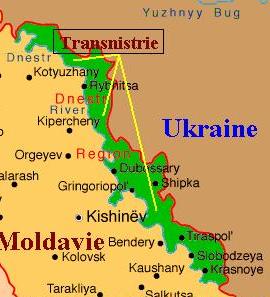
Radio PMR Pridnestrovye winter schedule

Radio PMR Pridnestrovye

Effective: 30 October 2011 - 25 March 2012

All times UTC

Moldova
1700-1800 7290$KCH 300 kW 309 deg to WeEUR French/German
1800-1900 7290*KCH 300 kW 309 deg to WeEUR Russian/English
1900-2000 7290#KCH 300 kW 309 deg to WeEUR French/German
2000-2100 7290 KCH 300 kW 309 deg to WeEUR Russian/English
2100-2200 7290 KCH 300 kW 309 deg to WeEUR French/German
2200-2300 7290 KCH 300 kW 309 deg to WeEUR Russian/English

$ strong co-ch 1700-1730 Vatican Radio in French and English
* strong co-ch 1830-1900 European Gospel Radio in English Sun
# strong co-ch 1900-2000 Brother Stair TOM in English Fri-Sun
(R BULGARIA DX MIX News, Ivo Ivanov, via wwdxc BC-DX TopNews Nov 8)
(DX Mix News 701 via Wolfgang Bueschel, Germany)

Winter schedules for Lithuanian relays


Effective: 30 October 2011 - 25 March 2012

Winter B-11 relays via of Sitkunai, Lithuania:

All times UTC
0100-0158 9480 SIT 100 kW 079 deg to CeAS Radio Free Asia Uyghur
0430-0458 6160 SIT 100 kW 079 deg to EaEUR Radio Japan NHK Russian
0630-0728 9770 SIT 100 kW 259 deg to WeEUR VOIROI/IRIB Italian
1000-1058 9690 SIT 100 kW 079 deg to CeAS Radio Free Asia Tibetan
1430-1528 7420 SIT 100 kW 079 deg to EaEUR VOIROI/IRIB Russian
1530-1628 5990 SIT 100 kW 079 deg to EaEUR HCJB Global Ru/Chechen Sun
1730-1828 7420 SIT 100 kW 259 deg to WeEUR VOIROI/IRIB German
1830-1928 6115 SIT 100 kW 259 deg to WeEUR VOIROI/IRIB French
1930-2028 6115 SIT 100 kW 259 deg to WeEUR VOIROI/IRIB English
2030-2128 6055 SIT 100 kW 259 deg to WeEUR VOIROI/IRIB Spanish
2300-2358 9875 SIT 100 kW 079 deg to CeAS Radio Free Asia Tibetan
(R BULGARIA DX MIX News, Ivo Ivanov, via wwdxc BC-DX TopNews Nov 8)
(DX Mix News 701 via Wolfgang Bueschel, Germany)

Radio Dabanga winter broadcast schedule


Clandestine using transmitters in France, Germany, Madagascar and United Ara Emirates.

Effective: 30 October 2011 - 25 March 2012

Radio Dabanga

All times UTC

Arabic
0430-0600 7315 ISS 500 kW 135 deg to EaAF
0430-0600 11940 ISS 500 kW 135 deg to EaAF
0430-0600 13800 DHA 250 kW 255 deg to EaAF
1530-1630 13800 MDC 250 kW 325 deg to EaAF
1530-1630 15535 WER 500 kW 150 deg to EaAF
(R BULGARIA DX MIX News, Ivo Ivanov, via wwdxc BC-DX TopNews Nov 8)
(DX Mix News 701 via Wolfgang Bueschel)

KBC Radio slated to test DRM Nov 12

KBC Radio DRM Test : Saturday November 12th

1800 UTC on 7550 kHz

More at : http://www.kbcradio.eu/?p=823

Also in analog mode at 0900-1600 UTC on 6095 kHz (Sat & Sun) Weekend schedule at : http://www.kbcradio.eu/?page_id=478

Reception reports to : themightykbc@gmail.com
For a QSL card you have to send two US dollars or two IRCs.
Alokesh Gupta,VU3BSE, New Delhi , India)

TWR Extends Outreach to Asia


Guam Transmitter Upgrade Features Live On-Air Dedication on Nov. 18

CARY, NC, November 10, 2011-Striving to extend its strategic outreach in Asia, international Christian media organization TWR has upgraded its powerful shortwave transmission station on the island of Guam. The advancement gives TWR the ability to cover much of the spiritually needy region, including China and southeast Asia, with a robust, quality signal. To celebrate this significant initiative, TWR President Lauren Libby and other ministry staff members will present an on-air dedication during a live
broadcast Friday, November 18 from 8:30-9:00 a.m. Eastern Standard Time. The 30-minute broadcast will begin at 1330 UTC on a shortwave frequency of 15.4 megahertz in the 19 meter band.

"This upgrade gives TWR the opportunity to touch even more lives with the good news of Jesus Christ," says TWR President Lauren Libby. "We thank God for the privilege of increasing our spiritual footprint in Asia."

Two 250,000-watt, digital-capable Thomson transmitters have been installed to provide increased coverage to the Asia region. These revitalized transmitters join three existing 100,000-watt units. Digital shortwave capability will enable TWR to reach both rural areas and large cities with a strong, FM-like quality signal. TWR is now well-positioned to reach listeners across Asia into the future, and reception is excellent anywhere - from cities to dense forests.

Special guests for the dedication broadcast include Dr. Alan Cureton, president of Northwestern College in St. Paul, Minn.; Collin Lambert, vice president of Moody Radio in Chicago, Ill.; and Mike Tirone, general manager and senior vice president of KCBI-FM in Dallas, Texas. These three organizations, plus thousands of individuals around the globe, helped with the purchase and installation of the transmitters.

"As Moody Radio continues to expand its global focus, TWR is one of the leading organizations that we are pleased to partner with," says Lambert. "Our joint efforts tied to the [upgraded] transmitter in Guam have not only broadened our participation in spreading the gospel throughout the world, but also allowed us to inform and mobilize our listeners in the process. In addition to a live stream over www.twr.org, the dedication broadcast will be carried on KTIS-AM, Moody Radio and KCBI and its sister stations.
(TWR News Release)
(Alokesh Gupta,VU3BSE, New Delhi, India)

Tuesday, November 08, 2011

BBC World Service - B11 English Service


Effective: 30 October 2011 - 25 March 2012

All times UTC


English
0000-0100 6195as 9410as 9740as 12095as 13725as 15335as 15755as

0030-0100 9510as

0100-0200 5940as 5970as 9740as 11750as 12095as 15310as 15335as 15755as 17685as

0200-0300 5875me 5940as 7385af 12095as 15310as

0300-0400 3255af 5940me 6145af 6190af 7255af 7385af 9410as 9460af 11860af 12095as 15310as 17790as

0400-0500 3255af 6005af 6190af 7255af 9410me 11860af 12035af 12095af 15310as 15360as 17790as

0500-0600 3255af 3955eu 6005af 6190af 7255af 9410me 12095af 15310as 15360as 15400af 15420af 17640af 17790as

0500-0600 Sat/Sun 15420af

0600-0700 3955eu 6005af 6190af 9410af 11760me 12015af 12095af 15310as 15400af 15420af 17640af 17790as

0700-0800 3955eu 5875eu 6190af 11760me 11770af 12095af 13820af 15310as 15400af 15575me 17640af 17790as 17830af

0800-0900 5760eu 5875eu 6190af 11760me 12095af 15310as 15400af 15575me 17640af 17790as 17830af 21470af

0900-1000 6190af 6195as 9740as 11760me 11895as 12095af 15285as 15310as 15400af 15575me 17640af 17760as 17790as 17830af 21470af

1000-1100 6190af 6195as 9740as 11760me 11895as 12095af 15285as 15310as 15575me 17640af 17760as 17790as 21470af

1000-1100 Sat/Sun 15400af 17830af

1100-1130 15400af

1100-1200 6190af 6195as 9740as 11760me 11895as 12095af 15285as 15575me 17640af 17790as 17830as 21470af

1200-1300 5875as 6190af 195as 9740as 11760me 11895as 15310as 15575me 17640af 17830as 21470af

1300-1400 5875as 6190af 6195as 9410as 9740as 11760me 11890as 12095af 15310as 15420af 15575me 17640af 17830as 21470af

1400-1500 5845as 5875as 5975as 6190af 6195as 9410as 9740as 11760me 11890as 12095af 15420af 17640af 17830as

1500-1600 5875as 6190af 6195as 9410as 9490af 9505as 9740as 11830me 12095af 15400af 15420af 17640af 17830as

1600-1700 3255af 5875as 5975as 6190af 9410as 9505as 11830me 12095af 13790af 15400af 15420af 17640af 17830as

1700-1800 5875as 5975as 6190af 7600as 9505as 12095af 13790af 15400af 15420af 17640af 17830af

1800-1830 5975as 7600as 9505as

1800-1900 3255af 5945as 6190af 9430af 11810af 15400af

1830-1900 9410af

1900-2000 3255af 5945as 6005af 9410af 9430af 11810af 15400af

2000-2100 3255af 6005af 6190af 9410af 9430af 11810af 15400af

2100-2200 3255af 3915as 5875as 5910af 5965as 6190af 6195as 9410af 9915af 12095af

2200-2300 3915as 5875as 5890as 5965as 6190af 6195as 7490as 9915af 12095af

2300-0000 3915as 5875as 5980as 6195as 7490as 9740as 11955as
(Alokesh Gupta, India via Claire Bingham, Babcock, UK)

Thursday, November 03, 2011

Radio Netherlands Program Preview, November 4 - 10


The State We're In
Jonathan Groubert and his team look at current events from an unexpected perspective.

This week: The extra mile

A British woman recounts being rescued by a Nazi U-Boat commander – the man responsible for torpedoing the ship she was on. A Dutch woman tracks down the father she never knew and finds him living on the streets in Australia. And a long-distance runner from Western Sahara competes for a nation that isn’t yet recognised.

First airing: Saturday 02:00 UTC

Earth Beat
Marnie Chesterton and her team look at the footprint we’re leaving on our planet.

This week:

We drink a pint of espresso and take a journey around the clock with our 24 hour society theme. As our world gets more 24/7 what does that do to us, and our environment?

First airing: Friday 03:00 UTC

South Asia Wired
Stories from South Asia.

This week:

She hasn’t consumed a morsel of food or a sip of water for 11 years. She’s being kept alive by a nose tube in her hospital cell in Imphal. Irom Sharmila is protesting against years of human rights abuses committed by Indian para military forces in her remote north eastern state of Manipur. We hear from the Iron Lady of Manipur herself – on what keeps her going and why she is determined not to break her fast until her people have regained their basic human rights.

(There'll be a new edition of the programme on Thursday 10 November)

First airing: Thursday 10:00 UTC

Bridges With Africa
We're giving the microphone to Diaspora groups in Europe and are linking up with stations in Africa.

This week:

Chairman of Liberia’s Electoral Commission James Fromayan decided to leave his post amid elections. We bring you the full story.
Al Shabab recruits young men in Nairobi’s slums. Koert Lindijer and Rober Ochola talk to the families of these men.
The crisis that hit Zimbabwe three years ago forced many Zimbabweans to flee to neighboring South Africa. Now, as things are changing for the good, many Zimbabweans return.
Noma is a disease that ‘eats away’ the face. Our reporter Maike Winters went to Nigeria along with a Dutch medical team to see how the disease destroys the lives of the patients and their families.
Music from Cameroonian-Dutch singer Ntjam Rosie.

First airing: Friday 00:00 UTC

Africa in Progress
Inspiring round-table discussions with guest speakers and in-depth interviews give listeners food for thought.

This week: Electronic waste - blessing or curse for Africa?

Africa is often seen as the dumpsite for electronic waste from the developed world. When computers, mobile phones, television sets, and refrigerators become unusable there, they are exported as e-waste to Africa. A cheaper option for recycling companies in rich countries.

E-waste often ends up in open dumps in Africa where people risk their lives trying to extract usable parts. In countries like Nigeria and Ghana, reusing e-waste is an important source of income. What should Africa do?

First airing: Monday 19:00 UTC

Commonwealth Story
A selection of winning stories chosen from the large number of entries for the 2010 Commonwealth Short Story Competition.

This week:

The first hello - by Anuradha Kumar (India). The promise of a village telephone.

First airing: Tuesday 01:50 UTC

Global Perspective
Who says I can’t… is the motto of this year’s collaboration of international broadcasters, offering stories of defiance and perseverance.

This week: Who says I can’t reject tradition?

Lesego Mangwanyane of SAFM radio in Johannesburg explores the role of sangomas, traditional healers in contemporary South African life, and wonders anxiously if she herself is destined to be one.

First airing: Monday 17:30 UTC

European Jazz Stage
Unique jazz performances from the continent’s hottest clubs, concert halls and festivals, including the spectacular North Sea Jazz Festival.

This week:

Robberto Correa & Siba bring rural sounds from Brazil - not the usual bossa nova and so on, but poetic songs about everyday life.

Awza Imarhane is a Touareg band from Mali; their songs are about love and war. The three string lute or tehadan has a central role.

Parafonia is a project by throat singer and musicologist Mark van Tongeren, inspired by Mongolian overtone singing.

Les Espoirs de Coronthie from Guinea plays mainly on traditional instruments, and sing in both Susu and French. Their modern grooves make them popular with young people in Guinea and the West.

First airing: Monday 01:00 UTC

RNW Classical
Classical concerts from the Royal Concertgebouw as well as studio recordings of Dutch performers, presented by Hans Haffmans.

Available 24 hours a day via our sister web station RNWclassical.com
(R Netherlands)

Radio Netherlands English service
Effective from 30 October 2011 - 25 March 2012

English

1000-1057 12065as
1400-1457 12080as
1800-1900 11655af
1900-1957 11655af
1900-1959 11615af
1900-2000 7425af
2000-2057 7425af 11615af
(Leo van der Woude, R Netherlands)

BBG releases plans to enhance international broadcasting


Washington, D.C., November 1, 2011 - The Broadcasting Board of Governors has released the framework of its new strategic plan to enhance the global impact of U.S. international broadcasting through innovation and integration.

“This plan frames the future direction for U.S. international broadcasting,” said BBG Chairman Walter Isaacson. “To retain and increase our audiences and impact, we have to be smart and capitalize on the opportunities of digital integration and audience engagement.”

Entitled, “Impact through Innovation and Integration,” the plan outlines a strategy for growth within an environment of scarce budget resources and profound, ongoing changes in audience media consumption habits. The goal is to be the world’s leading international news agency, working to foster free, open, democratic societies with an audience growth target of 50 million by 2016.

The 5-year strategy calls for a restructuring of federal and grantee elements of the BBG to leverage the talents and expertise of its broadcasters and journalists, increasing efficiencies across the broadcast enterprise, and ensuring that the original reporting and breaking news stories of each of the Agency’s broadcasters are shared with audiences around the globe.

The plan highlights the desire to integrate elements of U.S. international broadcasting into a single organization while preserving the BBG’s established, trusted brands.

A merger of the staff of the BBG and the International Broadcasting Bureau is already in progress as one of the immediate steps mandated by the Board to rationalize management and support functions.

The Agency will now study phased implementation plans to break down the organizational silos present in the BBG’s complex amalgam of broadcast entities, some Federal and some non-Federal, with different legal and administrative frameworks.

The BBG brands – Voice of America, Radio Free Europe/Radio Liberty, Alhurra TV and Radio Sawa, Radio Free Asia, and Radio and TV Martí - face intense competition from an ever-expanding universe of emerging media choices as well as the challenges of censorship and extremist voices.

To address these challenges and advance the nation’s strategic priorities, BBG’s plan features innovative initiatives: to create a global news network; to leverage new delivery technologies such as satellite video for China, Central Asia, and Southeast Asia; and to devise sophisticated new means of countering Internet blocking and other forms of censorship.

The plan is the result of a wide-ranging strategy review conducted from September 2010 to June 2011 at the direction of the BBG Board. The review assessed all agency media efforts worldwide in 15 regionally focused sessions. Some 75 independent journalists, media experts and practitioners, diplomats, and area specialists engaged pro bono with more than 200 agency employees at all levels to analyze the unique value-added and impact of BBG broadcasters in light of evolving media and political environments.

A copy of the Strategic Plan is available here. A companion BBG strategy website is hosting an ongoing discussion of the plan and the future of U.S. international broadcasting.

The Broadcasting Board of Governors is an independent federal agency, supervising all U.S. government-supported, civilian international broadcasting, whose mission is inform, engage and connect people around the world in support of freedom and democracy. BBG broadcasts reach an audience of 165 million in 100 countries. BBG networks include the Voice of America, Radio Free Europe/Radio Liberty, the Middle East Broadcasting Networks (Alhurra TV and Radio Sawa), Radio Free Asia, and the Office of Cuba Broadcasting (Radio and TV Martí).
(Leticia King/BBG)

MV Baltic Radio and Radio Gloria this weekend

Dear Listeners,

MV Baltic Radio is on the air this Sunday the 6th of November 2011

MVBR Schedule:

All times UTC

0900 to 1000 on 9480 kHz,1 kw Repeat of Radio Gloria ( from last month )

1000 to 1100 on 6140 kHz, 100 kw MV Baltic Radio

1000 to 1100 on 9480 kHz, 1 kw MV Baltic Radio

1300 to 1400 on 9480 khz, 1 kw MV Baltic Radio ( repeat from 1000 utc )
(Tom Taylor)