Showing posts with label Radio World. Show all posts

Wednesday, August 26, 2026

Oregon AM Radio Station Recovers After Tower Suffers Crop-Duster Strike KLAD(AM) in Klamath Falls was knocked off the air last week


Twisted steel and fencing mark the site where KLAD AM  Tower #3, collapsed after being struck by a crop-duster aircraft in Klamath Falls, Oregon. Photo by Rob Siems-Radio World

By Nick Langan 
Published: August 25, 2026


A crop-duster aircraft crashed into the primary broadcast tower for an AM radio station in Klamath Falls, Ore., last week.

Basin Mediactive’s KLAD(AM) 960 is licensed to Klamath Falls and transmits from one tower in a four-tower array along the Lost River, about five miles southeast of Altamont. It runs 5 kW during the day and 26 watts at night from the site.

The station runs a sports-talk format and is also heard on a 104.3 FM translator.

Get the additional story at: Radio World


Friday, January 30, 2026

Supercharged Ionosphere Delivers Rare Winter DX


A solar storm heated up the airwaves for North American long-distance signal hobbyists

By Nick Langan

Published: January 26, 2026
Nick’s Signal Spot is a new feature in which Nick Langan explores RF signals, propagation, new equipment and related endeavors. 

For VHF FM radio and TV long-distance signal reception enthusiasts, or DXers, the wintertime doldrums are often real.

Cold temperatures and dry air masses, as we’ve covered previously, often do not support tropospheric propagation. In the northern hemisphere, there is a winter E-Skip cycle, and there was some associated activity with it across North America earlier in January, but it’s much less intense compared to the summer. Typically, by late January, chances for skip dry up.


Wednesday, October 15, 2025

The World Is at Your Mouse Click

 
Airspy Screen Capture

Tuning to shortwave radio over web-connected receivers

By James Careless

Published: September 27, 2025  Updated: September 29, 2025
Even with the loss of the Voice of America, the international shortwave radio bands are still alive with stations worth listening to. But what can you do if you don’t have a shortwave radio receiver, and/or live in an urban area where reception is difficult? 

The answer is to use the internet to access remotely tunable shortwave radio receivers located around the globe. By going through these websites — which are free to use — you can get a taste of what’s on the air worldwide. 

Kiwi Screen Capture of RTM Malaysia

Additional text at: 

Wednesday, July 02, 2025

FCC Targets Another NYC Property With Pirate Letter

 
An owner of a home in the Bronx is warned for 91.3 FM broadcasts detected there in February

By Nick Langan 

Published: July 1, 2025

A property owner in New York City has received a “pirate letter” from the FCC’s Enforcement Bureau, marking the second letter in a week it sent to a location in the Bronx — this time to a residential dwelling.

Diana Richards, determined through New York City public property tax records as the owner of a home on Hill Avenue in the Bronx, was notified by the commission of an unlicensed broadcast emanating there on 91.3 FM. It was detected on separate dates this past February.


Follow the story at: 


Wednesday, June 18, 2025

Armstrong Broadcast Returns to New Jersey on June 19

 
The Armstrong Field Lab as it looks today with the original W2XMN building and the radar tower/photo via Radio World

Armstrong Broadcast Returns to New Jersey in June on 42.8 MHz will broadcast from the Alpine Tower for first time in a decade

By Nick Langan 

Published: May 26, 2025-Updated: May 27, 2025

The commemorative Armstrong broadcast station will return next month to 42.8 MHz in the New York City Tri-State area. 

On Thursday, June 19, Steve Hemphill and the staff at the historic Alpine Tower in Alpine, N.J., will celebrate with a commemorative broadcast the 20th anniversary of the Armstrong Memorial event, which Hemphill originally organized in 2005 to honor the man who made FM radio possible, Edwin Armstrong. 

Get Nick's story at: 

he WA2XMN Edwin Armstrong memorial broadcast station, operating on 42.8 MHz, will return to the airwaves on June 19 from Alpine, New Jersey, at 12:00 PM. This station is an experimental FM radio station that broadcasts sporadically from the Armstrong Tower, a site historically significant as the location of the world's first FM broadcast station, W2XMN. 

Wednesday, June 11, 2025

Letter: Long-Distance Listening Rekindles a 1950s Crystal Set Tale

 
photo via Nuts & Volts magazine

Frank Hertel recounts the magic of hearing Ecuador on a cigar-box receiver

By Frank Hertel 

Published: June 10, 2025

In this letter, the author responds to the story “Double-Hop Dreams and the Mystery of Long-Distance FM.” Radio World welcomes letters to the editor on this or any story. Email radioworld@futurenet.com.

Thanks for a great article.

I was in school, possibly the seventh grade, in 1956—57. Not having any money, and as not many jobs were available for kids, my only personal radio was a crystal set. I was introduced to electronics by my older brother Johnny.

He was attending an electronics school and I followed his interest. Not knowing any theory at the time, I would try different ways of building crystal sets.

One hot summer evening, I was in our attic area and wound a random coil, a 1N34 Diode and a random variable capacitor. Once I connected a long wire horizontal antenna, about 40-ft. long. I could very faintly hear a signal that would fade in and out. A fading signal on a crystal set just gets quieter — no noise level like normal radios.

I suspected it to be a distant shortwave signal, but from where?

Additional story at: https://tinyurl.com/bdfbc3ks

Monday, June 09, 2025

Double-Hop Dreams and the Mystery of Long-Distance FM


Learn how broadcast signals can travel more than 4,000 miles via E-Skip

By Nick Langan 

Published: June 6, 2025
How far can you actually hear an FM radio signal?

I am not talking about streaming, of course. I mean, actually on the radio, and listening to a station from Tampa in Washington state, or catching a signal from the dunes of Cape Cod in the desert of Nevada.

Or how about across the Atlantic, with FMs from North America traveling to Europe.

Is any of this actually possible? Yes!

In fact, at the time I write this, the 2025 Sporadic-E season is getting into full swing. There was quite a bit of activity in eastern North America on June 3.

Intrigued? I’ve got some historical precedent and examples to share!

Additional story from Nick at: https://tinyurl.com/yk7s8e4v

Wednesday, August 28, 2024

A second look at ... How Not to Build a Transmitter Site


Looking over my radio news archives from this summer, I discovered this gem of an article that bears repeating
(Gayle Van Horn)

How Not to Build a Transmitter Site - “Failing to plan” is “planning to fail”

By Michael Baldauf 
Published: June 5, 2024

Working with small stations and groups, an engineer may take on certain tasks beyond the expectations faced by someone at a larger company with more resources. 

To paraphrase the classic police drama, the story you’re about to hear is true. The names have been changed to protect … well, everyone.

In early 2021 I was contacted by the manager of a small group seeking help with a project. It involved an AM transmitter building that is near my home but 600 miles from the company’s headquarters.

Years ago this station’s studio and transmitter had been installed in a house on a bluff, while the antenna was placed along a river bottom directly below. 

The house was later sold off though, and now the transmitter “building” was a small shed in the backyard while its AM tower and FM translator antenna remained below.

(Radio World)

Additional article at; 

Tuesday, August 27, 2024

“I Have This Old Radio…”


How to dispose of those unwanted “radioiana,” equipment and artifacts

By James E. O'Neal
Published: July 20, 2016, Updated: August 26, 2024

A while ago, Radio World Editor in Chief Paul McLane forwarded me a letter of a type that he frequently gets. It asked for help in disposing of a collection of old radios, radio parts and radio-related memorabilia that were part of a parent’s estate.

I’ve been a lifelong collector of radio/television artifacts (which range from vacuum tubes to microphones, receivers and even one broadcast transmitter), so Paul asked me to try to help the person. Radio World continues to receive such inquiries. Perhaps you’re looking to dispose of such items yourself or, more likely, someone has asked you for your own advice.

Additional story at: https://tinyurl.com/yph337kf

Tuesday, August 20, 2024

Happy National Radio Day


Hey Radio World, How Are You Tuning In?

The RW team shares what tech they use to listen at home

In honor of National Radio Day, celebrated annually on Aug. 20 in the U.S., Radio World’s editorial team and longtime contributors are sharing a behind-the-scenes look at how they tune in at home.

From family heirlooms to emergency radios to trendy Target finds, we have it all.

You’ll find that the RW team is also a big subscriber to the motto “If it ain’t broke, don’t fix it,” so please enjoy the quick trip down memory lane. 

Here at Radio World, we know there’s no right or wrong way to listen in the comfort of your own home — as long as you do! Happy National Radio Day.

Additional story at Radio World: 

Tuesday, August 13, 2024

SDR: The Next Level of Shortwave Radio Listening

 
AirSpy HF + Discovery

Where have these things been all my life?

By James Careless
Published: August 5, 2024

There is a new breed of RF receivers known as software-defined radios, and they are revolutionizing the way in which people listen to shortwave (SW) radio, or indeed any form of radio broadcast. 

SDRs combine plug-in radio receiver dongles/boxes with personal computers, with the computer serving as the user interface. What makes this interface so useful is that the listener’s screen displays a wide swath of the bandwidth being tuned to, with each station’s signal shown as a visual vertical line that moves and grows/shrinks with its signal strength. 

In other words, the listener can literally see what is happening across the band in real-time, rather than having to turn the dial or push the Up/Down scanning buttons on a conventional shortwave radio, checking one station at a time.

SDRs come with a range of software tools for viewing, filtering, and recording sound. One (or more) of these devices is an absolute must for anyone who likes to tune around the bands. And if you own a computer the only device to be bought is the RF receiver dongle/box, which is often less expensive than a standalone SW receiver of similar quality and performance.

Additional story on How SDRs Work and more at: 

Tuesday, July 30, 2024

Digital Radio: Go Big or Go Home

 
Roger Lanctot writes that large screens represent a huge opportunity for radio

By Roger Lanctot 
Published: July 29, 2024

The author is founder of StrategiaNow. This commentary appeared in the Radio World ebook “Global Digital Radio.”

Big screens are coming to dashboards in Europe, North America, China and just about everywhere else in the world. Bigger screens with higher resolutions are the rule, reflecting the onset of video in the dash as well as the desire to dazzle drivers and passengers.

I am more than a little skeptical of this trend, given the sorry, sordid history of distracted driving and the annual toll of 1.2 million highway fatalities. The good news, though, is that that real estate represents a huge opportunity for the least distracting form of media in the car: radio.

Radio has always represented the distraction-mitigated solution for driver and passenger engagement. With the onset of digital radio, the opportunity to convert the lean-back, audio-only experience to a visual event is transformative.

Additional story from Radio World: 

Wednesday, July 03, 2024

AI Is Saving Money for Transmitter Users


Houzé: Optimized power consumption generates multiple benefits

BY RW STAFF
PUBLISHED: JUNE 26, 2024

A current Radio World ebook explores the use of artificial intelligence in radio broadcasting. This is an excerpt.

In 2018 WorldCast Systems released its first technology with artificial intelligence for FM transmitters, SmartFM, to optimize RF power based on the audio content, in real time. The company says benefits include lower power costs, reduced cooling, less maintenance, longer transmitter life and a smaller carbon footprint.

David Houzé is a product manager for WorldCast.

David Houzé
Radio World: What’s the most important recent or current trend in how artificial intelligence is being used in radio and audio?

David Houzé: We are still at the beginning of artificial intelligence in radio broadcasting but the trendiest use of AI is mainly in the studio and concerns the script generation for shows, news or weather reports. 

Additional story and interview at Radio World

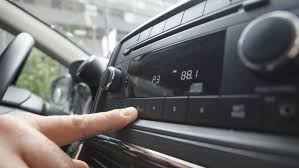
AM Radio for Every Vehicle Act to Receive Minor Technical Update


There will be no substantive changes to the legislation

BY RANDY J. STINE
PUBLISHED: JULY 2, 2024

A bill in the House of Representatives that would mandate AM capability in new vehicles is about to be revised, according to a person familiar with the developments. 

New information indicates that one of the original co-sponsors of the bill, Rep. Frank Pallone (D-N.J.), plans to introduce an amendment to the bill (H.R. 8449). Changes would only include minor technical updates. 

The planned amendment to the AM Radio for Every Vehicle Act comes on the heels of last week’s last-minute cancellation of a planned vote by the House Energy and Commerce Committee, which could have advanced the legislation to the full House for a vote. 

Pallone’s amendment will include “no substantive” changes to the legislation, according to the insider, and will be introduced at the next full committee markup. The amendment will clarify that the bill applies to new vehicles manufactured and sold in the United States, as well to vehicles manufactured abroad and sold in the U.S.; however, vehicles built in the U.S. but sold overseas would not be required to include AM capability. 

Additional story from Radio World:

https://www.radioworld.com/news-and-business/headlines/am-radio-for-every-vehicle-act-to-receive-minor-technical-update?utm_term=86D4F105-3F59-4FA3-9B8A-EB0D04CB98C8&lrh=bcc3466d7cc289d1a27cebae1e1b73de590786d5a60ff60a890b4f7130e08084&utm_campaign=0028F35E-226C-4B60-AC88-AB2831C8A639&utm_medium=email&utm_content=596F47A0-10E1-4926-99C9-066D3A3136C1&utm_source=SmartBrief

Tiny URL  https://tinyurl.com/674zh9ut

Monday, June 10, 2024

Exploring the Differences Between Podcasts and Radio


"Freedom is an important factor in understanding the differences"

BY Justin Kings  
Published May 31, 2024 

The author is head of the European Broadcasting Union Academy. 

Justin Kings, Head of EBU Academy
I was not a typical teenager in the 1980s. In raiding my local library’s shelves of cassettes, I discovered the BBC’s “Hancock’s Half Hour” radio shows. I would pop on my flimsy headphones with orange sponge ear coverings and get lost in the world created by Tony Hancock; picturing, vividly, the waiting room and surgery when he became “The Blood Donor” and the horror on his face as he was told how much of it he would give up!

Reflecting now, it was a podcast-like experience in 1984. A real-life case of “Back to the Future.” Engaging audio was plugged directly into my ears. It was my choice of entertainment, on my terms. It had also been recorded originally for a linear radio audience. As we know, many radio shows now become podcasts, and vice versa.

Additional story at Radio World: 

Monday, April 22, 2024

AM Radio Gets House Hearing


NAB welcomes the planned subcommittee hearing

BY T. CARTER ROSS 
PUBLISHED: APRIL 16, 2024

The House of Representatives Energy & Commerce Committee is hearing about AM radio on April 30. Committee Chair Cathy McMorris Rodgers (R-Wash.) and Ranking Member Frank Pallone (D-N.J.) announced that the Subcommittee on Innovation, Data, & Commerce will hold a legislative hearing that day titled “Draft Legislation to Preserve Americans’ Access to AM Radio.”

Additional story at Radio World: 
(Photo/Variety)

Special Report: AI Case Studies in Radio


“But in the end, it’s a sauce to the steak. It’s not the steak.”

BY PAUL MCLANE 
PUBLISHED: APRIL 19, 2024  UPDATED: APRIL 22, 2024

Applications of generative artificial intelligence-based tools are spreading throughout radio while other types of AI are already well ensconced. In a recently released ebook, Radio World sought comments from a sampling of companies about how they’re deploying AI. 

I’ve already shared the experience of four managers at NRG Media; you can read that here. Below are more case studies that shine a light on how AI is being used in our business.

Additional story at:
Radio World
Tiny URL: https://tinyurl.com/ycvmj8yv

Monday, April 15, 2024

Using drones to verify FM antenna performance


Aerial vehicles validate predictions made in computer simulations

BY PAUL MCLANE 
PUBLISHED: APRIL 9, 2024

A Saturday session of the Broadcast Engineering & IT Conference will explore “Using Drones to Verify FM Antenna Performance.”

John Schadler is vice president of engineering for Dielectric LLC, which makes antennas, RF systems components, and transmission lines. Jason Schreiber is managing director of Sixarms, which uses drones to provide measurement solutions for broadcasters and other industries. 

Radio World: What is your session about?

John Schadler: The paper will discuss the power of computer simulation and validate the predictions through comparisons to drone measurements. This in turn also shows the ability drone measurements have to verify antenna system performance.

Additional interview at:

(Radio World)

Friday, April 05, 2024

Wind Storm Knocks Down 2 Radio Towers Serving West Virginia AM


90 mph winds blasted through the state's capital on Tuesday

BY ELLE KEHRES 
PUBLISHED: APRIL 4, 2024

A high wind storm with gusts reaching 90 mph hit West Virginia’s capital on April 2, bringing down two of four towers serving WCHS(AM) and its sister station WSWW(FM).

WCHS is the flagship station of the statewide West Virginia MetroNews network, broadcasting news, talk and sports programming. The AM is licensed to Charleston, W. Va., serving southern West Virginia and southwestern West Virginia. WCHS is owned by West Virginia Radio Corp. of Charleston (WVRC) Media and is the Primary Entry Point Emergency Alert System station for the state.

The AM broadcasts at 580 kHz with 5 kW by day and night. It is nondirectional in daytime from one tower, and directional at night from four towers. In addition to its main signal, WCHS is relayed by two FM translators broadcasting on 96.5 and 104.5, all of which were off the air on Tuesday.

Additinal story: 
Photo/Radio World

Friday, March 22, 2024

Why Is Shortwave Only “the Radio of Last Resort”?


Its powerful new capabilities remain largely unexplored


BY SIMON KEENS 
PUBLISHED: MARCH 20, 2024

The author is sales and business development manager for Ampegon Power Electronics AG.

My first car, a 1984 vintage, had a shortwave radio receiver, but I didn’t bother using it. I was young while it was old and therefore unworthy of my attention. Besides, the signal it received was mostly odd-sounding talk-radio that changed tone as I accelerated. Something to do with unscreened sparkplugs? Whatever they were. Instead, I had a huge selection of pop music available to me on the FM bands, and big plans to retrofit new dash-mounted CD player technology (which never worked)!

Shortwave’s unique properties
The big draw of shortwave is the ability to broadcast to the other side of the world. Shortwave frequencies reflect off the ionosphere, offering long-range capabilities not possible with FM and MW propagation. With a high-power transmitter and appropriate antenna, shortwave broadcasters can provide national, continental or even inter-continental coverage from a single location.