Showing posts with label Guadeloupe. Show all posts

Tuesday, January 17, 2023

Return to Guadeloupe's Radio History


reposted courtesy of AWR Wavescan

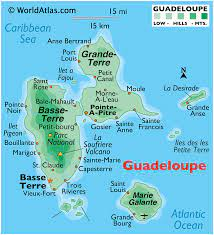
In our Wavescan topic today, we return to the French island of Guadeloupe which is shaped like the wings of a butterfly that is flying toward the northwest. That island is located between the Caribbean Sea and the Atlantic Ocean, and we examine the early communication radio scene and its almost three-quarters century of mediumwave radio history.

In the era immediately following the end of World War 1, the French government in Paris established its first wireless communication station in Guadeloupe. The new wireless station with the callsign FKD was installed inland at Destrellan, some 20 miles northeast of the capital town Basse-Terre on the western wing.

Due to a change in international radio regulations, three years later (1924), that same wireless station at Destrellan was granted a new callsign, HYU. Then in 1941, the wireless communication station in Guadeloupe was noted in the United States on 11380 kHz, with a different callsign again. The station identification announcement stated FGS which was understood to indicate French Guadeloupe Station. Some 37 years later (1978) another callsign was indicated. The considerably upgraded station, still at Destrellan, was identified at that subsequent time under the twin callsigns FZV and FZW.

Now before we leave the shortwave scene in Guadeloupe, we should also mention that the Atlas Corporation in the United States announced in January 1945 that plans were underway to construct powerful shortwave stations in several French colonies around the world, including Guadeloupe. However, that ambitious radio project never culminated. 

The first mediumwave station on Guadeloupe was installed near the capital city Basse-Terre in 1951, and it was a 1 kW unit on 650 kHz. A second mediumwave transmitter at the same location was taken into service six years later in 1957, and it appears that the old 50-watt shortwave transmitter was returned to 1420 kHz.

However in 1961, two new mediumwave stations were constructed, one on each wing. Near the capital city Basse-Terre at Citerne on the western wing, a new 4 kW transmitter was installed for the 1420 kHz channel. 

Also at the same time, a new mediumwave station was constructed at Arnouville, quite near the almost junction of the two wings Pointe-a-Pitre, the largest town on the eastern wing. This new station housed two mediumwave transmitters at 20 kW each for operation on 640
kHz. 

Beginning in the 1980s, FM radio was introduced to Guadeloupe. Initially, the coverage was for the two cities, Basse-Terre and Pointe-a-Pitre, one on each wing, though because of the lower operating cost, the clarity of reception, and the popularity of FM radio receivers, the number of FM stations increased rapidly. In 1986 for example, there were 40 FM stations on the air.

Then in 1997, the mediumwave transmitter (now at 5 kW) on 1420 kHz for Basse-Terre at Citerne was closed, and give another 20 years and finally, the two 20 kW transmitters on 640 kHz were also closed, leaving a nationwide network of only FM stations still on the air)
(Adrian Peterson/AWR Wavescan Archive) 

Monday, January 16, 2023

Hurricane Fiona and the Early Shortwave Scene on Guadeloupe


reposted courtesy of AWR Wavescan

The disastrous Hurricane Fiona struck the French Island territory of Guadeloupe on the outer edge of the Caribbean as its first onslaught during the night of Saturday, September 17 (2022). It was in that area that Fiona strengthened and became a Category 4 hurricane, with wind gusts of 155 miles per hour and sustained winds at 130 miles per hour. 

Guadeloupe encountered near-record rainfall from the hurricane resulted in serious flooding, even washing away the long-standing bridge over the River Goyave. Due to the devastation wrought by Fiona over Guadeloupe, French President Emmanuel Macron in Paris declared a state of natural disaster for the island territory and he promised government and financial aid for recovery. 

From Guadeloupe, this first hurricane in the new hurricane season swept into the American Island of Puerto Rico, where it blew the avocado crop off the trees. Fiona moved onward and it wrought disastrous havoc in the Dominican Republic, Turks and Caicos, Bermuda and further northwards, right up to Newfoundland and eastern Canada. The measured wind speed of Ferocious Fiona, as it was dubbed, was still gusted with 100 mph winds as it attacked the coastal and inland areas of eastern Canada and the island of Newfoundland. 

The French territory Guadeloupe is an archipelago of eight inhabited islands in the Lesser Antilles, located between the tropical Atlantic and the Caribbean Sea. The two principal islands are Basse-Terre and Grande-Terre are in the shape of a butterfly, and they are separated by a narrow channel, the Rivière Salée. 

The capital town of Guadeloupe is Basse-Terre which is located on the Western Wing, and the larger commercial town, Pointe-à-Pitre, is located on the Eastern Wing. The other nearby islands, known in French as "dependencies," are Marie-Galante, la Désirade, Petite-Terre (uninhabited), and the archipelago Les Saintes.

The total land area of the entire archipelago is 660 square miles with a population of around a third of a million. Grande-Terre is essentially made up of limestone, with plateaus, plains, and hills; Basse-Terre is volcanic in origin, with high mountains and tropical rainforest.

Right at the end of the year 1938, a new shortwave broadcasting station in the Caribbean was noted by international radio monitors in the United States. That new shortwave station was on the air with programming in the French language, and the identification announcements in French and in English as Radio Guadeloupe provided the location. The noted international radio monitor in the United States, Roger Legge, was the first to draw attention to Radio Guadeloupe, and the island of Guadeloupe had thus become a new shortwave broadcasting country.

The new Radio Guadeloupe was located at Pointe-à-Pitre on the Eastern Wing and it was an amateur station turned professional. Initially, the almost regular programming was on the air for an hour each evening, and it was noted on 7050 kHz, right within the 40 metre amateur band. There were occasions when other nearby channels just outside the amateur band were in use, such as 7435 7440, and 7446 kHz.

The operator of Radio Guadeloupe was Monsieur André Haan, and his address was Box 125, Pointe-à-Pitre on the Eastern Wing. The identification melody for Radio Guadeloupe was the popular French tune, March Lorraine, which you heard at the beginning of our program
today.

During the earlier part of the European War in the Middle of the last century, Radio Guadeloupe was silenced, from the latter part of the year 1939 into all of the two subsequent years (1940 & 1941), apparently by French government action. However, in January 1942, the station was reactivated again, though only for a short while, on 7446 kHz. Then two years later again, in September 1944, the station was noted once more, though again, only for a short while. 

However, after the end of World War II, Radio Guadeloupe was brought into operation again, this time as a government radio broadcasting station. It was listed in the WRHB with 50 watts on 7447 kHz, at a new channel was 7430 kHz. In addition to local programming, Radio Guadeloupe also took a daily half-hour relay from shortwave Radio France International in Paris. 

In 1951, a mediumwave outlet was added, with 1 kW on 650 kHz. Then five years later (1956), the shortwave service was closed (forever!) and an additional mediumwave channel was inaugurated on 1420 kHz. 

When the official shortwave channel was closed, it was operating at just 50 watts. The new mediumwave channel on 1420 kHz was also listed with 50 watts, so maybe the shortwave transmitter was modified to a mediumwave operation. 

Three different callsigns have been in use for Radio Guadeloupe, though none were ever used on air for the shortwave broadcasting service. Each callsign in some way identified the station owner and operator, Andre Haan.

It is suggested that the licensed callsign for the operation of the radio equipment as a regular amateur station was FG8AH, André Haan. It would appear that the operation of the station as a program broadcasting station was under the (unannounced) callsign FG8AA. Then when the station was reactivated as a government-operated radio broadcasting station at a new location under the direction of the same André Haan the listed callsign was FG8HA.
 (Adrian Peterson/AWR Wavescan 16 Oct 2022)