Showing posts with label TWR Bonaire. Show all posts

Tuesday, May 13, 2025

A nostalgic look at Wavescan's feature on TWR Bonaire

 
TWR Bonaire from the Caribbean Netherlands

TWR with Superpower on Bonaire

The government administration on Curacao Island had been very gracious and very generous to TWR, and the same courteous attitude was again demonstrated towards TWR by the government administration on the nearby island of Bonaire. In fact, a total of one square mile of island territory was made available for TWR usage.

The studio and office building were erected near the west coast, a little north of the main town of Kralendijk, directly opposite the tourist hotel, Hotel Bonaire. The transmitter building was erected likewise near the west coast of the island, half way between Kralendijk and the southern tip of the island, right against the tidal salt flats with their Pink Flamingos.

The first transmitter on the air at TWR Bonaire was the Continental 500 kW on 800 kHz. This massive transmitter was inaugurated at 1:00 am on Thursday, August 13, 1964, as the highest powered mediumwave transmitter in the Western Hemisphere.

Electrical power came from their own generators, two 16 cylinder diesels with Westinghouse generators, each one weighing 45 tons, providing at a total power output of 3.2 megawatts. The programming came from the studio site via an FM program link, and over a period of time, programming in generally five languages was broadcast; English, Spanish, Portuguese, French and German.

One important daily program on mediumwave was a local marine weather forecast, at 20 minutes past each hour. Then too, Radio Netherlands from Hilversum in Holland took out a regular program relay over TWR superpower mediumwave during the years 1965 to 1977, a total of twelve and a half years.

Six months after the TWR mediumwave and shortwave complex was taken into regular service, an official opening ceremony was conducted at the Studio & Office Building complex on February 25, 1965. Her Royal Highness, Crown Princess Beatrix of the Netherlands, was the official guest, and she honored TWR during the occasion of this, her official visit to the Netherlands Antilles.

In June 1972, a new antenna system was installed on the 24 acre transmitter site, with a main tower surrounded by four smaller towers in a parasitic arrangement. The well-known Arthur Cushen in Invercargill, New Zealand reported a nicely enhanced signal from the superpower mediumwave station on 800 kHz in the Caribbean.

In 1987, after a total of nearly twenty three years of on air service, the original 500 kW Continental transmitter was removed and replaced by another unit of similar power. However, this newly installed unit was a used transmitter, manufactured by BBC in Switzerland and previously on air with Capital Radio in the Transkei republic in southern Africa for just a few years. Still superpower at 500 kW though, and still on 800 kHz.
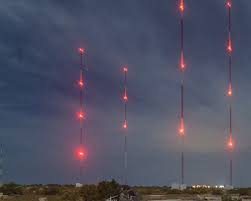
photo via TWR Bonaire

Shortwave transmissions on TWR Bonaire ended six years later on June 30, 1993, though the super power mediumwave unit continued in regular service. Then four years later again (1997), a 50 kW Omnitronix from North Wales in Pennsylvania was installed. As an economy move, the new 50 kW was in use during the day and the 500 kW was on the air at night.

Then a further two years later (1999), a 100 kW Nautel from Nova Scotia in Canada was installed as an economy replacement for the 500 kW BBC unit that had previously been on the air in southern Africa. We are informed that the BBC unit was shipped overseas, but where to? That's an interesting question. However, that was the end of superpower on Bonaire, at least temporarily.

According to James O'Neal, writing in the May 9 (2018) issue of Radio World in the United States, TWR on Bonaire procured a new 440 kW mediumwave transmitter, again from Nautel in Nova Scotia, Canada; and Kintronic in New York modified the existing antenna system. The electronic equipment was shipped to Bonaire in eight crates at a total weight of two tons.

This brand new highly efficient superpower mediumwave transmitter at a total cost of $4 million was dedicated in a special ceremony on January 30 earlier this year (2018). Yes, TWR is back again, as the superpower mediumwave giant in the Western Hemisphere, with 440 kW on 800 kHz.
(Wavescan N496/26 August 2018)

TWR Bonaire broadcast on 800 kHz (450 kW) 
(UTC)
0000-0330; 0830-1000
1000-1130
2330-0000
(WRTH 2025)

Thursday, August 15, 2024

Trans World Radio-Bonaire at 60 years


BONAIRE: 60 years ago, TWR - Trans World Radio put the most powerful radio station in the Caribbean into service on medium waves. Bonaire is a Dutch island 150 km from Venezuela. This is where TWR got permission to broadcast. Under Dutch sovereignty, the radio was not supposed to comply with American power limitations. So she installs 1 Brown-Boveri 500kW on 800kHz (375 meters) mediumwave transmitter, a 250kW and a 50kW transmitter, and wins the title "America's Most Powerful Mediumwave Transmitter! ”.

The installation is located along salty swamps in the municipality of Belnem south of the capital.
The station began testing in 1963 with a power of 500 kW.
In 1964, the success of this plantation was not expected, Radio Nederland Wereldomroep asks to rent the transmitter for broadcasts to Central, North and South America on medium-waves. The programs were broadcast in Dutch, English and Spanish. They were produced in Hilversum and flown on strips by plane. The news bulletins were relayed live from the programs broadcasted from Loopik. Very soon Radio Nederland decided to set up its own station on this very island.

But the costs associated with operating and maintaining a high-power tube facility ultimately forced TWR to rethink its strategy and short waves were halted in 1993. TWR also wanted to reduce its emissions to medium waves: the 500 kW transmitter and its electric generator were too high charges.
In 1998, TWR reduced its medium-wave power by installing a more economical transmitter: a 100 kW NX100 from Nautel - AM FM Broadcast

The operating license for the 500 kW medium wave transmitter has been revoked and a new license (PJB3-AM) has been issued for 100 kW. 500kW transmitter sold and leaving the island.
Twelve years later, in 2012, the transmitters have evolved again and TWR is making the decision to increase the station's power to close to its original level. The radio wants to become a major regional station in Latin and Central America, to complement the small on-air FM operations in the region.
Authorities allow TWR to increase its power to 450 kW.

From 2012 to 2016 TWR is raising funds to allocate the necessary capital.
In 2016 Kintronic Labs is commissioned by TWR to provide a door-key new directional antenna system consisting of 4 231 meters poles arranged in parallelograms. This new multidirectional antenna system allows the station to target specific audiences at different times of the day.

In July 2017, the new RF system came into service using their existing 100kW transmitter.
During the installation of the antenna, TWR ordered its new transmitter with more than 90% efficiency: a semiconductor transmitter. This is the Nautel NX400 model that was selected for the project. The forecasted economy was double, compared to the first issuer: an economy of nearly 30% on energy and a much fewer personnel.

January 31, 2018, the new 450 kW medium wave transmitter Nautel Broadcast is inaugurated. It represents a $3.8 million investment. On this occasion TWR which used the name Radio Trans Mundial becomes Shine 800 AM.

Improving power and coverage helps to spread Christian programming on a wide area, but it's also helpful in other ways. In case of an emergency, nothing beats medium waves, for example, when hurricanes have hit the Antilles.

At this time programmes are modified to inform people about weather, encourage disaster relief and to speak to local residents live or to be made available to the governments of the West Indies.
(Michel Fremy/FB Radio Magazine)

Thursday, October 11, 2018

Medium Wave Transmission Goes Big


TWR Bonaire towers at night
How operators are minimizing future operating costs through large broadcast facilities
Wendall Lonegan
05 Oct 2018

Nautel was recently closely involved in the formation of two of the largest medium wave transmitting facilities in their respective regions.

The first is a 400 kW broadcast site in Bonaire, an island municipality of the Netherlands operating a Nautel NX400 transmitter. The second is a 2 MW site in Solt, Hungary, a small community about an hour South of Budapest, operating five NX400 transmitters through a sophisticated combiner.

A Closer Look
So, why operate such large broadcast facilities? And how do they minimize future operating costs?

The Bonaire site is owned by Trans World Radio and broadcasts a Christian program, which has a strong listenership in the Caribbean Islands, Central America and northern countries in South America.

Additional story at Radio World: https://www.radioworld.com/columns-and-views/medium-wave-transmission-goes-big 
(The author is head of broadcast sales for Nautel)
(photo credit: TWR)

Wednesday, August 29, 2018

TWR with Superpower on Bonaire


The government administration on Curacao Island had been very gracious and very generous to TWR, and the same courteous attitude was again demonstrated towards TWR by the government administration on the nearby island of Bonaire.  In fact, a total of one square mile of island territory was made available for TWR usage.

            The studio and office building were erected near the west coast, a little north of the main town of
Kralendijk, directly opposite the tourist hotel, Hotel Bonaire.  The transmitter building was erected likewise near the west coast of the island, half way between Kralendijk and the southern tip of the island, right against the tidal salt flats with their Pink Flamingos.
            The first transmitter on the air at TWR Bonaire was the Continental 500 kW on 800 kHz.   This massive transmitter was inaugurated at 1:00 am on Thursday August 13, 1964, as the highest powered mediumwave transmitter in the Western Hemisphere.
            Electrical power came from their own generators, two 16 cylinder diesels with Westinghouse generators each one weighing 45 tons, providing at a total power output of 3.2 megawatts.  The programming came from the studio site via an FM program link, and over a period of time, programming in generally five languages was broadcast; English, Spanish, Portuguese, French and German. 
            One important daily program on mediumwave was a local marine weather forecast, at 20 minutes past each hour.  Then too, Radio Netherlands from Hilversum in Holland took out a regular program relay over TWR superpower mediumwave during the years 1965 to 1977, a total of twelve and a half years.   
            Six months after the TWR mediumwave and shortwave complex was taken into regular service, an official opening ceremony was conducted at the Studio & Office Building complex on  February 25, 1965.  Her Royal Highness, Crown Princess Beatrix of the Netherlands was the official guest, and she honored TWR during the occasion of this, her official visit to the Netherlands Antilles.
            In June 1972, a new antenna system was installed on the 24 acre transmitter site, with a main tower surrounded by four smaller towers in a parasitic arrangement.  The well known Arthur Cushen in Invercargill New Zealand reported a nicely enhanced signal from the superpower mediumwave station on 800 kHz in the Caribbean.
            In 1987, after a total of nearly twenty three years of on air service, the original 500 kW Continental transmitter was removed and replaced by another unit of similar power.  However this newly installed unit was a used transmitter, manufactured by BBC in Switzerland and previously on air with Capital Radio in the Transkei republic in southern Africa for just a few years.  Still superpower at 500 kW though and still on 800 kHz.
            Shortwave transmissions on TWR Bonaire ended six years later on June 30, 1993, though the super power mediumwave unit continued in regular service.  Then four years later again (1997), a 50 kW Omnitronix from North Wales in Pennsylvania was installed.  As an economy move, the new 50 kW was in use during the day and the 500 kW was on the air at night.
            Then a further two years later (1999), a 100 kW Nautel from Nova Scotia in Canada was installed as an economy replacement for the 500 kW BBC unit that had previously been on the air in southern Africa.  We are informed that the BBC unit was shipped overseas, but where to?  That’s an interesting question.  However, that was the end of superpower on Bonaire, at least temporarily.
            According to James O’Neal, writing in the May 9 (2018) issue of Radio World in the United States, TWR on Bonaire procured a new 440 kW mediumwave transmitter, again from Nautel in Nova Scotia, Canada; and Kintronic in New York modified the existing antenna system.  The electronic equipment was shipped to Bonaire in eight crates at a total weight of two tons.
            This brand new highly efficient superpower mediumwave transmitter at a total cost of $4 million was dedicated in a special ceremony on January 30 earlier this year (2018).  Yes, TWR is back again, as the superpower mediumwave giant in the Western Hemisphere, with 440 kW on 800 kHz.
TWR website sound English TWR 800 kHz 800 AM Dutch Spanish
(AWR/Wavescan) 

Monday, April 09, 2018

The Radio Scene on a Small Island with a Large Volcano

(via On the Shortwaves)
During the past year 2017 here in Wavescan, we have presented many topics associated with the radio scene in the Middle Americas, that is in Central America and the Caribbean.  However, due to the fact that we still have many unpresented topics from these areas, we plan to continue with Focus on the Middle Americas during this entire coming year 2018.  We trust that you will appreciate and enjoy the information that we will present in all of these coming topics regarding the radio scene in these very colorful countries and islands.

Our opening topic for our first presentation in the New Year 2018 takes us into the Caribbean, an area that was devastated during last year’s hurricane season. We return to the radio scene on the small island with the large volcano; it is the story of Radio Antilles, the shortwave station that relayed the programming of both Deutsche Welle in Cologne Germany and the BBC in London England.

 On April 20, 1963, the Radio Antilles Corporation was formed, and five months later the government granted a radio broadcasting license. Much of the electronic equipment for the Montserrat station came from the previous Radio Africa in Tangier, Morocco and it was installed and operated with co-operation from the staff of Radio Andorra in Europe. Some eight years later (1971), Radio Deutsche Welle in Germany injected a massive cash flow into Radio Antilles, and as a major shareholder/new owner of the station they took over the operation of the large facility.  When DW engineers arrived on Montserrat in 1971, they found two shortwave transmitters at 15 kW each already installed.  They soon afterwards installed an additional shortwave transmitter at 50 kW among the medium wave transmitters on the ground floor of the two story building on the lower south west coast of the island of Montserrat. 

 In March 1977, Radio Antilles was taken into regular service as a relay station for the programming of Deutsche Welle in Cologne Germany and for the BBC in London England.  However, just four years later (1981), the BBC withdrew from their usage of Radio Antilles, and eight years later again (1989), Deutsche Welle Montserrat was closed.  Soon afterwards, the electronic equipment was removed from the isolated country building, and the building was ultimately inundated by lava overflow from a nearby volcano, so much so, that the exact location of the building is now indiscernible. However at the same time as Radio Antilles was under development as a relay station for Deutsche Welle and the BBC, a new joint operation was under installation on the nearby island of Antigua.  The development of this new international shortwave relay station was staged under the auspices of a joint holding company, the Caribbean Relay Company. After a series of surveys on several of the Leeward and Windward Islands, Antigua was chosen because of its strategic location, together with sufficiently level ground that would be satisfactory for a large antenna farm.  A tract of land, 240 acres, was procured near Seaview Farm in the center of the island of Antigua.

 The BBC designed and constructed the transmitter station, they installed four Marconi transmitters at 250 kW each Model BD272, and they erected seven antenna towers supporting 18 curtain antennas. The locally available electrical power was somewhat unreliable, so the BBC installed five electrical power generators, each a Ruston at one megawatt, which was sufficient to power the entire station with one always available on standby. The first transmitter was taken into service on November 1, 1976, and the other three were activated during the following year (1977). Original planning called for two transmitters and nine antennas each, for the BBC and Deutsche Welle. However, as the scheduling was developed and implemented as time went by, it appears that the programming of both shortwave organizations, the BBC and Deutsche Welle, was carried by all four of the transmitters, though at approximately half time each. 

Due to budget cuts, the BBC-Deutsche Welle relay station on Antigua was closed on March 26, 2005. Initially, the Caribbean relay station endeavored to find other clients who were willing to broadcast to the Americas from their shortwave station. However, there are no known additional relays from the Antigua station, and all that we can presume is that all usable equipment was removed and the property was sold off.  


We cross over now to the Dutch islands in the Caribbean, and in particular to Curacao and Bonaire. Around the year 1960, Trans World Radio TWR gave consideration to constructing a large shortwave/medium wave station on the island of Curacao. However, the entire project was soon afterwards transferred to the nearby island of Bonaire. Construction at TWR Bonaire began in September 1963, and the first test broadcasts on shortwave began almost a year later in August 1964. The very first shortwave frequency for the new TWR was 5955 kHz under the official Dutch call sign PJB. Beginning in November 1964, the new Bonaire shortwave station broadcast the programming from Trans World Radio and it also relayed programming from Radio Netherlands in Hilversum Holland. However, Radio Netherlands ended their relay via TWR soon after their own shortwave station on Bonaire was inaugurated.

On June 30, 1993, TWR closed down the usage of their two shortwave transmitters on Bonaire, one at 50 kW and another at 250 kW, and shipped them off to Swaziland for incorporation into their African shortwave station. In various configurations, a medium wave station at TWR has remained on the air on Bonaire, and the space that was previously occupied by the shortwave transmitters now houses power generators that provide electricity for the island.  

 Test transmissions from the new relay station operated by Radio Netherlands on the island of Bonaire began in March 1969.  At the height of its total capability RN Bonaire contained 3 shortwave transmitters at 250/300 kW, 21 antennas on 17 towers, and 6 power generators at 500 kW each. With the changing winds of fortune in the international shortwave world, Radio Netherlands Bonaire was closed on June 30, 2012. The station was totally dismantled and all that remains of this once majestic shortwave station is just an open field. 

 Radio Havana Cuba was organized as a government operated international shortwave facility in 1963. At that stage, four shortwave transmitters at 100 kW were installed at their shortwave station at Bauta near Havana, two from Russia and two from BBC (Brown Boveri Company) Switzerland.

These days, Radio Havana Cuba operates a total of three shortwave sites with 16 shortwave transmitters rated at 50 kW, 100 kW and 250 kW. The shortwave station known as the Caribbean Beacon is located on the island of Anguilla, a small British island in the eastern Caribbean. In June 1991, Dr. Gene Scott bought the medium wave station Caribbean Beacon, and he installed a new Continental 100 kW shortwave transmitter at the same Sandy Hill site.

The antenna system was previously in use with shortwave KGEI at Belmont in California. The new shortwave Caribbean Beacon was inaugurated in December 1996, though it was hounded by subsequent local fears about radiation problems for more than a year. During the year 2008, the shortwave station in Utah that was previously on the air under the callsigns KUSW and then KTBN was closed and the electronic equipment was shipped to Anguilla for incorporation into the Caribbean Beacon.

 As we mentioned previously here in Wavescan, the Caribbean Beacon was damaged in the recent hurricanes that swept through the Caribbean islands. The station has since been noted back on the air with test broadcasts, and it is doing its best to maintain its international shortwave service.   

 This has been the story of six international shortwave stations in the Caribbean.  A total of four have come and gone: Deutsche Welle-BBC Montserrat and Antigua, Trans World Radio and Radio Netherlands on Bonaire.  Two still remain: Radio Havana Cuba with 16 transmitters, and the Caribbean Beacon on Anguilla with 1 at 100 kW, hanging on tenuously after the onslaught of the recent hurricanes.
(AWR Wavescan 463)

Tuesday, January 16, 2018

TWR Unwraps new transmitter


TWR Bonaire ready for new transmitter
This afternoon eight wooden crates with the 450 kW transmitter got unwrapped by the TWR-staff on Bonaire. The crates arrived at the transmitter site at a symbolic moment, right after our Christmas Lunch!

Bernard Oosterhoff, TWR-Bonaire's station director says, ‘I am overjoyed that everything is progressing so well. We can feel Gods’ blessing on this special project! A year ago, we planned that we would be finished by the end of this year. Now it will be January, but for a big project like this, one month delay is not much and we trust on Gods timing. Yes, it is very special feeling to have the new transmitter under our roof now. An amazing amount of installation work has been done this year, so most of us take some well-deserved time off during Christmas.

Promote 800 AM frequency
In January we plan to hook up the new transmitter and test it. Please pray with us that the signal will reach into the new areas which we hope to cover and even beyond. Then when the signal is going strong, we will need to promote the 800AM frequency in the new regions, so many people will tune in and become regular listeners’
(phone/text TWR Bonaire)

Tuesday, September 22, 2009

Trans World Radio broadcast from Bonaire continue, despite tower repairs

The ministry of TWR (Trans World Radio) across the Caribbean and South America is to continue unaffected during essential repair of their transmission towers on the island of Bonaire. Due to the harsh, salty environment of the island, parts of the transmission towers had rusted extensively and had to be replaced. The cost of replacing the towers would be over £600,000, so the team on Bonaire were keen to replace the individual braces, at a tenth of that cost, before the situation worsened. The transmission towers help the station broadcast across a vast area covering Brazil, Venezuela, Guyana and Cuba [on 800 kHz AM].
(Source: inspiremagazine.org.uk/R Netherlands Media Network Weblog)