Wednesday, May 15, 2024

Blog Logs, May 2024

Welcome to the May 2024 edition of Blog Logs. Thank you for your emails and for following the Shortwave Central blog and X/Twitter at Shortwave Central @QSLRptMT.


 Thank you to all the contributors for sharing their loggings – do you have any loggings or information to share for the next edition of Blog Logs? Your input from mediumwave, or shortwave is welcome at: w4gvhla@gmail.com  Tell the world what you're hearing from your listening post or portable monitoring!

 Have you subscribed to the Shortwave Central YouTube channel? There is a large selection of videos and audio airchecks, with more planned for the future! Join your fellow radio enthusiasts at: https://www.youtube.com/c/ShortwaveCentral  

 The new Shortwave Central Kiwi SDRs are up and running. at: http://192.168.0.244:8073/ and  DX Central at: http://21730.proxy.kiwisdr.com:8073/ The SDR's are a great aid for your listening from our southeast Louisiana location.

 By following the Shortwave Central blog and on X/Twitter, you will find tips and information from the ever-changing realm of radio!

 Blog Logs Issue # 5
 Language services, SDR or receivers as indicated.
// denotes station heard on a parallel frequency
*Sign-on Sign-Off*
All frequencies in kilohertz

Monitored 14 April - 14 May 2024

All times UTC

Mediumwave

Brazil
570, Rádio Eldorado, Criciuma SC, 2225. Sports news ‘Avail FC)’ ads for “Supermercado (?) Criciuma Tubarão. SINPO 34433. Best reception on USB and interference from 560 Rádio Deus é Amor, Santa Isabel.
590, Rádio 79, Ribeirão Preto SP, 2115 with sports talk, news to “Betafogo de Ribeirão Preto.” SINPO 35553.
730, Rádio Cidade, Jundiai, SP 2158. Sports news, station ID “ZYK523 Rádio Cidade…a voz do Brasil” on 2200. Interference from Rádio Trianon, São  Paulo SP.
750, Rádio América, Belo Horizonte MG, 2234. Brazilian songs, oldies, and station promo. SINPO 22432. Interference from Rádio CBN Vale, São José dos Campos SP. Also on 580 with religious broadcasting. SINPO 24422.
750, Rádio CBN Vale, São José dos Campos SP. At 2231 with ID as “CBN,” into news bulletin. SINPO 33433. Interference from Rádio América, Belo Horizonte MG.
820, Rádio Jauense, Jaú SP at 2206. Sports program, “Quinze de Jaú…jogo na cidade de Barretos.” SINPO 24522.
1160, Rádio Cacique, Taubaté SP, 2156. “noticias das Estrada do Vale do Paraiba, Conexão da Tarde”, grupo de emissoras Coligadas…” SINPO 34333.
1320 Rádio Tropical Gospel, Curitiba PR at 2204. “Igreja Visão Missionária..” Commercials for Curitiba, Cajuru, Missionário Alexandre da Rosa.” SINPO 35553.
1380, Rádio Cidade, Brasópolis MG at 2156. Brazilian song, station jingle, and ID “ZYL218 AM 1380 Rádio Cidade, Brasópolis, Minas Gerais.” SINPO 35443. (Rudolf Grimm, São Bernardo SP, Brazil).

Kuwait
630, Radio Kuwait, Quran Channel (Madirat al-Kuwayt/Al-Masqua 2210-2220. Ongoing Arabic Quran recitations in progress at tune-in. This is a 24-hour station.
1134, Radio Kuwait Multilingual Channel 2215-2225. Arabic programs including clear ID, and program previews into the presentation.
1548, USAGM/Radio Farda 1548-1555. Clear ID at tune-in to Arabic easy-listening vocals. http://www.radiofarda.com Station at Al-Kuwayt/Umm al-Rimam 1630-2330 schedule. (Van Horn/Kiwi Qatar SDR)

Paraguay
650, Radio Uno, Asunción. Spanish at 2324. Sports commentary for ‘futebol.’ (soccer). Guarani, Sudamericana. Station comments with SINPO 24332. (Rudolf Grimm, São Bernardo SP, Brazil).

Peru
1360, Radio Sicuani, 2330-0020. Spanish. Music which was presumed to be in Quechua and mentions of “provincial de Canchis.” Noted Sicuani is the capital of Canchis province. (RealDX/Paul Crankshaw).

United Arab Emirates
846, Umm al-Quwain/Quran Radio 1820-1835 with ongoing Quran recitations. 
1476, Radio Keralam, Ras-al-Khaimah with Indi pops, station ID, and jingles. Sitar vocals. (Van Horn/Qatar Kiwi)

Uruguay
1180, Radio La Voz de Artigas, Artigas. Spanish “Sonido professional, como lo sabes tu … Artigas.” Pop music tune, SINPO 25432 ((Rudolf Grimm, São Bernardo SP, Brazil).

Shortwave
Algeria
13790, Radio Ifrikiya FM, 2142. Arabic service including pop music and announcer’s talk. SINPO 35543 with transmission to west Africa (Rudolf Grimm, Sao Bernardo, Brazil
15110, Radio Ifrikiya FM, 0105-0115. Arabic/French programming including regional Arabic and pop vocals. Fair signal SINPO 35433.
15160, Radio Ifrikiya FM, 1725-1727. Arabic vocals from tune-in. Announcer duo’s station promo. Recheck 2155 on 13790 with Afro pops and no // 13590. Afro pops to 2100 time-tips to ID and Arabic script. (G. Van Horn/Kiwi Qatar SDR). https://ifrikyafm.com/

Austria
15440, Adventist World Radio/AWR relay at 2040. French service for religious text and prayer. Announcer’s station info during poor signal quality. (Harold Sellers, Vernon, BC, Canada). http://www.awr.org 

Bolivia

3310, Radio Mosoj Chaski, Cotapachi, 0017-0025. Poor signal with unreadable Spanish comments, Strong carrier for extremely weak audio (Manuel Méndez, Spain/BDXC).

Botswana
6195, USAGM/Voice of America relay Selebi-Phikewe 2055 with lady’s programming including pop music. SINPO 25322 as a target to central Africa. (Grimm).
15580, USAGM/Voice of America relay Selebi-Phikewe 1735-1852. English service of national news and interviews on humanitarian aid to Gaza. Fan-fare melody into replay interview on the annual Easter Egg Roll at the White House. Shift to 6080 no // 4930. Issues In the News segment on Ukraine’s continuing war. Recheck 2010 on 6195. ID to African rap vocals // 4930 (SIO 444) // 909 (SIO 323) (Van Horn/Kiwi Kenya SDR/Kiwi South Africa SDR). http://www.voanews.com

Brazil
6150, Rádio Saturno, Belo Horizonte at 1100 with station ID. Station Portuguese schedule (ex 6170):0430-1455; 2040-2100. Log 0600-0645. (Van Horn).
6180, Rádio Nacional da Amazonia, Brasilia DF at 2050. Station‘s Portuguese identification and announcer’s chat. Instrumental music program. SINPO 45544. Targeted to northern Brazil (Grimm). http://www.ebc.com.br
9665, Voz Missionaria, Cambori?, 0522-0546 // 5940, 11749.9 with Portuguese religious songs. Méndez)
9819 Rádio 9 de Julho, São Paulo 2034-2047 with Portuguese religious songs. SINPO 15421 (Méndez).
11815, Rádio Brasil Central, Goiania, 2033-2048 with Brazilian music. SINPO 35433 (Mendéz)
15190, Rádio Inconfidência at 0102. Portuguese ads to announcers’ frequency quote. Local time check into Brazilian dance music. Fair signal quality as the band is only fair. (Sellers) 1941-2018 with Braz music and ID as “Rádio Inconfidencia, inconfidencia.com.br” SINPO 25432 (Méndez) http://www.inconfidencia.com.br

Clandestine
6045, Voice of Freedom (tentative) from 0940-0950. Open carrier observed but no audio with North Korean jamming underneath. (Frank Hillton, SC).
9490, Radio República. 0132 Good signal for Spanish broadcast including several ID’s as “Radio República, la voz de la Resistencia Cubana.” (Sellers). The station is prone to jamming by Cuba.

Denmark
5930 World Music Radio, Bramming 2025-2045 with Southern American instrumentals to station identification. (Sam Wright, MS)

Ethiopia

6030, Radio Oromiya, Addis Ababa 1914-1936. East African songs and vernacular comments (Méndez).  
6090, Radio Amhara/Amhara State Radio 1745-1805. Male/female with presumed Amharic conversation. Newscast and “Amhara” ID at 1800. SIO 322. (Méndez).
6110, Radio Fana/Fana Broadcasting Corp. 1755-1810. Tune in with program text in presumed Amharic. Poor signal SIO 222. (Van Horn/Kiwi Qatar SDR) The Kiwi Kenya SDR has an ongoing “buzz.”

Euro Free Radio
6275, Radio Argus 1902-1925. English pop tune at tune-in. “Radio Argus” ID at 1902 into new tune. Music titles to DJ Bert Bridges intro for Pink Floyd music. (Van Horn) Additionally found out this was the station’s first broadcast in 21 years, and unfortunately the email address posted on the BDXC email group bounced twice for me! Does anyone have a current address?
5879.97 Radio Rock Revolution 2000-2015 with rock music and DJ’s identification, better in LSB (Giovanni Serra, Roma, Italy/NASWA)
6285.02 Zender Akenzo 2006-2018 with Dutch programming for disco pops (Serra).

Kuwait
15750, USAGM/Radio Mashaal. Pashto program at 1110. SINPO 15321 for transmission to Afghanistan and Pakistan (Grimm).

Liberia

6050, ELWA Radio 0600-0615. The station’s interval signal to ID and greetings to listeners. Religious devotionals and gospel vocals (Van Horn) ** See comments in my Bits & Bytes column on ELWA, in the upcoming June 2024 issue of The Spectrum Monitor e-zine.

Madagascar
11965 African Pathways Radio at 2033. English service with station’s website information into the program about Eswatini, formerly known an Swaziland. (Sellers).
11610, World Christian Broadcasting 2146. The Light of Life in Chinese. Station identification with station info. SINPO 25532 to Western Europe (Grimm).

México
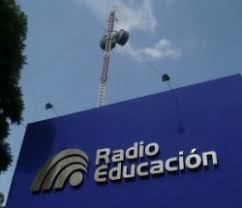
6185, Radio Educacion, Ciudad de México 0625-0645 and 0100-0135 with classic Mexican music and station IDs. Also noted as Señal Cultura México, schedule 2200-1100 UTC. (Hillton). http://www.radioeducacion.edu.mx

Norway
5895, Radio Northern Star, Bergen, 2026-2037. English comments and station ID at 2030 “Radio Northern Star.” English pop music for SINPO 25432 (Méndez).

Peru
4820, Radio Senda Cristiana, Cotahuasi, Arequipa, 0018-0127. Spanish programming to religious text. SINPO 15421 (Méndez).

Romania
11620 Radio Romania International at 0011. English service with lady’s newscast for a good signal. 13650 at 2031 with newscast, also on // 11975. Noted on fair quality 11800 at 2219 with a program on health issues (Sellers). http://www.rri.ro

Thailand
13750, Radio Thailand at 0001. English service covering newscasts by male/female duo. Fair signal. (Sellers).
15090 USAGM/Radio Azadi via Udon Thani. Heard at 0231. Pashto programming to Afghanistan. (Grimm) the station also broadcast this time on 9480. http://www.azadiradio.com

United Kingdom

3955, SM Radio Dessau 1902-1925. Woofferton, UK relay and replay of earlier broadcast from Germany relay at 1200 and 0800. Classical music to German announcements and the May Day program. (Van Horn/NLD Twente SDR) E-QSL received in three days.

United States
9265, WINB 2045-2050. The signal barely audible through archived audio from Bro. Stair’s sermons // 9665.
9980, WWCR 1850-1905. Parallels 15825 or 13845 not heard.  Religious text to hymns, canned station ID into Overcomer Ministry programming; 12160 at 1800-1830; 12160 at 2000-2010; 9350 at 2050-2100 with discussion on current politics and upcoming elections.
9275, WMLK Radio, Bethel, PA 1910-1920. Fair signal from tune-in for archived Elder Jacob O. Meyer religious text. SIO 232. Audible 2045-2055 with very weak text.
5950, WRMI/Radio Tumbril 0200-0220. “Radio Tumbril” identification for Encore classical music program from host Brice Avey. Music from Hummel and Mendelssohn, SINPO 44344
15770, WRMI 2220-2230. Spanish program to Latin America. Station ID; 9455 at 2230 with Overcomer Ministry program; 7730 at 2240 Supreme Master’s program; 5850 Radio Prague French newscasts.
9475, WTWW 2100-2110. Scriptures for America into archived programming from the late Pastor Peter J. Peters from LePorte Church. (Van Horn/SW Central Kiwi SDR LA).

Vanuatu
7260, Radio Vanuatu 0620-0640. Noted a public service format in Bislama, followed by national news and pop vocals. (Hillton).7260, 0610-0655 Poor signal quality but Vanuatu (Wright) https://www.vbtc.vu

Vatican State
9705, Vatican Radio via Santa Maria di Galeria. French service heard at 2029. Interval signal to ID as “Radio Vaticana.” Instrumental music and lady’s program info. SINPO 35543 with programming targeted to Africa. Heard on 21470 via BBC relay in English with sports programming and station station ID. SINPO 35553 to Africa (Grimm). http://www.vaticannews.va 

Tuesday, May 14, 2024

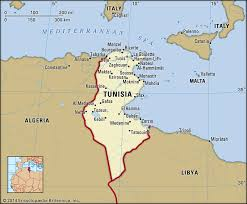
A glimpse of Tunisian radio broadcast history


Sixty-five years ago, in May 1959, Tunisia launched its international service on short waves. The first short wave transmitter was in Djedeida near Tunis (36°50'12.4"N 9°55'45.5"E). This is a 50 kW Telefunken.

Ten years later, a new transmitter center is installed in Sidi-Mansour, near Sfax (34°49'13.9"N 10°51'08.5"E). It comes equipped with 2 100 kW Telefunken transmitters. Antennas point to the Maghreb, Europe and the Middle East.

In 1975, a third transmitter of the same type came to strengthen broadcasting.

In 1999, after the end of the Cold War and as all countries reduced their investment in short waves, Tunisia did the opposite! The transmitter center was modernized at a great cost. All transmitters were replaced by four 500 kW Thales TSW2500. To finance the works the Tunisian state made a thirty-year loan that it must repay by 2028.

After repayment of the first deadlines, the National Office of Television noted it is necessary to save money and the transmitters are only used at reduced capacity. Worse yet, while only half the loan is repaid, the government is trying to find a buyer for this material. 

Unfortunately, the shortwave market had collapsed and 500 kW transmitters had become unsellable. At the end of 2013, broadcast on shortwave were suppressed, because it costs nearly 3 million dinars/year to taxpayers.

Since then, Radio Tunis International has broadcasted its programs in French, Italian, English, German and Spanish on medium waves 963 kHz, 100kW and FM at Bizerte 92.0 MHz Tunis 98.2 MHz Sousse 92.0 Mhz Sfax 99.5 MHz Kef 88.2 MHz Gafsa 101.8 MHz and fortunately on the net at http://www.rtci.tn/ and apps. 

Over the years, this large international chain has served more foreign residents and tourists.
(Radio World/FB)
(edited by Teak Publishing for clarity)

Monday, May 13, 2024

Weekly Propagation Forecast Bulletins

 Product: Weekly Highlights and Forecasts
:Issued: 2024 May 13 1020 UTC
# Prepared by the US Dept. of Commerce, NOAA, Space Weather Prediction Center
# Product description and SWPC web contact www.swpc.noaa.gov/content/subscription-services
#
#                Weekly Highlights and Forecasts
#
Highlights of Solar and Geomagnetic Activity 06 - 12 May 2024


Solar activity was high. The bulk of the activity came from Region 3664 (S17, L=347, Fkc/BGD on 10 May). This region was responsible for 41 M-class and 9 X-class flares accounting for approximately 72% of the 74 energetic events observed during the week. It was also responsible for several CMEs, On Monday, 6 May the region had grown to an Ekc/BGD group, having been a numbered region since 01 May. By the 8th, it had more than doubled in size to 1200 microhemispheres. and had produced its first three X-class flares. By 10 May, it had doubled again in size to 2400 microhemispheres and produced a total of 6 X-class flares. 

Flares and CMEs noted included the following from Region 3664, with flare maximum time and particulars followed by the time the CME was first visible in C2 imagery: 

08/0509 X1.0 - 08/0600

To be determined, 08/1224

08/1753 M7.9/2N, 08/1912

08/2236 X1.0, 2140

09/0913, X2.2/3B; 09/0948.

These CMEs were all modeled in a 09/1300 Enlil run which prompted the dissemination of a G4 geomagnetic storm watch (See alerts listing). Additional flares and CMEs prior to the onset of the geomagnetic storm occurred at: 

09/1744 X1.1/2B, 09/1912

10/0654 X3.9, 09/0748

11/0123 X5.8/2B, 11/0136

Note: The flare/CME associations are provisional at this point and may need revision. Please see the Energetic Events list for information regarding radio emissions associated with the flare described above and for information regarding the remainder of the flares not described above. Additonal CMEs occurred in conjunction with the remaining flares but are not described here. 

Proton events were observed at geosynchronous orbit. A 10 Mev at 10 pfu event, associated with an X3.9 flare from region 3664, began on 10 May at 1335, peaked at 207 pfu on 10/1745, and ended at 12/1235. A 100 MeV proton event, associated with an X5.8 flare from Region 3664, began on 11 May at 0210, reached a peak of 7 pfu at 11/0715, and ended at 12/0030. 

The greater than 2 MeV electron flux at geosynchronous orbit was at normal to moderate levels. 

Geomagnetic field activity reached extreme levels, and saw the largest geomagnetic storm since the 2003 Halloween superstorms. DST dipped to -412 on 11 May at 0300 UT. The week began with a relatively benign solar wind environment, indicative of a relatively unremarkable high speed stream that may have included a weak transient passage. With the exception of one active period, the geomagnetic field remained at quiet to unsettled levels until the arrival of a barrage of CMEs described above on 10 May. 

Interplanetary shock passage was observed at 10/1639 and followed by a sudden impulse at 1645 of 108 nT at the Boulder magnetometer. Over the remainder of the 10th, the total interplanetary magnetic field strength at L1 increased to 75 nT and Bz remained southward, dipping to -50 nT at times. The solar wind speed jumped from around 450 km/s to 700 km/s with the arrival of the shock, eventually reaching a peak near 1000 km/s on 12/0057. The geomagnetic field responded promptly and had reached a Kp=7 by 10/1718, Kp=8 by 11/0338, and Kp=9o by 10/2334. 

The Kp remained at 9o through the 11/00-03 synoptic period, and at 8+ or above for the next 15 hours. A third period of 9o was again observed during the 11/09-12 synoptic period.The Oulu, Finland cosmic ray detector indicated a Forbush decrease of 10% between the 10th and 11th. From 11/1800 to 12/0600 the Kp remained between 7+ and 7- before dropping below minor storm levels through the 12/21 synoptic period. An extremely weak shock was observed at 13/0900 followed by a decrease in density and a jump in temperature. The signature had the hallmarks of a fast stream becoming geoeffective. By 13/1900, the temperature began dropping and the density began rising. This was followed by an increase in geomagnetic activity to moderate (Kp between 6- and 6+) levels. 

Forecast of Solar and Geomagnetic Activity 13 May - 08 June 2024

Solar activity is expected to remain at moderate to high levels through the forecast period. Region 3664 will rotate off the visible disk by 14-15 May, and another 10 regions will depart the visible disk between 16 and 23 May. This will lead to a relative lull in activity compared to the past week. However, a couple of regions rotating on will maintain the potential for at least moderate activity. Region 3663 is expected to return on the 23rd and Region 3664 on the 28th of May, with a significant increase in the threat of high activity. 

There is a chance for proton events at geosynchronous orbit, particularly with the return of Region 3664. This doesn't preclude the possibility of an event in the days leading up to the 23rd, but the risk will increase with each day Region 3664 moves across the visible disk. 

The greater than 2 MeV electron flux at geosynchronous orbit is expected to be at moderate levels throughout the period. 

Geomagnetic field activity is expected to be at minor storm levels to being the period, with a lingering chance of moderate to strong levels through the 14th. A relatively quiet period follows, interrupted by coronal hole high-speed stream activity between 23 May and 3 June. 


Product: 27-day Space Weather Outlook Table 27DO.txt
:Issued: 2024 May 13 1020 UTC
# Prepared by the US Dept. of Commerce, NOAA, Space Weather Prediction Center
# Product description and SWPC web contact www.swpc.noaa.gov/content/subscription-services
#
#      27-day Space Weather Outlook Table
#                Issued 2024-05-13
#
#   UTC      Radio Flux   Planetary   Largest
#  Date       10.7 cm      A Index    Kp Index
2024 May 13     220          40          7
2024 May 14     215          18          5
2024 May 15     200          12          4
2024 May 16     190           5          2
2024 May 17     180           5          2
2024 May 18     170           5          2
2024 May 19     170           5          2
2024 May 20     160           5          2
2024 May 21     165           5          2
2024 May 22     165           5          2
2024 May 23     160           8          3
2024 May 24     160          12          4
2024 May 25     160           8          3
2024 May 26     160           5          2
2024 May 27     165          12          4
2024 May 28     175           8          3
2024 May 29     195           5          2
2024 May 30     205           5          2
2024 May 31     205           8          3
2024 Jun 01     215          12          4
2024 Jun 02     220          12          4
2024 Jun 03     225           8          3
2024 Jun 04     220           5          2
2024 Jun 05     220           5          2
2024 Jun 06     225           5          2
2024 Jun 07     225           5          2
2024 Jun 08     225           5          2
(NOAA)

Music Programs on Shortwave - Verson 2 update


An updated version (v2) of my "Music Programmes on Shortwave" PDF file for the current A-24 broadcast season is now available to download from the permanent link at:


I hope that you find it of interest.
As always, I appreciate any updates or corrections.
Alan Roe, Teddington, UK 

Sunday, May 12, 2024

Voice of Indonesia frequency adjustment on May 13


Voice of Indonesia, the Overseas Service of Radio Republik Indonesia (VOI RRI) will carry out an adjustment on our shortwave frequency starting Monday, 13 May 2024 at 0000 UTC. We are moving from 4750 kHz to 4755 kHz. 

Meanwhile, our 3325 kHz will continue as usual. We are asking for your understanding. Please send your feedback to our email address voilisteners@gmail.com

Thank you. (Station Direct via WRTH Facebook)
(R D'Angelo/NASWA)
(edited or clarity)

Voice of Indoneaia websitehttps://voinews.id/ 

Thursday, May 09, 2024

Shortwave Radiogram, Program 353, May 9-15


Hello friends

If you are in the USA. I hope you were not inconvenienced (or worse) by the bands of severe weather the moved across the country during the past few days. Here in the Washington DC area, we have been promised interesting weather as part of this system, but each new forecast calls for less drama. I think we'll be lucky to get a few drops of rain.

Space weather has also been disruptive lately. I've noticed that the amateur radio bands have featured more noise than stations the past few days. I hope this week's Shortwave Radiogram is audible.

A video of last week's Shortwave Radiogram (program 352) is provided by Scott in Ontario (Wednesday 1330 UTC). The audio archive is maintained by Mark in the UK. Analysis is provided by Roger in Germany.

Here is the lineup for Shortwave Radiogram, program 353, 9-15 May 2024, in MFSK modes as noted:

 1:44  MFSK32: Program preview
 2:53  MFSK32: World heat records for 11th month in a row
 4:59  MFSK64: Proposal to replace collapsed Baltimore bridge*
 9:32  MFSK64: This week's images*
28:36  MFSK32: Closing announcements

* with image(s)

Please send reception reports to radiogram@verizon.net
Twitter: @SWRadiogram or https://twitter.com/swradiogram 
(visit during the weekend to see listeners’ results)

Wednesday, May 08, 2024

Trans World Radio - Monte Carlo


Special thanks to Ray Robinson and Jeff White for sharing a recent edition of Wavescan.

Jeff: 63½ years ago, in October 1960, Trans World Radio, now the largest Christian broadcaster in the world, began broadcasting from a facility in Monte Carlo.  Last week, Ray Robinson in Los Angeles covered their early beginnings as the Voice of Tangier in the Tangier International Zone.  Now here he is with the story of broadcasting in Monaco, and Trans World Radio, Monte Carlo in particular.

Ray:  Thanks, Jeff.  The small independent European Principality of Monaco is a micro-state, located on the French Riviera just ten miles west of the French border with Italy.  This country is listed as the second smallest in the world, with only the Vatican State being smaller.  Monaco is a little more than two miles long, east to west, and at its narrowest point it’s only 200 yards wide.  The total area is just ¾ square mile, and almost a quarter of that total area has been recovered from the Mediterranean Sea.

The capital city of Monaco is, Monaco; although another well-known city in this tiny enclave is Monte Carlo.  The total population of Monaco is around 39,000.  The country obtains much of its revenue from tourism, with 1½ million people flooding into the area each year.

The national flag of Monaco has two horizontal bars - red at the top and white at the bottom.  Surprisingly, the Monaco flag is exactly the same as the flags of both Indonesia & the German state of Hesse, though the dimensions are slightly different.

The country of Monaco is also well known for its Casino; the Formula 1 Monaco Grand Prix car race; the Monte Carlo Rally run annually since 1911, and the Tour de France bicycle race which always passes through the Principality.  Monaco issues its own colorful postage stamps, and also its own bank notes and coinage, now in the Euro series.

It was back in the year 1956, that the American Hollywood actress Grace Kelly married Prince Rainier of Monaco in a highly publicized wedding ceremony.  The reigning Grimaldi family traces their dynasty back to the year 1297, when the first of their clan took over the throne.

This little southern European country was named by Greek seafarers who set up their own colony in the 7th century AD.  600 years later, the area was reestablished as an Italian colony dependent upon the city of Genoa.  Even though Monaco is an independent country, it is heavily dependent upon neighboring France.

It was back in 1923 that initial consideration was given to establishing a radio station in Monaco, though nothing definite came of this matter until some 20 years later.  During 1942, discussions for the establishment of a new international shortwave station took place between the government of Monaco and the governments of both Germany & Vichy France.  In May, a permit was issued for the construction of a powerful shortwave station that could give wide area coverage for Nazi German radio programming.

Work on the new station moved slowly, though two shortwave transmitters, rated at 100 kW each, were ordered through the Indonesian government, although they were never delivered.  A new transmitter building was built into the side of Mt Agel, behind Monte Carlo, and located actually in what is officially French territory.

Radio Monte Carlo had an official opening ceremony on July 17, 1943, with the well-known French actor, Maurice Chevalier as the Master of Ceremonies.  For this, they utilized a small 200 watt shortwave transmitter located in Monaco itself, and also a medium wave outlet via the already established transmitter of Radio Mediterranee on 1240 kHz, located some distance away at Antibes in France.  A little over a year later, this wartime Radio Monte Carlo was closed.  So, although Herr Hitler had paid for the construction of a super-power station, it wasn’t finished in time to be used by his regime.

In June 1945, Radio Monte Carlo was re-opened by the French, first with a 300 watt shortwave transmitter on 6130 kHz; and a year later, a 10 kW medium wave transmitter on 410 metres, 730 kHz was added.  Both of these units were heard by international radio monitors in England.  One year later again, a 25 kW shortwave transmitter was installed and this was noted on air in the United States, as well as in New Zealand & Australia.

Meanwhile, across the Mediterranean from the south coast of Spain, the city of Tangier enjoyed a status known as the Tangier International Zone from 1924-1956.  In this zone, there were no controls on broadcasting, and as we explained last week, in 1954 an American by the name of Dr. Paul Freed founded a station known as the Voice of Tangier, first by buying time on the commercial Radio Tangier, and then by installing his own shortwave transmitters.  His initial vision was simply to broadcast to Spain where under Franco’s government, Spanish protestants were forbidden to evangelize or distribute Christian resources, but the vision grew quickly from there.

When Morocco gained independence in 1956, the Tangier International Zone was reunited with the rest of the country, and all broadcasting in Tangier came under government control.  In April 1959, it was announced that all stations would be nationalized at the end of that year.  Dr. Freed began serious negotiations with Radio Monte Carlo about the lease of airtime.  In his book, ‘Towers to Eternity’, Dr. Freed explains that Monte Carlo was the only station in Europe at that time, and at any price, that would allow him the privilege of broadcasting the Gospel full time and indeed it remained so for more than another decade.

In September 1959, he signed a contract with Radio Monte Carlo for the establishment of a large shortwave station, the transmitters for which would be installed in the by then disused building in the side of Mt Agel.  The terms of the agreement were that TWR had to buy the transmitters, but they would be owned by Radio Monte Carlo and leased back full time to TWR for their exclusive use.

An antenna system was constructed in a strategic location, high on the bluffs of the Southern Alps, overlooking the Mediterranean.  It consisted of mostly high-gain curtain antennas with 21 steel framed towers up to 175 feet high.  They had one antenna each for:
The Middle East
British Isles
Scandinavia
Russia
There was also a reversible antenna which reached Spain on one side and Eastern Europe on the other, and several stack dipoles with reflectors and directors which gave coverage into the nearby countries of Italy, Germany and France.

The Voice of Tangier closed on December 31st, 1959, and TWR Monte Carlo went on the air for the first time on October 16, 1960, just nine months later.  Initially they had just one 100 kW shortwave transmitter, under the official callsign 3AM5.  A second 100 kW transmitter was added the following year, plus a 500 kW unit in 1982.  TWR’s studios and offices occupied three floors of a multi-storey building in Monte Carlo, and over 18,000 letters from listeners were received in the first year.

At the height of their operation in Monte Carlo, TWR was on the air from the three shortwave transmitters and ten curtain antennas, as well as on medium wave from a high powered facility nearby, and in French on longwave.  I personally was first introduced to the programming of Trans World Radio by my grandparents in the late 1960’s, who always used to listen to the English programs from 7:25-9:00am each day.  I remember them well on 7290 kHz, which generally provided a very solid, reliable signal.  Here’s a shortwave sign-on from 1979:

On April 1st, 1966, TWR began leasing the 400 kW medium wave transmitter of Radio Monte Carlo on 205 metres (1466 kHz), for early morning and late evening programming in German, French and English.  The English segment was from about 10:30pm to midnight each evening.  Most programming was American, but in the 1970’s, some British-produced programs were added, such as the one for young people called Rendezvous with evangelist Dick Saunders.  Here’s a medium wave closedown from March 1971:

In 1974, a new Thomson CSF medium wave transmitter was installed, boosting TWR’s output power to 1 MW in the evenings.  From the mid-1970’s, though , the frequency became a challenge, because in the UK, many BBC local radio stations started using the adjacent frequency of 206 metres (1457 kHz), and the station where I lived in London did so with 50 kW!  Cheap portable transistor radios with only average selectivity struggled to separate the signals, and the resulting splatter on 205 wasn’t something to which a casual user would listen. 

TWR closed their shortwave operations from Monte Carlo in 1996, after a new station had been opened in Cyprus.  An evening medium wave relay from Monte Carlo continued until 2020, but since 2022, all broadcasting in Monaco has been on FM and DAB only.
 
On two different occasions, Adventist radio programming was noted over Radio Monte Carlo.  Beginning in 1957 for a year or two, the French version of the “Voice of Prophecy” was heard on three shortwave channels; and for a few months in 1999, Adventist World Radio took out a relay via another medium wave transmitter on 702 kHz for coverage into North Africa in both Arabic & French.

QSL’s from Radio Monte Carlo were fairly common, and multitudes of QSL cards have been issued over the years by Trans World Radio, Monte Carlo.

Back to you, Jeff.
(Wavescan/05 May 2024)

From War Propaganda to Gospel Outreach: The Story of Trans World Radio Monte Carlo

On this occasion, we are presenting the story of Radio Monte Carlo, and we are also honoring Trans World Radio in Monte Carlo on the occasion of their 50th anniversary. The November issue of the American radio magazine, “NASWA Journal”, reminds us that TWR Monte Carlo celebrated its 50th anniversary a few weeks ago; and some time back, Christian Ghibaudo in France provided us with much of the background information for this feature item.
The small European country of Monaco is located against the Mediterranean coast of France, just ten miles from the border of Italy. This country is listed as the second smallest in the world, with only the Vatican being smaller. Monaco is a little more than two miles long, and at its narrowest point it is only 200 yards wide. The total area is just ¾ square mile, and almost a quarter of this total area has been recovered from the Mediterranean Sea.
The capital city of Monaco is, Monaco; though another well known city in this tiny enclave is Monte Carlo. The total population of all of the country of Monaco is around 33,000. The country obtains much of its revenue from tourism, with 1½ million people flooding into the area each year.
Their national flag shows a plain red banner on the top half and a plain white banner on the bottom half. Surprisingly, the Monaco flag is exactly the same as the flag of both Indonesia & the German state of Hesse, though the dimensions are slightly different.
The country of Monaco is also well known for its Casino; and the Monaco Grand Prix car race; and its Tour de France bicycle race. Monaco issues its own colorful postage stamps, and also its own coinage, now in the Euro series.
It was back in the year 1956, that the American Hollywood actress Grace Kelly married Prince Rainier in a highly publicized wedding ceremony. The reigning Grimaldi family traces their dynasty back to the year 1297, when the first of their clan took over the throne.
This little southern European country was named by Greek seafarers who set up their own colony around the 600s. Another 600 years later, and the area was refounded as an Italian colony dependent upon the city of Genoa. Even though Monaco is an independent country, it is heavily dependent upon neighboring France.
It was back in the year 1923 that initial consideration was given to establishing a radio station in Monaco, though nothing definite came of this matter until some 20 years later. During the year 1942, discussions for the establishment of a new international shortwave station took place between the government of Monaco, and the governments of both Germany & Vichy France. In May, a permit was issued for the construction of a powerful shortwave station that could give wide area coverage to German radio programming.
Work on the new station moved slowly, though two shortwave transmitters, rated at 100 kW each, were ordered through the Indonesian government. A new transmitter building was constructed into the side of Mt Agel, behind Monte Carlo, and located actually in what is officially French territory.
A temporary radio station was inaugurated in an official opening ceremony on July 17, 1943, with the well known French actor, Maurice Chevalier as the Host of Ceremonies. A small shortwave transmitter with just 200 watts was located in Monaco itself, and the mediumwave outlet was the already established transmitter of Radio Mediterranee on 1240 kHz which was located some distance away at Antibes in France. A little over a year later, this new Radio Monte Carlo was closed.
In June 1945, Radio Monte Carlo was re-opened by the French, with a 300 watt shortwave transmitter on 6130 kHz; and a year later, a 10 kW mediumwave transmitter on 410 metres, 730 kHz. Both of these units were heard by international radio monitors in England. One year later again, a 25 kW shortwave transmitter was installed and this was noted on air in the United States, as well as in New Zealand & Australia.
On two different occasions, Adventist radio programming was noted over Radio Monte Carlo. Beginning in 1957 and for a year or two, the French version of the “Voice of Prophecy” was heard on three shortwave channels; and for a few months in 1999, Adventist World Radio took out a relay via the mediumwave transmitter on 702 kHz for coverage into North Africa in both Arabic & French.
In 1958, Trans World Radio signed a contract with Radio Monte Carlo for the establishment of a large shortwave station, and the transmitters would be installed in the disused building constructed into the side of Mt Agel during the German era. Trans World Radio was on the air previously from a site in Tangier, North Africa, but, with the changing political scene in Tangier-Morocco, it became necessary for them to re-locate elsewhere.
The new facility for TWR Monte Carlo was inaugurated on October 16, 1960, with the use of a new 100 kW shortwave transmitter under the official callsign 3AM5. An additional 100 kW shortwave transmitter was installed during the following year, and a 500 kW transmitter in 1982. Their studios and offices occupied three floors in a multi-storeyed building in Monte Carlo.
At the height of their operation in Monte Carlo, TWR was on the air from the three shortwave transmitters and ten curtain antennas, as well as on mediumwave from a high powered facility nearby. The main antenna systems are located in French territory rented to Monte Carlo, though one antenna for coverage into Europe is located on the northern slopes of Mt Agel in what is regular French territory.
These days, with the usage of their own shortwave stations elsewhere, as well as with rental time on additional relay stations, the TWR station in Monte Carlo is in part time use only, just for the morning hours on the two 100 kW transmitters.
QSLs from Radio Monte Carlo are quite evident, and multitudes of QSL cards have been issued over the years by Trans World Radio Monte Carlo.
(NWS # 96 via Adrian Peterson)
(photo via Teak Publishing Archives)

Programming update for FTIOM and UBMP

 The main feature will be special guest Kiki Valera with some of his new son cubano album Vacilón Santiaguero


From the Isle of Music
The main feature will be special guest Kiki Valera with some of his new son cubano album Vacilón Santiaguero
May 11: 0900-1000 UTC 9670 kHz 
1900-2000 UTC 3955 and 6070 kHz


Uncle Bill’s Melting Pot, May 18, 2024
The main feature will be special guest Eugene Pao, Hong Kong’s foremost jazz guitarist, with some of his new album Jazz at Lincoln Center recorded live during a tour of the United States. 
May 18 0900-1000 UTC 9670 kHz 
1900-2000 UTC 3955 and 6070 kHz

Both programs will feature additional music to round out the hour.

It’s great to be back on Channel 292!
(Bill Tilford/Tilford Productions)


Tuesday, May 07, 2024

DX Central Announces a New Summer-Long AM DX Challenge


 THE 2024 SUMMER OF DX!

DX Central and Loyd Van Horn are pleased to announce the latest challenge for MW DXers to test their skills against the temperament of the ionosphere with the 2024 Summer of DX challenge, open now through 2359 UTC on August 31, 2024.

"Who says that mediumwave season ends in May?  Definitely not us," says Van Horn.  "Some of my best MW DX catches ever have come through in the summer months.  While more difficult, the patient and determined DXer can reap fantastic results by braving the lightning crashes and summer static for MW DX!"

The Summer of DX challenge is open to any DXer, worldwide, for any station broadcasting between 530 and 1710 kHz.  There will be point values assessed for each entry and final point totals will be calculated after the conclusion of the challenge.  Results will be presented during the season premiere of Season 5 of the popular DX Central Live! DX-themed livestream in the fall of 2024.

"We made a conscience effort with our scoring setup for this challenge to try to level the playing field as much as we could to remove biases such as the use of SDRs or proximity to stations, that some DXers may see as discouraging for participation," says Van Horn.

"I wanted to make this something that any DXer around the world would want to actively be a part of!"

Those interested in participating can find a full list of rules, scoring information and other details at the challenge Web site:  dxchallenges.com.  Once registered, DXers can begin submitting their logs and accumulating points!

DX Central is a multimedia platform that specializes in mediumwave (AM) and FM DX and related topics.  The platform includes a web site with written educational material on MW and FM DX, propagation, equipment reviews and more; a popular weekly livestream during the peak of MW season in the Northern Hemisphere with live DX, discussions around DX-related topics and active participation from viewers; the DX Central YouTube channel with a large assortment of videos including instructional videos from the DX101 and Radio101 series as well as MW and FM identification airchecks to aid DXers in identifying their own DX catches; and the host of a series of weekly frequency challenges during the peak of MW DX season to motivate DXers to push their skills and help them hear more stations!

The DX Central Platform:
youtube.com/@DXCentral

Voice of Indonesia to adjust frequency


Voice of Indonesia, the Overseas Service of Radio Republik Indonesia (VOI RRI) will carry out an adjustment on our shortwave frequency starting Monday, 13 May 2024 at 0000 UTC. We are moving from 4750 kHz to 4755 kHz. 

Meanwhile, our 3325 kHz will continue as usual. We are asking for your understanding. Please send your feedback to our email address voilisteners@gmail.com

Thank you. (Station Direct via WRTH Facebook)
(R D'Angelo/NASWA)
(edited or clarity)

Voice of Indoneaia websitehttps://voinews.id/ 

Monday, May 06, 2024

HAARP slated for research campaign


The High-frequency Active Auroral Research Program (HAARP) will be conducting a research campaign on May 8-10 UTC, with operating times specified below. Operating frequencies will vary, but all HAARP transmissions will be between 2.8 MHz and 10 MHz.


Actual transit days and times are highly variable based on real-time ionospheric and/or geomagnetic conditions. All information is subject to change.

This campaign is being conducted in support of research proposals from the University of Alaska Fairbanks and is a study of mechanisms for the detection of orbiting space debris. Space debris poses a major risk to all space operations, including manned spacecraft and communications satellites. 

These experiments are being performed at HAARP will help identify ways to improve collision detection on satellites.


Date (UTC) May 8 May 9 May 10
Time (UTC) 2000-0200 2000-0200 2000-0230
Frequencies (MHz) 3.25, f0F2 3.25, f0F2 3.25, f0F2

For updates on ionospheric cconditions in Gakona, please consult ionograms from the HAARP

Weekly Propagation Forecast Bulletins

 Product: Weekly Highlights and Forecasts
:Issued: 2024 May 06 0628 UTC
# Prepared by the US Dept. of Commerce, NOAA, Space Weather Prediction Center
# Product description and SWPC web contact www.swpc.noaa.gov/content/subscription-services
#
#                Weekly Highlights and Forecasts
#
Highlights of Solar and Geomagnetic Activity 29 April - 05 May 2024

Solar activity was at moderate to high levels. Moderate levels were observed on 29 Apr and 01-02 May. High levels were reached on 30 Apr, due in part to an M9.5/2b flare at 30/2346 UTC from Region 3654 (S07, L=134, class/area Fkc/550 on 30 Apr). Region 3654 was the largest and most complex spot group on 28 Apr-01 May, however it was in decay as it approached the SW limb on 01 May. The region produced a total of 11 M-class flares. On 30 Apr, Region 3663 (N26, L=037, class/area Fkc/580 on 05 May) emerged in the NE quadrant, followed by Region 3664 (S19, L=352, class/area Ekc/580 on 05 May) on 01 May. Both regions grew steadily over the following days. Region 3663 produced 17 M-class flares and 3 X-class flares while Region 3664 produced only 5 M-class flares. The three X-class flares included an X1.6/1b at 03/0222 UTC, an X1.3/1b at 05/0601 UTC, and an X1.2/1b at 05/1154 UTC. The X1.6 flare had associated Type II (959 km/s) and IV radio sweeps, a 550 sfu Tenflare and an associated CME first observed in SOHO/LASCO C2 imagery at 03/0248 UTC. Modelling of the event showed a potential glancing blow arriving around 05/1800 UTC.

There were two further CME runs of note. Those included an eruption near N13W09 at 29/0909 UTC that displayed a westward flow across GOES 16 SUVI imagery. C2 imagery showed a CME off the NW limb at 29/1248 UTC that was modelled as a potential glancing blow on 03 May around 1500 UTC. Lastly, a CME that was associated with a C3.9 flare at 03/2037 UTC from a plage area in the NE quadrant. The flare had associated Type II (392 km/s) and Type IV radio emissions and a CME first observed in C3 imagery at 03/2218 UTC. Analysis showed a potential glancing blow on 09 May. Other eruptive events associated with radio signatures were observed, but did not produce ejecta determined to be on the Sun-Earth line. 

No proton events were observed at geosynchronous orbit.

The greater than 2 MeV electron flux at geosynchronous orbit was at normal to moderate levels throughout. 

Solar wind parameters began the period under mild positive polarity CH HSS influence solar wind speed was mostly in the 450-500 km/s range and total field around 2-4 nT. Solar wind speed began to diminish to nominal levels on 30 Apr. After 30/1130 UTC, the first of three CMEs were observed. Total field increased to near 14 nT while the Bz component rotated from -9 nT to +13 nT. Solar wind speed continued to decrease to near 350 km/s. The geomagnetic field responded with quiet levels on 29 Apr, followed by quiet to active levels on 30 Apr-01 May. On 02 May, a shock arrival was observed at 02/1317 UTC, indicating the arrival of the second CME. This CME was possibly the one that left the Sun on 29 Apr. The IMF increased to approximately 21 nT and the Bz component shifted southward to -19 nT. Solar wind speed increased initially to near 450 km/s and later to near 510 km/s on 03 May. The geomagnetic field responded with unsettled to G3 (Strong) storm levels on 02 May and quiet to active levels on 03 May. By early on 03 May, the IMF had decreased to nominal levels with solar wind speed slowly returning to background conditions. Nominal conditions returned on 04 May and through the midday on 05 May. Around 05/1500 UTC, another enhancement was observed in the IMF, likely the arrival of the 03 May CME. 

Total field strength increased gradually to 14 nT while the Bz component reached a southward deflection of -12 nT. Solar wind speed increased to near 380 km/s. The geomagnetic field responded with unsettled to active levels late on 05 May. 

Forecast of Solar and Geomagnetic Activity 06 May - 01 June 2024

Solar activity is expected to be at moderate to high levels (R1-R3/Minor-Strong) through 12 May as Regions 3663 and 3664 rotate across the visible disk. Low to moderate levels are expected on 12 May-01 Jun. 

There is a chance for S1-S2 (Minor-Moderate) solar radiation storm levels on 06-13 May due to the flare potential of Regions 3663 and 3664. 

The greater than 2 MeV electron flux at geosynchronous orbit is expected to be at normal to moderate levels on 06 May-01 Jun. 

Geomagnetic field activity is expected to be at unsettled to G2 (Moderate) storm levels on 06 May due to persistent CME influence. The geomagnetic field is expected to reach unsettled to active levels on 07-09 May, 12-14 May, 23-25 May, 27-28 May, and 31 May-01
Jun due to recurrent CH HSS activity. 

Product: 27-day Space Weather Outlook Table 27DO.txt
:Issued: 2024 May 06 0628 UTC
# Prepared by the US Dept. of Commerce, NOAA, Space Weather Prediction Center
# Product description and SWPC web contact www.swpc.noaa.gov/content/subscription-services
#
#      27-day Space Weather Outlook Table
#                Issued 2024-05-06
#
#   UTC      Radio Flux   Planetary   Largest
#  Date       10.7 cm      A Index    Kp Index
2024 May 06     180          35          6
2024 May 07     185          12          4
2024 May 08     190           8          3
2024 May 09     185          10          3
2024 May 10     175           5          2
2024 May 11     175           5          2
2024 May 12     175           8          3
2024 May 13     175          15          4
2024 May 14     180          10          3
2024 May 15     205           5          2
2024 May 16     205           5          2
2024 May 17     200           5          2
2024 May 18     195           5          2
2024 May 19     190           5          2
2024 May 20     185           5          2
2024 May 21     180           5          2
2024 May 22     175           5          2
2024 May 23     170           8          3
2024 May 24     165          12          4
2024 May 25     170           8          3
2024 May 26     175           5          2
2024 May 27     175          12          4
2024 May 28     170           8          3
2024 May 29     165           5          2
2024 May 30     165           5          2
2024 May 31     165           8          3
2024 Jun 01     175          12          4
(NOAA)

Friday, May 03, 2024

Propagation news update from the U.K.


RSGB
May 3, 2024
What a strange week we had; with the solar flux index in the 167 range, falling to 130, conditions should have been reasonable, but the Kp index hit 4 and even 5.33 on the evening of Friday 26 April, which meant propagation on Saturday the 27th was truly dire.

Stations taking part in International Marconi Day on the 27th found the 40m band only open to long skip in the morning. This was due to the critical frequency being below 5MHz. The predicted MUF over a 3,000km path fluctuated between 15MHz and 19MHz for the whole day, which meant only 14MHz was open reliably. As a result, QSOs were hard to come by and many stations reported that it was slow going with virtually no signals from outside of Europe.

So what happened? Well, it was a combination of factors. The increased Kp index—due to a fast solar wind—took its toll; and we are now moving to a summer ionosphere, where chemical changes make it harder to ionize. This will mean we should see MUFs dropping as the season progresses, at least during the day. Nighttime MUFs will be higher than in winter.

So it may be that the glory days of 28MHz F2-layer propagation are on hold until autumn, with only short-skip sporadic E on the 10m band to keep us entertained.

F2-layer propagation is still available on the higher HF bands, but it may be patchy.
International Marconi Day station GB0CMS in Caister, Norfolk, reported that its 20m signals were picked up by a reverse beacon network skimmer in Utah, despite not working anyone outside of Europe. 

Meanwhile, on the morning of the 2nd, Laurie, G3UML was quite surprised to work YJ0CA on Vanuatu on the 15m band using SSB. He also worked 3D2CCC on Conway Reef on the 20m band using CW, and JD1BMH in Japan on the 15m band, also using CW.

Next week NOAA predicts the solar flux index will be in the 125 range, rising to 175 as the week progresses. Geomagnetic conditions are dependent on coronal mass ejections. We have had eight M-class solar flares in the past three days, and a Kp index of 5 on Thursday, the 2nd, which doesn’t bode well for next week. So, keep an eye on solarham.com for current conditions, and look for the best HF propagation if the Kp index is low for a day or two.

VHF and up propagation news from G3YLA and G4BAO:
The weather pattern remains very unsettled for the whole period, with areas of low pressure edging north across the UK from the continent.

There will be a risk of thundery weather at times, with locally heavy rainfall, which will be good for rain scatter on the Gigahertz bands. Tropo looks to be hard to find as we end the current week dominated by low-pressure systems, but there are signs of high pressure returning after mid-week, but only temporarily.

This could produce some tropo paths, especially across surrounding waters such as the Irish Sea, English Channel, and North Sea.
The nominal summer season of sporadic E propagation is upon us and—from May to early September—daily blogs will be provided on the propquest.co.uk website, highlighting the possible sporadic E

It’s well worthwhile getting into the habit of regularly checking the DX clusters and activity maps since the early season is usually characterized by a complex jet stream pattern with multiple potential locations for sporadic E propagation.

Timewise, it eventually settles into a more traditional behavior with activity often in two phases, one in the morning and the second in late afternoon and early evening.

As you listen to this report, the Eta Aquariids meteor shower should be peaking. Unfortunately, the best viewing for the shower—which is part of the debris from Halley’s comet—will be in the southern hemisphere.

Nevertheless, this is expected to be one of the best showers this century. For those viewing the shower, a waning Moon means that light levels should be low, making for ideal visual sighting.

For EME, the Moon will be waning all week with the New Moon around 8 May. The Moon will be rising in the sky throughout the week, with zero declination on 5 May and peaking at its highest in the sky on Saturday, 11 May.

The lowest additional path loss occurs Sunday and Monday, the 5th and 6th, but high Sun noise–with the Moon close to the Sun at New Moon—occurs shortly afterward. Later in the week, as the Sun ‘leaves’ the Moon behind, noise levels, at least on the higher bands will fall to around normal.

(Mike Terry/BDXC)

FastRadioBurst 23 to air on May 5


FastRadioBurst 23 will air on Sunday, May 5 at 0900 and 1300 UTC on 6160 kHz and at 2000 UTC on 6160 kHz & 3975 kHz. The program will be on  Test Cards on Radio. This program is beamed to Europe via Shortwave Gold. Don't miss it !!

Finland's RealMix Radio plans weekend broadcast


RealMix Radio is an exciting new radio project based in Raasepori, Finland. This is their studio building!

Recently granted an official broadcasting license, plans are for a broadcast on the first weekend in May 2024. 

The station is using a modest 15-watt transmitter, with future plans for 250 watts. Plans are also underway to expand RealMix’s broadcasting capabilities to include a medium wave frequency. 

Due to the very low power, a Scandinavian Kiwi SDR is recommended. 

The driving force behind this venture is Joakim Weckström who may be contacted at:  realmix.sw@gmail.com.

6185 kHz

Broadcast times UTC
Saturday May 4, 2024 
07:00 music program 
09:00 Delta Mike On Air 

Sunday May 5, 2024 
07:00 Delta Mike On Air 
08:00 Listener's Requests 

Reception reports to realmix.sw@gmail.com 

Interesting nostalgic story on Radio Afghanistan


AFGHANISTAN  
 I would like to remember one more broadcaster heard on the air - Radio Afghanistan. Broadcasting in Russian by the international service Radio Afghanistan began in January 1961. The station had low-quality transmitting equipment and was unlucky with the choice of frequencies. Therefore, there were often problems with receiving the station.

I remember the only period when audibility was unusually good for three years from 1974 to the end of 1976. The broadcast was carried out during the day at a frequency of 15195 kHz from 13.30 to 15.00 Moscow time for half an hour consecutively in Russian, German and English. True, the time for listening was inconvenient, but I sometimes adapted to listen at work in a special laboratory, where I first did my internship, and then worked for a short time before the army. There was some kind of service radio in the laboratory, which I used.

Over the years,the content of Russian Radio Afghanistan broadcasts has remained approximately the same. This was the case in 1974: news, Russian music, commentary, Afghan music, conversation (about Afghanistan), Afghan music.The broadcasts covered the changes taking place in Afghanistan since the recent overthrow of the monarchy in July 1973 and the activities of President Mohammed Daoud Khan,the cousin of the former king Mohammed Zahir Shah, whom he overthrew. These were the last years of relative stability,
after which, from April 1978, a period of revolutions and civil wars began in Afghanistan.

In the early 80s,and perhaps earlier, some periodicals sold in Soyuzpechat kiosks in other countries published schedules of foreign, including Russian-language broadcasting in these countries:
Radio Afghanistan - in the newspaper "Kabul new times"
Radio Damascus - in the newspaper "Syria times"
Radio Ulaanbaatar - in the newspaper "News of Mongolia"
BBC - in the magazine "England".
(Vladimir, Rybinsk, Yaroslavlskaya oblast-RUS) 
RUSdx #1287 via wwdxc BC-DX TopNews April 28)

Now called IEA - Islamic Emirate of Afghanistan.
(WWDXC Top News 1579/02 May 2024)

Thursday, May 02, 2024

Texas Radio Shortwave on Channel 292 on May 5


On Sunday, May 5, Channel 292, Rohrbach, Germany, will air TRSW’s monthly program at 1000 UTC on 9670 kHz and 2100 UTC on 3955 kHz.
These changes are based on three test transmissions in mid-April.
TRSW welcomes detailed reception reports emailed to texasradioshortwave@protonmail.com.  This includes reports from listeners using remote SDRs.

Encore classical music from Radio Tumbril


Dear Listener,

Regular Broadcast times of Encore By WRMI and Channel 292 are:
02:00 - 03:00 UTC Friday 5850 kHz WRMI to US
20:00 - 21:00 UTC Friday 15770 kHz WRMI to Europe
10:00 - 11:00 UTC Saturday 9670 kHz Channel 292 to Europe
01:00 - 02:00 UTC Sunday 5850 kHz WRMI to US and Canada
19:00 - 20:00 UTC Sunday 3955 kHz Channel 292 to Europe
02:00 - 03:00 UTC Monday 5950 kHz WRMI to the US and Canada
13:00 - 14:00 UTC Tuesday 15770 kHz WRMI to Europe, east coast of US and Iceland. (Sometimes RTTY on the lower sideband. Suggest notch out or use USB.)

Some Things to see on The Encore Website:
The Encore website is www.tumbril.co.uk where you will find:
Important information about funding of Encore - Radio Tumbril.
Up to date transmission times and frequencies.
The playlists for the most recent programmes.
An email link.
Informal reception reports as well as those requesting eQSL cards are welcome.

ENCORE IS A ONE-MAN OPERATION -  PLEASE MAKE A PAYPAL DONATION OR 'BUY ME A COFFEE' AND HELP PAY THE  BROADCASTERS AND KEEP ENCORE ON THE AIR - Go to - www.tumbril.co.uk

WRMI and Channel 292 are very generous with their air-time but Encore still costs around 100 Dollars/Euros a month to broadcast.
If you can - please send a small contribution to help Encore keep going.

THE DONATION BUTTON AND 'BUY ME A COFFEE' BUTTON are on the homepage of the website - www.tumbril.co.uk - which folks can use if they would like to support Encore.

(Please don't be put off by the POWR security wall when using the PAYPAL button - it is a harmless requirement of WIX the website hosting service.)

THIS FORTNIGHT'S PROGRAMME - (First broadcast this FRIDAY 3rd May) by WRMI at 0200 UTC on 5850, (and 2000 UTC on 15770) and then Channel 292 on SATURDAY (4th May) at 10:00 UTC on 9670 kHz):
Starts with part of a trumpet concerto by Johann Hummel, some of Mendelssohn's String Octet, and a wind band piece from contemporary US composer David Holsinger.
After that - The Woman with the Alabaster Box, a piece for voices by Arvo Pärt, and the chamber piece, Siegfried Idyll by Richard Wagner.
The programme ends with part of La Mer by Debussy.

A very good site for online SDR receivers all over the world is: http://kiwisdr.com/public/  Click the 'Map' button in the top left of the screen.
 
Thank you for spreading the word about Encore - Classical Music on Shortwave on Radio Tumbril - and thank you for your support.

(This bulletin is sent by Bcc to the many hundreds of listeners who have been in contact with Encore over the last nearly five years of broadcasting Encore.)

Brice Avery - Encore - Radio Tumbril - www.tumbril.co.uk 
GMØTLY

Shortwave Radiogram, Program 352


Hello friends,

In last week's email, I wrote "It will be hot enough, soon enough." Well, as I type this, it is 90°F/32°C in Arlington, Virginia. And we obstinately have not turned on our house's air conditioning. The AC is for when it really gets hot. Which will be soon enough.

Our front yard is green, thanks to a variety of weeds, enough to support a botany thesis. Mixed in among these are occasional blades of grass. And not, I suspect, the most desirable species of grass. Ah, summer.

Dramatic events in space weather continue, but generally, we were lucky last week with propagation during the Shortwave Radiogram transmission times. Our surprise mode DominoEX 22 usually showed some errors, a reminder of why we don't use this mode more often.

A video of last week's Shortwave Radiogram (program 351) is provided by Scott in Ontario (Wednesday 1330 UTC). The audio archive is maintained by Mark in the UK. An analysis is provided by Roger in Germany.

Here is the lineup for Shortwave Radiogram, program 352, 2-8 May 2024, in MFSK modes as noted:

 1:45  MFSK32: Program preview
 2:52  MFSK32: New lily species is first in 110 years*
 7:52  MFSK64: Bacteria-spore-loaded plastic eats itself*
12:14  MFSK64: This week's images*
27:56  MFSK32: Closing announcements

*with image(s)

Please send reception reports to radiogram@verizon.net

And visit http://swradiogram.net 
Twitter: @SWRadiogram or https://twitter.com/swradiogram 
(visit during the weekend to see listeners’ results)

Radio Carolina North slated for weekend broadcast


Our next Radio Caroline North broadcast is between 4th and 5th May, live from our radio ship 
Ross Revenge.

You'll hear some great music from the 60s to early 90s – plus a chance to win some goodies from our Web Shop, courtesy of Clive Ironmonger from Spilsby, Lincolnshire.

Listen on 648 AM across England, The Netherlands, Belgium and beyond, on 1368 AM in the North/North-West courtesy of our friends at Manx Radio, worldwide online here via our Caroline North Player, on smart speakers and the Radio Caroline app.

We'd love to hear from you during the broadcast via memories@... and remember, it's the only email address that gets you straight through to our 'North' broadcasters.


Wednesday, May 01, 2024

Radio Free Asia,summer schedule

 USAGM- Radio Free Asia - A24 Summer schedule


All times UTC, programming daily and targeted to Asia 

31 March - 26 October 2024

Burmese
0030-0100 15245  15700  17530
0100-0130 15245  15700  17530
0200-0300 15245
1230-1300 9370  9990
1300-1330 9370  9990
1330-1400 9990  12140
1400-1430 9990

Khmer
1230-1300 9330 11885  12150
1300-1330 9330  11885  12150
1430-1500 9355  12140
2230-2300 12140  13715
2300-2330 12140  13715

Korean
1000-1100 1566
1200-1300 9900
1300-1400 9900
1500-1600 1188  9910  9990  11985
1600-1700 1188  9910  9990  11985
1700-1800 1188  9990  11985
1800-1900 1188  9990  11985
2100-2200 9540  11945  11985

Lao
0000-0100 15210
1100-1200  1 5195

Mandarin
0300-0400 11570  11895  12065  17800
0400-0500 11895  13750  17800  21570
0500-0600 11895  17800  21690
0600-0700 11895  13790  17800  17855
1500-1600 9940  11675  13810
1600-1700 7540  11610  13570  13810
1700-1800 9360  9970
1800-1900 9360  9970  12110
1900-2000 9360  9720
2000-2100 6080  9360  9535
2100-2200 7435  9685
2300-0000 9535  9720  15265

Tibetan
0100-0200 9370  9410  9705  17670
0200-0300 9865  11745  11965  
0600-0700 15610
1000-1100 13740
1100-1200 13580  15265  15490  17640
1200-1300 12055  13580  15490  17690  17860
1300-1400 11995  13720  15275  15490  17860
1500-1600 9355
2200-2300 7485
2300-0000 5950   9545  11700

Uyghur
0100-0200 9350  9780  9800
1600-1700 9355  9560  11675  
(USAGM/RFA)

European, Private Shortwave Stations-May 2024


The May 2024 edition of  Stig Hartvig Nielsen's monthly edition of  European, Private Shortwave Stations

is available at: 

https://s3-us-west-1.amazonaws.com/groupsioattachments/9411/105845499/157103/0?AWSAccessKeyId=AKIAJECNKOVMCCU3ATNQ&Expires=1714587705&Signature=0WuZM5edV4H9yrOgxedUwdPEas8%3D&response-content-disposition=inline%3B+filename%3D%22European%2520private%2520SW%2520stations%2520-%25201%2520May%25202024.pdf%22

Tiny URL: 

https://tinyurl.com/y4pjkvnk