Showing posts with label Deutsche Welle. Show all posts

Tuesday, October 22, 2024

Deutsche Welle, winter schedule


Germany, Deutsche Welle - B24

Effective: 27 October 2024 - 29 March 2025

All times UTC
All broadcast targeted to Africa

Amharic
1600-1700  Daily  11830  15275  (targeted to Ethiopia, via Issoudn, France)

Arabic
1215-1300  Wed  15390  17570  (targeted to Sudan, via Issoudun, France)
1830-1900  Wed  11830  15275  (targeted to Sudan, via Nauen, Germany)
(DW)  

Monday, August 19, 2024

Deutsche Welle cancels 1386 kHz


Just for the record. Deutsche Welle canceled its broadcasts via Lithuania 1386 kHz, most probably from July 1 (exactly two years after their start on July 1, 2022). 

In early July I heard only the DW famous interval signal instead of programming. Its former time slot 18:00-18:30 UTC is occupied by Radio Liberty again. DW schedules dated July 1 also show no Russian anymore..
(Alex Miatlikov, Dnipro Ukraine to MWlist iog (2024-08-18)

Tuesday, July 04, 2023

Deutsche Welle resumes Arabic service


Germany
Deutsche Welle resumes Arabic service on shortwave. DW, which discontinued Arabic broadcasting on shortwave in 2009, has resumed Arabic transmissions on SE to Sudan. 

All transmissions are from Issoudun, France relay and are heard Monday to Friday only:
1230-1300 UTC - 15275 17800 kHz
1830-1900 UTC - 15275 17840 kHz
Source (click on the Shortwave Frequencies Summer 2023 at the bottom of the page)
(Dave Kenny/DX News-Shortwave/BCDX/July 2023)

Wednesday, July 06, 2022

Deutsche Welle resumes Russian broadcast on MW


Germany and Lithuania


"The German media company Deutsche Welle, resumes radio broadcasting in Russian. The DW program will be broadcast from Vilnius for half an hour every evening on medium waves.

From Friday, July 1, the German media company Deutsche Welle starts broadcasting on medium waves, which can be received in Russia and Belarus. Every evening from 9:00 pm to 9:30 pm, DW programs will be broadcast on 1386 kHz; in July, these will be radio versions of DW News and Straight to the Point.

Broadcasting on medium waves is a joint project with Radio Liberty. His programs will be aired on the same frequencies until midnight Moscow time. The technical partner that launches the radio signal from Vilnius is the international broadcaster Radio Baltic Waves
International."
(Al Ag / SIGNAL Broadcast DX-ing, MW, SW, LWUKW, FM - Telegram)
-
The German media company Deutsche Welle and Radio Liberty are included in the register of foreign media agents in the Russian Federation. 
(RUS-DX)

Tuesday, December 07, 2021

Deutsche Welle adds additional frequency via Uzbekistan


Effective 08 December, Deutsche Welle will add 5925 kHz to the following hour of broadcasting. 

1400-1500 UTC 5925 TAC (100 kW) to WeAs Dari/Pashto via RRTM Telecome Tashkent, Uzbekistan

Parallel frequency 11990 DHA (250 kW) to WeAs Dari/Pashto via ENC-DMS Dhabbayya, United Arab Emirates relay

Parallel frequency 15230 ISS (500 kW) to WeAs Dari/Pashto via MBR TDF Issoudun, France relay
(DXB 07 Dec 2021)


Friday, September 24, 2021

Follow German election from Deutsche Welle


Germany votes on the 26th of September! 

Every four years a new federal government is elected in Germany and now the time has come again. In order to be well prepared for the upcoming elections, we would like to introduce you to our programs that will keep you informed about it. 
If you always have been interested in Germany and its politics – DW offers something for you in our special website! With a little luck, you also could win a great prize! 
Even though it is not clear which political party will emerge as the winner of the election, one thing is for sure: There will be a new chancellor. After 16 years Angela Merkel will resign and not run for office again. On this occasion you will be able to follow the live premiere of our documentation "Angela Merkel – Navigating a World in Crisis" on the 17th of September on our YouTube Channel DW Documentary. From September 19th, the film can also be seen on DW English. 
You also can check out the documentation "Impatient, Dissatisfied, Divided? - Germans at the End of Merkel's Grand Coalition." on DW Docfilm. 
Or listen to our podcast "Merkels last dance", where each episode is dealing with one of the problems Angela Merkel faced during her periods of governance. 
There will be rolling news coverage about the German election from 3:00pm UTC to 9:00pm UTC on DW English. Including a live broadcasting event called "Elefanten-Runde" in the evening of the election on DW Deutsch+ and DW English from 6:15pm to 7:15pm UTC where politicians from different parties will answer questions from journalists. Additionally, on the 27th of September DW will broadcast news in the morning containing a debate “To the point” at 8:30am UTC about the election. 
And if you have had enough of debating politicians, check out our series "Flipping The Script". Here it is not the politicians but the voters who are showing up on stage to debate the most important questions. 
Here you can find more information about the DW program on TV and live stream. 
Win a special prize! 
And we have also come up with something special for you: Answer the following question and with little luck win a Germany-DW-Package! Follow here to enter our quiz! Best of luck! 
Kind regards 
Your DW Service Team 

Monday, September 13, 2021

Deutsche Welle resumes programming to Afghanistan


Deutsche Welle has resumed its shortwave service for Afghanistan according to A-21 HFCC update on August 24:

All times UTC

Effective: 13 September
1400-1430 on 15230*NAU 250 kW / 096 deg to WeAs Dari
1400-1430 on 15390 DHA 250 kW / 045 deg to WeAs Dari
1430-1500 on 15230*NAU 250 kW / 096 deg to WeAs Pashto
1430-1500 on 15390 DHA 250 kW / 045 deg to WeAs Pashto
*alternative 15180 DHA 250 kW / 048 deg to WeAs Dari
*alternative 15180 DHA 250 kW / 048 deg to WeAs Pashto
(DXB 25 Aug 2021)

NAU (Nauen, Germany)
DHA (United Arab Emirates)

Thank you to new contributor, Kanwar Sandhu for the information, the new programming is effective on 13 September.

Monday, March 22, 2021

Deutsche Welle summer schedule


Germany, Deutsche Welle - A21 Summer

All times UTC
Effective 28th March to 30th October 2021

Language Time/UTC Frequency Txer Site Target Area Weekday

AMHARIC 1600-1700 15275 kHz ISSOUDUN Ethiopia     daily
AMHARIC 1600-1700 17800 kHz ISSOUDUN Ethiopia     daily

HAUSA   0630-0700 09830 kHz SAO TOME Africa(west) daily
HAUSA   0630-0700 11850 kHz ISSOUDUN Africa(west) daily
HAUSA   0630-0700 15215 kHz ISSOUDUN Africa(west) daily
HAUSA   1300-1400 09830 kHz SAO TOME Africa(west) daily
HAUSA   1300-1400 11850 kHz SAO TOME Africa(west) daily
HAUSA   1300-1400 15215 kHz ISSOUDUN Africa(west) daily
HAUSA   1800-1900 09830 kHz SAO TOME Africa(west) daily
HAUSA   1800-1900 11850 kHz ISSOUDUN Africa(west) dail
HAUSA   1800-1900 15215 kHz ISSOUDUN Africa(west) daily

HAUSA   1325-1530 15195 kHz ISSOUDUN Africa(west) Sat (Football)03.04.21-24.04.21 
HAUSA   1325-1530 15350 kHz ISSOUDUN Africa(west) Sat (Football)03.04.21-24.04.21
HAUSA   1325-1530 15195 kHz ISSOUDUN Africa(west) Sat (Football)08.05.21-22.05.21
HAUSA   1325-1530 15350 kHz ISSOUDUN Africa(west) Sat (Football)08.05.21-22.05.21

Reception reports to : info@dw.com
(Alokesh Gupta)

Tuesday, January 15, 2019

Languages on QSL Cards

Radio Free Asia QSL card, 2008
Around the world today, it is estimated, there are 7,100 living languages. The same authorities state that the population in India alone speak 880 languages, and in the Indian state of Arunachal Pradesh there are 90 different languages.  

The international translation organization known as the United Bible Societies, states that all or part of the Holy Scriptures have been translated into more than 3,324 languages (and also dialects, we would suggest).  
         
The most widely spoken language on Earth is English, with a total of 1.121 billion people who speak this language as a primary or secondary language. The Guinness Book of World Records (1988) lists a Frenchman who was the world leader in the number of languages he spoke.  This polyglot was French born Georges Henri Schmidt, a United Nations official in the middle of last century, and he was fluent in 31 languages.

A perusal of any issue of the World Radio TV Handbook clearly indicates that radio programming is on the air throughout the world in a multitude of languages, though obviously not in all of the world’s total list of spoken languages. 

All India Radio speaks to its homeland listeners in 202 languages, and in its international shortwave services AIR speaks in 28 languages. The Voice of America, together with its subsidiary program broadcasts speaks to the world in about 50 languages; and currently, the BBC London is on the air in its shortwave services in 18 languages.  
         
Several of the Christian shortwave stations are also on the air in a multitude of languages.  For example, Trans World Radio (TWR) presents programming on shortwave in 230 languages; and Adventist World Radio (AWR) speaks around 120 languages.  The Far East Broadcasting Company (FEBC) in the Philippines, is on the air in 113 languages; and Vatican Radio presents programming in 20 languages.
         
With so many languages on the air from so many radio stations around the world, it is to be expected that QSL cards would also be printed in many different languages. Many shortwave stations around the globe issue QSL cards in their own national language.  For example, it is rather obvious that the Voice of America and Radio New Zealand International, issue their QSL cards for example in the English language.  So, did Radio Australia before it was abruptly closed two years ago.  

Interestingly, the shortwave stations in some countries have printed their QSL cards only in English, even though their people speak other languages. For example, the QSL cards from All India Radio and Radio Bangladesh are always in English.  QSL cards from Radio Canada International when they were on the air, were always printed in both of their official languages French and English.

Then too, the shortwave stations in many other countries also issue QSL cards in English as well as in their own national language. Germany’s Deutsche Welle has printed QSL cards in German, as well as in English.  Back in the mid 1990's, the German service of the BBC London also issued their own QSL card which was printed in German. Other stations that have issued QSL cards printed in the German language have been KBS South Korea, Radio Pyongyang North Korea, and the Voice of Vietnam in Hanoi.

China has issued separate QSL cards in Chinese, Japanese, Portuguese and English; Radio Australia has issued QSL cards in Asian languages such as Japanese and Thai.  Radio New Zealand International has also issued cards in the Japanese language.  Vatican Radio has issued QSL cards in English and Latin; and Switzerland has issued QSL cards in four languages, German, French, Italian and English.  

In addition to internationally known languages on QSL cards, at least two of the artificially constructed auxiliary languages have also been presented on QSL cards. In 1957, amateur station SP8CK in Lublin Poland made a QSO contact with station CX1AK in Montevideo, Uruguay in South America.  The QSL card from Poland was printed in Esperanto, the most popular of all the constructed auxiliary languages.

A very rare language was used for the text on a QSL card in 1930. This card was issued by amateur spark station SKW in the city of Uman in the Ukraine, and it confirmed a QSO with an American amateur station, NU1BES in Providence Rhode Island.  

The holder of the callsign NU1BES was Lewis Bellem, an engineer with the Universal Winding Company that manufactured radio coils in Providence under the trade name Cotoco-Coils.  In 1938, both Bellem and Granville Lindley, a fellow engineer from the Universal Winding Company, went out to Pitcairn Island in the South Pacific and installed the amateur radio broadcasting station VR6AY.

The text on the QSL card from amateur station SKW in the Ukraine is printed in the Ido language, which is a modified dialect descendant from the better-known Esperanto language. These days there are no more than 200 people throughout the world who have learned to speak the Ido language.

Finally, in our perusal of languages on QSL cards, we come to the print language for the blind, which was named Braille in honor of its founder Frenchman Louis Braille who was blinded in childhood by an accident.  As a fifteen year-old teenager in 1824, Braille invented a system of six raised dots that enable blind people to read and understand the dots with their fingers.

In 1955, amateur radio station F9KX in France issued a QSL card to K6GW in the United States.  The QSL text on this card is printed in the French language, and a French Braille message composed with raised dots is also embossed onto the card.

In 1994, Arthur Cushen at Invercargill in South New Zealand received a QSL card and letter from the ABC station 2PB in Australia’s capital city, Canberra.  At the time, station 2PB was on the air as an ABC news station, and the transmitter was the old 2 kW 2CY that had been rejuvenated and returned to 1440 kHz. The QSL letter was four pages long, and it was prepared in Australian Braille.   

And finally, several years ago, Adventist World Radio in Indianapolis issued a limited number of QSL cards that were printed with an English text and with a brief message in American Braille. These cards were borrowed from the Adventist operated Christian Record Services in Lincoln Nebraska.
(Jeff White/AdrianPeterson)
AWR Wavescan/NWS 516)
The RFA QSL card, was part of a 3-part series in 2008, celebrating their anniversary. The  card was drawn by the children of RFA personnel, celebrating their languages and encouraging democracy and freedom.

Wednesday, August 15, 2018

Animals and Insects ... in Radio

Deutsche Welle - Trincomalee, Sri Lanka
In our program today, we present another episode in the story of Animals and Insects in Radio.  Today’s program is Episode 3 in this three-part mini-series on the story of Animals and Insects in Radio, and on this occasion, we begin with a visit to the one-time Deutsche Welle Relay Station which is located near Trincomalee on the northeast coast of the island of Sri Lanka.


It was back in the early part of the year 1985 that our DX editor Adrian Peterson teamed up with the well-known shortwave radio personality Jonathan Marks from Radio Netherlands and his wife Marian for a five hour journey by car across the island of Sri Lanka from Colombo to Trincomalee.  The purpose for this journey through the sometimes-dangerous insurgency areas was for a visit to what was the Deutsche Welle relay station which had been installed in what had previously been a Royal Navy wireless communication station.

Following our inspection of the shortwave and mediumwave equipment in that very modern international radio broadcasting station, our tour guide at Deutsche Welle took us out into the massive antenna field.  He explained that there were occasions when a tribe of wild Asian Elephants had broken down the protective fence surrounding the antenna field and they then encroached onto the station property, sometimes causing damage to an aerial system.  

Then too he added, from time to time, a troop of wild monkeys has come parading through the area, swinging from the structural wires of the huge curtain antenna systems, though thus far, they had caused very little damage, and neither had any of them become electrocuted.

We should add that SLBC, the Sri Lanka Broadcasting Corporation, now operates the Trincomalee radio station, and that this our DX program Wavescan is regularly heard on shortwave from one of their four powerful 250 kW transmitters.

Then too, VOH the Voice of Hope in Zambia Africa has experienced a similar problem with monkeys invading their station property.  There are many wild monkeys that live in the trees surrounding the antenna field of their isolated shortwave station.  Sometimes they get so bold that they come right down onto the ground surrounding the transmitter buildings looking for food. 

A few months ago, the engineering staff discovered that the air temperature in the main transmitter building itself was getting dangerously high; and in addition, the industrial air conditioning unit was no longer working.  

When they investigated, they found that much of the insulating material surrounding the ducts from the compressors outside the back of the building had been stripped bare by the monkeys; and in addition, some of the electrical wiring had been broken off also.  When all had been repaired and replaced, they were careful to ensure that all of the outer surfaces were monkey-proofed.

Over in nearby India, Manosij Guha tells us in the 2002 edition of Larry Magne’s now defunct annual publication Passport to World Band Radio that a shortwave radio station in his country had a similar animal problem.  Manosij tells us that All India Radio AIR established a shortwave relay station near the small town of Aligarh some 60 miles east of New Delhi in 1971.

Initially this station, on its estate of more than 800 acres, contained two shortwave transmitters at 250 kW each, together with 39 antenna systems and 15 miles of feeder lines.  Manosij Guha stated that on several occasions nilgais, the large brown Indian antelope, have invaded the antenna farm and been electrocuted in the antenna field.

On two separate occasions in two widely separated countries, sheep have been the culprit in causing strange sounds in a radio transmission. 

The now silent shortwave station operated by Radio Australia in Victoria was installed on a property of 600 acres located at 490 Verney Road in what is now North Shepparton.  Although the property is located in what is described as sheep grazing country, currently the area is becoming somewhat built up with local housing.

At the height of its operational capacity, Radio Australia Shepparton contained seven shortwave transmitters; 4 @ 100 kW, 2 @ 50 kW, and 1 @ 10 kW.  On the antenna farm were 15 steel towers standing 210 ft high supporting 24 curtain antennas, with an additional four rhombic antennas for use in emergency occasions.

In its earlier usage in the postwar years, the growth of high grass in the antenna field became a problem due to the likelihood of fires during the hot dry summer.  So a flock of 850 sheep were obtained, Border Leicester cross with Merino, and they kept the grass down. 

On one occasion way back, apparently there was a meter in the transmitter hall at Shepparton that gave a strange erratic reading.  When the staff investigated outside, they discovered that one of the sheep was scratching an itch by rubbing itself against a feeder line pole.

Back towards the end of the year 1993, a similar event occurred in England.  It was reported that a government communication radio station at Scarborough in Yorkshire, Northern England was emitting strange high frequency noises.  An investigation revealed that sheep were rubbing against what they described as an aerial pole.

Back towards the end of the year 1993, Jonathan Marks (again!) in his DX program Media Network from Radio Netherlands shortwave told the story of how a school of shrimp put their station on the island of Bonaire in the Caribbean off the air.  The concentration of shrimp in the water pond clogged the water intake for the cooling system and the station had to be closed until the fish were cleared from the cooling equipment.  The abundance of shrimp in the wetlands and shoreland areas of Bonaire attracts the Pink Flamingo for which the island is quite famous.

The March 1999 issue of Contact, the monthly magazine from the World DX Club in England,  tells us another interesting story.  They state that the National Rivers Authority in Great Britain inserted a tiny radio transmitter into 450 salmon fish so that they could be tracked as they migrate up the River Hirnant in Wales.

At one stage, their mobile radio detector indicated that one of these fish had leaped out of the water and was moving across dry land.  The authorities tracked the mobile salmon with their radio receiver to the home of a fisherman, who confessed that he had been fishing without a license.

And finally, one for the birds!  This item happened back during the 1940s, and it is taken from a 1995 issue of the American radio journal, Radio World.

The incident that we refer to occurred at mediumwave station WBAA, which is still located at Purdue University in West Lafayette, Indiana.  At the time, the station was located in the Electrical Engineering Building, and the antenna was suspended between two towers that were part of the steel framework of the building.  These towers extended 88 feet above the top of the building and they supported a cage antenna made up of several parallel conductors each about seven inches apart.     

One summer afternoon back in the 1940s at about four o’clock, the meter on the transmitter indicated a gradual change in the antenna current.  The operator checked all systems, and everything seemed to be OK.  After half an hour with very low antenna readings, the meter reading began to improve until it slowly returned back to normal.

Next day, and on the following days, always at about the same time, the antenna reading began to deteriorate to a dangerously low level, and then gradually return to normal.  Now on Sundays, station WBAA was off the air, and on one occasion the operator happened to drive past the station at about the same time, four o’clock in the afternoon.

He was amazed to discover that the antenna was literally covered with Blackbirds, perched on the cross bars from one end of the antenna to the other.  In spite of the heavy construction of the antenna, it was sagging noticeably, enough to change the level of capacitance with the ground.

In addition, the effective increase in the size of the antenna with all of the birds upon it changed the impedance factor of the antenna.  This then was the cause for the low meter readings and the deterioration of the level of the transmitted signal.

Indeed, that cage antenna was actually … a bird cage antenna!
(AWR Wavescan/NWS 493)


Thursday, October 26, 2017

Deutsche Welle, winter shortwave schedule

(via playdx)
Deutsche Welle, Bonn/Berlin - Winter schedule B-17
Effective: 29 October 2017 - 24 March 2018 

All times UTC
StartEnd Freq Station Power Azi Target Days

AMHARIC
1600 1700 15275 TRINCOMALEE 250 270 Ethiopia Daily
1600 1700 17800 DHABAYYA 250 225 Ethiopia Daily

DARI
1330 1400 9720 DHABAYYA 250 45 Afghanistan Daily
1330 1400 15430 TRINCOMALEE 250 335 Afghanistan Daily

HAUSA
0630 0700 7220 SAO TOME 100 0 West Africa Daily
0630 0700 9830 NAUEN 500 185 West Africa Daily
0630 0700 15200 MEYERTON 250 330 West Africa Daily
1300 1400 9830 SAO TOME 100 20 West Africa Daily
1300 1400 17800 ISSOUDUN 500 170 West Africa Daily
1300 1400 17840 ASCENSION 250 55 West Africa Daily
1800 1900 9785 ISSOUDUN 500 170 West Africa Daily
1800 1900 9830 SAO TOME 100 0 West Africa Daily
1800 1900 15200 MEYERTON 250 330 West Africa Daily

HAUSA (Football)
1425 1630 15195 ISSOUDUN 500 170 West Africa Saturdays
1425 1630 17840 ISSOUDUN 500 172 West Africa Saturdays

PASHTO
1400 1430 9720 DHABAYYA 250 45 Afghanistan Daily
1400 1430 15430 TRINCOMALEE 250 335 Afghanistan Daily

SWAHILI
1000 1100 15275 MADAGASCAR 250 300 East Africa Daily
1000 1100 17710 MEYERTON 250 7 East Africa Daily
(DW Bonn Germany, via ADDX Andreas Volk-D,
via wwdxc BC-DX TopNews Oct 25)

These are RESERVE alternative frequency requests

15340 1600 1700 48 DHA 250 225 0 218 Amh UAE Alterna

11800 0630 0700 46,47W NAU 500 185 0 218 Hau D Alterna
17800 0630 0700 46,47W DHA 250 260 0 218 Hau UAE Alterna
15200 1300 1400 46,47W ISS 500 165 0 211 Hau F Alterna
21780 1300 1400 46,47W NAU 500 185 0 218 Hau D Alterna

11620 1330 1400 40E,41NW DHA 250 45 0 217 Prs UAE Alterna Dari/Persian
15215 1330 1400 40E,41NW DHA 250 45 -15 146 Prs UAE Alterna Dari/Persian
17720 1330 1400 40E,41NW ISS 500 76 0 217 Prs D Alterna Dari/Persian

11620 1400 1430 40E,41NW DHA 250 45 0 217 Pus UAE Alterna
15215 1400 1430 40E,41NW DHA 250 45 -15 146 Pus UAE Alterna
17720 1400 1430 40E,41NW ISS 500 76 0 217 Pus D Alterna
(DW Bonn Germany, via ADDX Andreas Volk-Munich-D,
via wwdxc BC-DX TopNews Oct 25)
(Top Nx 1319-26 Oct 2017)

Monday, August 07, 2017

The Radio Scene on a Small Island with a Large Volcano


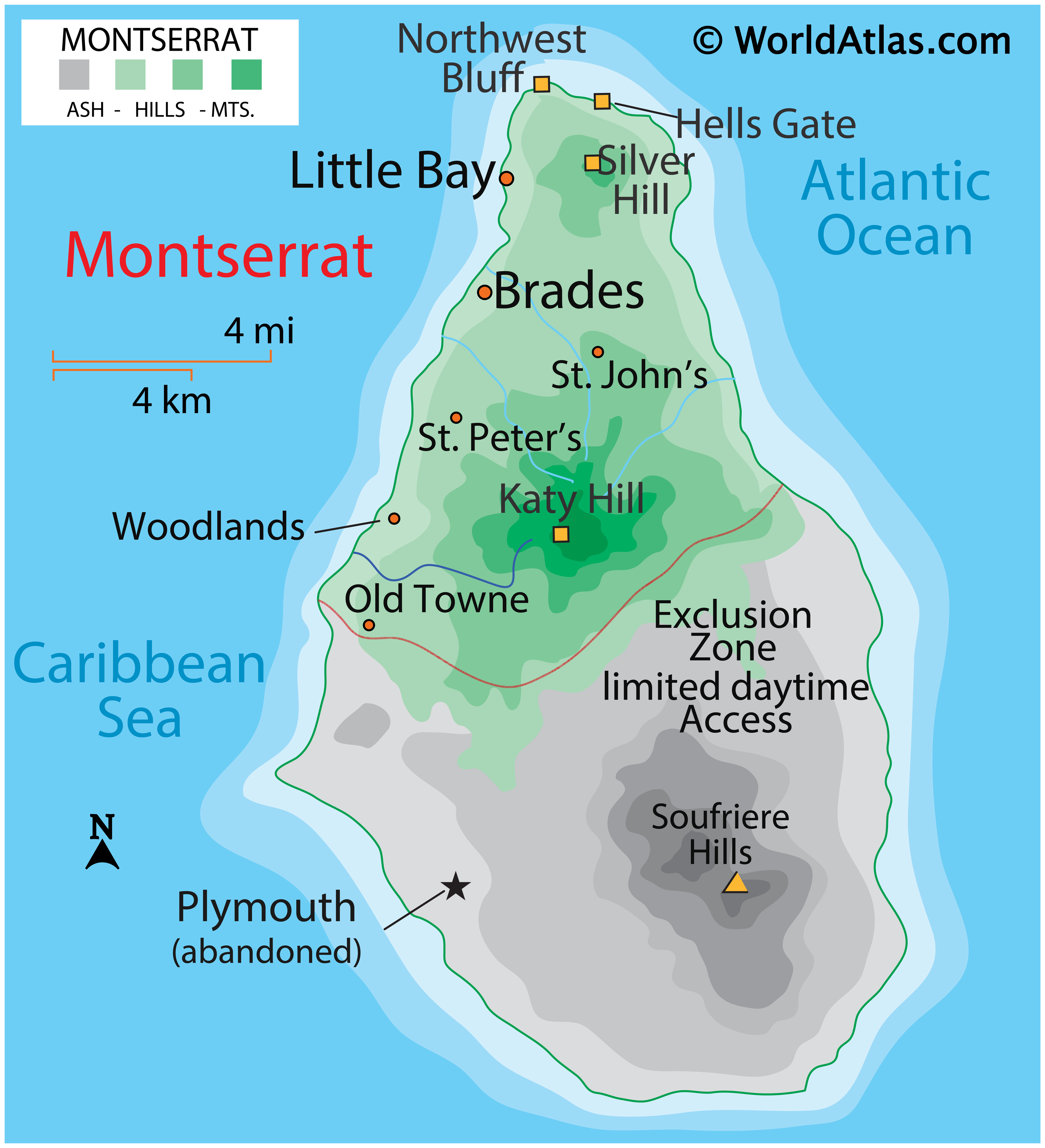
The Radio Scene on a Small Island with a Large Volcano!  That’s our opening topic here in Wavescan today.  The small island with a large volcano is Montserrat in the Caribbean, but that’s not where we begin our radio story today.  Instead, let’s begin this radio story in El Salvador in Central America rather than on Montserrat in the Caribbean.

            Early in the year 1967, Deutsche Welle in Cologne Germany, announced that they planned to erect a shortwave relay station in the small Central American country of El Salvador.  This information about a new Deutsche Welle relay station, their first in the Western Hemisphere, was copied and recopied quite widely throughout the international radio world at that time.  Original planning for the El Salvador relay station called for four high powered transmitters: 1 @ 100 kW mediumwave; and on shortwave, 1 @ 150 kW and 2 @ 250 kW.   

            Two years later (1969), and still with no real sign of progress, international news media re-iterated the Deutsche Welle intent to erect a shortwave relay station in El Salvador.  In anticipation of a completed  project, Deutsche Welle went ahead and bought the transmitters for installation in El Salvador.  However, at that stage, the government of El Salvador disallowed the installation of the projected Deutsche Welle relay station in their country.

            According to Jerome Berg of suburban Boston in his outstanding volume, Broadcasting on the Shortwaves 1945 - Today, the shortwave transmitters originally planned for installation in El Salvador were instead diverted and installed in another new Deutsche Welle relay station, Radio Trans Europe in Sines Portugal in 1970. 

            However, at the same time, Deutsche Welle continued looking for a new host country in the Central American-Caribbean region, and two years later again (1972), they announced that they had become a shareholder in Radio Antilles, on the island of Montserrat.  In fact, over a period of time, Germany provided funding into Montserrat to the value of many millions of Deutschmark.

            Back in the times of ancient antiquity, Montserrat, a small island almost in the middle of the chain of small islands that separate the Caribbean from the Atlantic, was inhabited by Amerindians who had migrated from the American mainland and other islandic areas.  At the time when the famous Christopher Columbus discovered Montserrat in 1493, the island was uninhabited he declared, due to local tribal fighting.

            The local citizens on Montserrat describe their island as in the shape of a pear (fruit), perhaps we might say, a crooked pear.  It is eleven miles long, and seven miles wide at its widest point.  It is a quite hilly tropical island, very verdant, with what had been in earlier times a couple of quiescent volcanoes.  We are told that the island is home to 1,241 different species of small animals, and 718 species of beetles.

            Two hundred years after Columbus, a batch of Irish migrants was taken onto Montserrat, and in fact over a period of time, so many Irish migrants settled onto the island that the Irish Gaelic language was at one stage quite dominant in all of its communities.  During the year 1666, which incidentally happened to be the year of the Great Fire in London, the Irish migrant communities on Montserrat invited France to claim the island, but instead, England invaded and captured it. 

            However in 1782, during the still raging American Revolutionary War, the War of Independence, France did actually invade and capture Montserrat.  During the following year though, the island was ceded back again to England by the Treaty of Paris (1783).

            Hurricane Hugo on September 17, 1989 with its sustained wind force at more than 185 mph wrought horrendous damage to the island and this wide spread 90% devastation was compounded half a dozen years later with the onset of almost continuous volcanic activity beginning on July 18, 1995.  So powerful was the total devastation from the explosive eruptions of Mt Soufriere that the large bottom half of the pear shaped island is declared an exclusion zone, for which everybody has to obtain a police permit to enter.  It is claimed that Mt Soufriere has been the subject of scientific study more than any other volcano anywhere else upon planet Earth.

            The small capital city of New Plymouth was so overwhelmed with millions of tons of mud, volcanic ash and lava that the entire city has been abandoned.  At one stage, the town clock on top of its ornamental tower could be seen just above the level of the accumulated and solidified debris.  Some 8,000 citizens fled Montserrat and they were settled on other nearby islands, in England and elsewhere. 

            A new capital city Brades is under construction on the northern half of the island, and a totally new infrastructure is underway.  In 1994 the total population of the entire island was 13,000, but today their population numbers just 5,000.

            The well known European radio entrepreneur Jacques Tremoulet provided two mediumwave transmitters (20 kW and 200 kW) and two shortwave transmitters (15 kW each) for a new radio broadcasting station on Montserrat, Radio Antilles in 1959.  This equipment had been previously in use as a commercial broadcasting station, Radio Africa in Tangier.  These units, together with additional ancilliary equipment were installed in a new transmitter building located close to the Caribbean shore at the southern edge of the island.

            Soon after Deutsche Welle entered the radio scene on Montserrat, it is stated, they installed a 200 kW mediumwave transmitter that had been procured previously for their El Salvador project.  In addition, Deutsche Welle subsequently installed a new 50 kW Continental shortwave from the United States. 

            Thus, Radio Antilles, with its transferred equipment from the old Radio Africa in Tangier and also from the El Salvador project, together with the new 50 kW Continental, formed the electronic equipment that would be used as as a joint relay station on behalf of Deutsche Welle in Cologne Germany and the BBC in London England. 

            More about the Deutsche Welle - BBC relay station on Montserrat Island next time.
(AWR Wavescan/NWS 441)

Monday, May 29, 2017

Frequency updates on shortwave


Updated schedule of The Mighty KBC Radio via MBR Nauen:
0000-0200 on  9925 NAU 125 kW / 300 deg to NoAm English Sun till Aug.27
from Sept.2/3
2300-0000 on  6145 NAU 125 kW / 300 deg to NoAm English Sat, ex 0000-0100 Sun
0000-0100 on  6145 NAU 125 kW / 300 deg to NoAm English Sun, ex 0100-0200 Sun*
* to avoid on 6145 BAU 100 kW / 340 deg to WNAm English Dly Radio Habana Cuba.

Clandestine
Echo of Hope/VOH
Effective: 18 May
0600-2400 5995#HWA 100 kW / non-dir to NEAs Korean, ex  6003
0600-2400 6350*HWA 100 kW / non-dir to NEAs Korean, ex  6348
parallel freq 3985 HWA 100 kW / non-dir to NEAs Korean no change
parallel freq 6250 SEO 010 kW / 010 deg to NEAs Korean no change
# no jamming, but other two traditional 3985 and 6250 are jammed
* no jamming, best reception in USB, due to strong QRM RTTY 6245New schedule of
Radio Voice of Adal via MBR Issoudun, May 24

Clandestine
Voice of Adal
1500-1539 on 15205 ISS 100 kW / 125 deg to EaAf Arabic   Wed, x 1500-1530
1539-1558 on 15205 ISS 100 kW / 125 deg to EaAf Tigrinya Wed, x 1530-1558
1500-1530 on 15205 ISS 100 kW / 125 deg to EaAf Arabic   Sat as scheduled
1530-1558 on 15205 ISS 100 kW / 125 deg to EaAf Tigrinya Sat as scheduled

Clandestine
Voice of Tibet
Effective: 27 May
1200-1210 11513 DB  100 kW / 095 deg to EaAs Chinese, ex 11507
1210-1230 11507 DB  100 kW / 095 deg to EaAs Chinese, ex 15513
1300-1310 11512 DB  100 kW / 095 deg to EaAs Chinese, ex 11513
1310-1330 11517 DB  100 kW / 095 deg to EaAs Chinese, ex 11507
1335-1345 15522 DB  100 kW / 131 deg to CeAs Tibetan, ex 15513
1345-1400 15528 DB  100 kW / 131 deg to CeAs Tibetan, ex 15537
2335-2400 7487 DB  100 kW / 131 deg to CeAs Tibetan, ex  7497

Germany
Deutsche Welle
Effective: 01 June
0630-0700 NF 13660 NAU 500 kW / 185 deg to WeAf Hausa, ex 13810
1600-1700 NF 17705 DHA 250 kW / 225 deg to EaAf Amharic,x 13850
(DX Bulgaria/SWL DXing/WWDXC Top News)

Friday, January 13, 2017

Deutsche Welle frequency updates

DW QSL via Gayle Van Horn Collection
Deutsche Welle frequency updates 
Effective: 11 January
All times UTC
1330-1400 9580*DHA 250 kW / 045 deg to WeAs Dari, ex 15215 NAU
1330-1400 15215 TRM 250 kW / 335 deg to WeAs Dari, addit.from Feb.1
1400-1430 9580*DHA 250 kW / 045 deg to WeAs Pashto, ex 15215 NAU
1400-1430 on 15215 TRM 250 kW / 335 deg to WeAs Pashto, addit.from Feb.1
1800-1900 9600 ISS 500 kW / 170 deg to WeAf Hausa, ex 11700
* co-ch same  9580 SHP 100 kW / 070 deg to EPac English Radio Australia

 (SWL DXing)

Friday, October 28, 2016

Deutsche Welle slashes English service for Winter B16 schedule

(via Gayle Van Horn QSL Collection)
Deutsche Welle has slashed their English service, down to one hour from three. The one hour from 1600-1700 UTC, is targeted to eastern Africa, as indicated below.

All times UTC

Germany, B-16 schedule of Deutsche Welle English:

1600-1700 on  9820 MEY 250 kW / 007 deg to EaAf English
1600-1700 on 15290 ISS 500 kW / 140 deg to EaAf English
1600-1700 on 15315 ISS 500 kW / 172 deg to WeAf English
1600-1700 on 17690 ISS 500 kW / 172 deg to WeAf English
1600-1700 on 17710 DHA 250 kW / 215 deg to EaAf English
Morning transmissions 0400-0500 and 0500-0600 are cancelled.
(sked via SWL DX Bulgaria)

Friday, July 22, 2016

BREAKING NEWS - Attack in Munich

The following Deutsche Welle current summer schedule. Follow ongoing events in Munich, Germany.

All times UTC

http://www.msn.com/en-us/news/world/multiple-casualties-in-shooting-rampage-in-munich-shopping-mall-police/ar-BBuFw6E?li=BBmkt5R&ocid=spartandhp


Deutsche Welle
Amharic
1600-1700  daily  15275 (via Trincomalee, Sri Lanka) 17800 (via Dhabbaya, UAE)

Dari
1330-1400  daily  15215 (via Trincomalee, Sri Lanka) 15430 (via Dhabbaya, UAE) 17720 (via Trincomalee, Sri Lanka)

English
0400-0500  daily  9800 (via Meyerton, South Africa) 11820 (via Talata-Volonondry, Madagacar) 15250 (via Trincomalee, Sri Lanka)
0500-0600  daily  9800 (via Meyerton, SOuth Africa) 11820 (via Talata-Volonondry, Madagacar) 15255 (via Issoudun, France) 17800 (via Trincomalee, Sri Lanka)
0700-0800  daily  15530 (via Issoudun, France) 17800 (via Issoudun, France) 21780 (via Dhabbaya, UAE)

French
1700-1800  daily  15275 (via Issoudun, France) 15235 (via Issoudun, France) 17740 (via Issoudun, France) 17800 (via Ascension Is.)

Hausa
0630-0700  daily  9830 (via São Tomé and Príncipe) 15530 (via Nauen, Germany) 17800 (via Issoudun, France) 21780 (via Dhabbaya, UAE)
1300-1357  daily  9830 (via São Tomé and Príncipe) 17800 (via Ascension Is.) 21780 (via Dhabbaya, UAE)
1800-1900  daily  9830  (via São Tomé and Príncipe) 15275 (via Issoudun, France) 17800 (via Issoudun, France)

Pashto
1400-1430  daily  15215 (via Trincomalee, Sri Lanka) 15430 (via Trincomalee, Sri Lanka) 17720 (via Dhabbaya, UAE)

Swahili
0300-0400  daily  6045 (via Meyerton, S. Africa) 9800 (Nauen, Germany) 15250 (via Trincomalee, Sri Lanka)
1000-1100  daily  17710 (via Meyerton, S. Africa
1100-1200  daily  15275 (via Talata-Volonondry, Madagacar)
1500-1600  daily  15275 (via Trincomalee, Sri Lanka) 17710 (via Dhabbaya, UAE)
(AOKI)

Tuesday, June 21, 2016

Deutsche Welle plans test transmissions


Sri Lanka
Test frequencies of Deutsche Welle via Trincomalee Perkara

All times UTC
0300-0400 on 15255 TRM 250 kW / 255 deg to EaAf Swahili June 28 to July 1
0400-0500 on 15255 TRM 250 kW / 255 deg to EaAf English June 28 to July 1
0400-0500 on 17800 TRM 250 kW / 255 deg to EaAf English June 28 to July 1
(DX Bulgaria 21 Jun)

Monday, June 06, 2016

Germans Close Business in Rwanda After Half Century Lease Expires


Rwanda
Once a powerful facility in the region, the German owned Deutsche Welle radio center at Kinyinya hill outside Kigali is finally and completely shutting down. It's no more.

In 1965, Rwanda leased 68.4 hectares on Kinyinya hill for fifty years to the Germans - that later set up a massive facility to boost Deutsche Welle, Germany's international broadcaster.

"We are stopping our short wave transmitters today and then next week we will start dismantling them and the masts in order to meet the deadline of August when our license expires,"
said Bernhard Ahlborn, the deputy director of Deutsche Welle.

On March 28, 2015 the facility stopped its operations, to begin dismantling their equipment, to pave away for the handover of the Land to Rwanda government.

The Germans will today hand over the premises of the relay station with its infrastructure to the Government of Rwanda, to mark the end of 50 year concession agreement.

The Deutsche Welle relay station in Kigali has been serving African and the Middle East audiences. It was the only firm facility of the kind that was remaining. The Germans had similar facilities in other 60 countries.

According to officials at Rwanda Utilities Regulation Authorities (RURA) the land, plus houses that were developed in the area will be handed over to government of Rwanda.

The annual operational cost of Kinyinya transmitters was said to be EUR3.3 million (about Rwf2.7 billion), but it is alleged the firm was making loss, hence giving up its relay station in Rwanda.

With new technology, Frequency Modulation (FM) and internet available, the public finds no need of switching to short wave radio signals.

Today, Rwanda government officials from Ministry of Foreign Affairs and Ministry of infrastructure and the Germany Embassy will witness the handover.

The Deutsche Welle property is adjacent to hundreds of hectares of land that was acquired by Rwanda Social Security Board (RSSB) to develop affordable housing units.
http://ktpress.rw/2016/05/germans-close-business-in-rwanda-after-half-century-lease-expires/
(KT_Press, May 31, 2016. By Jean de la Croix_Tabaro.
via Mike Terry-UK, BrDXC-UK ng June 2)
(BCDX-Top Nx 1255/04 June)

Wednesday, December 09, 2015

Deutsche Welle frequency adjustments from December 15


Frequency changes of Deutsche Welle effective from December 15:

All times UTC

0400-0500 12025 MDC 250 kW / 300 deg to EaAf English, ex 11810, re-ex 11800
0500-0600 15405 MDC 250 kW / 300 deg to SoAf English, ex 15520, re-ex 15275
1600-1700 15190 DHA 250 kW / 225 deg to EaAf Amharic, ex 15560
And upcoming frequency change of Deutsche Welle effective from January 15, 2016
0630-0700 11800 ISS 500 kW / 170 deg to WeAf Hausa (alt.freq.13610), ex 9800
(DX Bulgaria 09 Dec)

Wednesday, July 29, 2015

Updates from Deutsche Welle


All times UTC

Test frequencies of Deutsche Welle from Aug.1 to Aug.3

0300-0330 on 15260 TRM 250 kW / 255 deg to EaAf Swahili
0400-0430 on 17800 TRM 250 kW / 255 deg to EaAf English
1000-1030 on 17740 TRM 250 kW / 255 deg to EaAf Swahili
1700-1730 on 17740 TRM 250 kW / 270 deg to NWAf French
1800-1300 on 17800 TRM 250 kW / 285 deg to WeAf Hausa

The following transmissions will be cancelled from Aug.1
0800-0830 on 15215 DHA 250 kW / 045 deg to WeAs Pashto
0800-0830 on 17800 TRM 250 kW / 335 deg to WeAs Pashto
0830-0900 on 15215 DHA 250 kW / 045 deg to WeAs Dari
0830-0900 on 17800 TRM 250 kW / 335 deg to WeAs Dari
(Ivanov SW Nx 29 Jul)